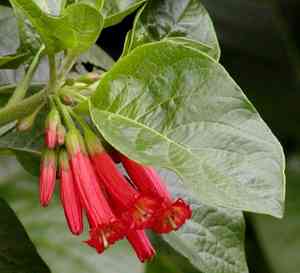
Red iochroma (Iochroma fuchsioides)
Also known as: Red Bell, Tomato Bush
Coral Honeysuckle (Lonicera sempervirens) is a beautiful perennial shrub distinguished by its elongated, tubular flowers that resemble those of fuchsias. These vibrant blooms, often in shades of red, orange, or yellow, grow in clusters and are particularly attractive to hummingbirds. Native to North America, this plant features lush green foliage that provides a striking contrast to its vivid flowers. It thrives in well-drained soils and partial shade, making it adaptable to various garden environments.
In This Article
Attributes of Red iochroma
Lifespan
Perennial
Plant Type
Shrub
Plant Height
3 to 6 feet (0.91 to 1.83 meters)
Spread
2 to 3 feet (0.61 to 0.91 meters)
Leaf Color
Green
Flower Size
1 to 2 inches (2.54 to 5.08 cm)
Flower Color
Red
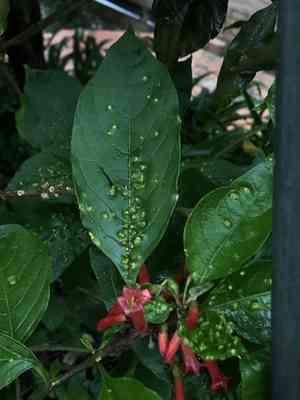
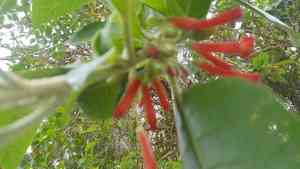
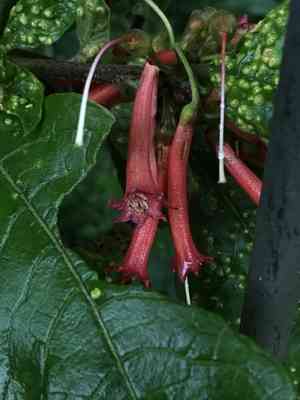
Images of Red iochroma
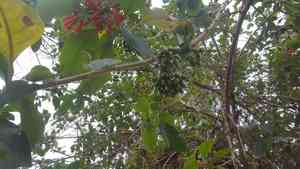
Quickly Identify Red iochroma
1
Look for its tubular red flowers, which resemble fuchsia blooms, and its green, elliptical leaves. The plant typically has a bushy growth habit and can reach several feet in height.
Scientific Classification of Red iochroma
Phylum
Vascular plants
Class
Dicotyledons
Order
Solanales
Family
Nightshade
Genus
Violetbushes
Species
Red iochroma
Planting and Growing of Red iochroma
Care Difficulty
Moderate
Watering Schedule
Every 3 days
Sunlight Requirements
Partial sun
Sunshine Duration
4-6 hours
Ideal Temperature
65-75℉
Soil Type
Potting Mix, Peat Mix
Soil pH
6.5-7.5
Fertilizer Type
Balanced
Pruning Season
Spring, Summer
Pruning Area
Branches, Leaves
Pruning Frequency
2 times a year
Repotting Season
Spring
Pot Type
Terracotta, Plastic
 How to Water Red iochroma?
The watering amount for Iochroma fuchsioides should be enough to thoroughly moisten the soil without leaving it soggy. Ensure the soil is drenched but allows excess water to drain freely from the pot, ensuring you're not leaving the roots waterlogged.
What are the symptoms of an underwatered Red iochroma?
›
What should I do if my Red iochroma is not getting enough water?
›
What are the symptoms of an overwatered Red iochroma?
›
How to save an overwatered Red iochroma?
›
 What Are the Sunlight Requirements for Red iochroma?
Iochroma fuchsioides thrives best in partial sun to full sun areas, enhancing growth and flowering. Proper light exposure ensures maximum flowering and foliage vibrancy, contributing greatly to the plant's health.
How much light does Iochroma fuchsioides need?
›
What are the best locations for its placement?
›
What are the optimal seasonal changes in light?
›
 What Is the Ideal Temperature Range for Red iochroma?
The ideal temperature range for Iochroma fuchsioides is between 65°F to 75°F. This temperature range supports optimal growth and flowering. Consistency within this range helps the plant perform photosynthesis effectively and maintain its vibrant colors and blooms. It's important not to subject the plant to fluctuations outside this temperature zone for prolonged periods.
 What Soil is Best for Red iochroma?
Iochroma fuchsioides requires soil that drains well because it prevents root rot and ensures that the roots get adequate oxygen. This condition helps the plant maintain its vigor and boosts its flowering potential. The plant thrives in nutrient-rich soil, which can support its lush foliage and vibrant blooms. Supplying the soil with organic matter or compost can enhance nutrient availability, leading to a healthier plant. While good drainage is critical, maintaining a consistent level of moisture is also vital. This balance prevents drought stress, ensuring the plant remains hydrated without waterlogging, which is crucial for sustaining its growth.
 How to Fertilize Red iochroma?
For Iochroma fuchsioides, precise fertilization is crucial to ensure its vibrant growth and flowering capability. When using liquid fertilizers, apply at half the recommended strength on the label. For slow-release fertilizers, follow the manufacturer's recommendations, taking care not to exceed them, as excessive nutrients could hamper plant health.
 How to Prune Red iochroma?
Always use clean, sharp pruning shears to prevent any potential disease transmission. Sterilize your tools before and after each use with a disinfectant solution to ensure a healthy pruning process. Iochroma fuchsioides can exude a sticky sap when cut. Wear gloves and protective clothing to prevent skin irritation. This sap can also be adhesive, so use care not to let it come into contact with surfaces or items you wish to keep clean. After pruning, monitor the plant for any signs of pest infestation, as fresh cuts can occasionally attract unwanted insects. Use natural methods of pest control, like neem oil, if you notice an increase in pest activity.
More About Pruning Techniques→
 How to Propagate Red iochroma plant?
1
Begin by soaking the seeds of Iochroma fuchsioides in water for 24 hours to soften the seed coat. This will help improve germination rates as the seeds tend to have a hard outer layer.
2
Plant the seeds in a seed tray filled with a quality seed-starting mix. Ensure that seeds are spaced adequately to allow for airflow, reducing the risk of fungal infections.
3
Select healthy, non-flowering stems and cut sections about 10-15 cm long. Remove the leaves on the lower section to expose the nodes, which will help in root formation.
 How to Repot Red iochroma plant?
1
Iochroma fuchsioides should be repotted when you notice roots creeping out from the drainage holes, indicating that the plant has outgrown its current container. Additionally, if the soil drains too quickly or the plant seems stunted despite regular care, these are signs that repotting may be necessary.
2
Select a pot that is only slightly larger than the current one, to prevent overwatering issues. The pot should have adequate drainage holes to allow excess water to escape. This aids in maintaining healthy root growth and prevents root rot.
3
For Iochroma fuchsioides, choose a well-draining, rich loamy soil that supports its rapid growth and ample blooming. A soil composition that retains some moisture but allows water to pass easily is ideal, preventing both over-drying and root rot.
Toxicity
Ingestion
WARNING
The judgment on toxicity and danger is for reference only. We DO NOT GUARANTEE any accuracy of such judgment. Therefore, you SHALL NOT rely on such judgment. It is IMPORTANT TO SEEK PROFESSIONAL ADVICE in advance when necessary.
Learn More About Red iochroma Diseases
Anthracnose
Bacterial Leaf Spot
Bacterial Wilt
Black Spot
Chemical Injury
Crown Gall
Damping-off
Downy Mildew
Drought Stress
Fusarium Wilt
Gray Mold
Leaf Curl
Leaf Spot
Mosaic
Nutrient Deficiency
Nutrient Toxicity
Powdery Mildew
Root Rot
Root-knot Nematode
Rusts
Sooty Mold
Spider Mites
Temperature Stress
Thrips Damage
White Mold



