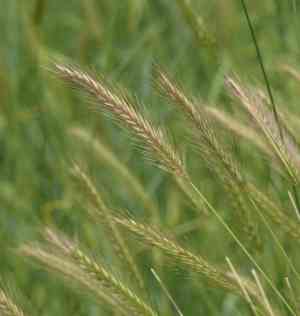
Meadow barley (Hordeum secalinum)
Also known as: Meadow Barley
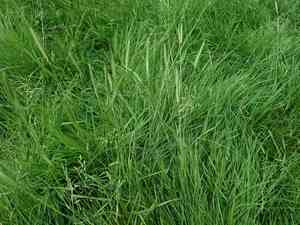
The plant reaches a height of 30 to 80 cm with ascending, slightly curved stems. Its narrow leaves are partially folded. The ligule is about 0.8 mm in length. Lower leaf sheaths are covered with rough hairs, while the upper ones are smooth. The upper leaf sheaths are mildly inflated and snugly encase the stem.
In This Article
Attributes of Meadow barley
Lifespan
Perennial
Plant Type
Grass
Plant Height
70 cm
Spread
15 cm to 70 cm
Leaf Color
Green
Flower Size
N/A, flowers are in spikelets
Flower Color
Yellow Green Brown
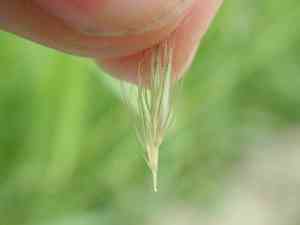
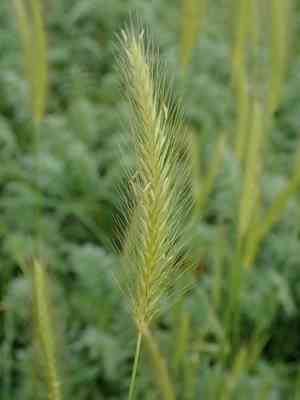
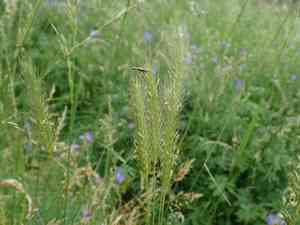
Images of Meadow barley
Quickly Identify Meadow barley
1
Hordeum secalinum can be identified by its slender, lanceolate leaves and the presence of distinct awns on its spikelets. The stems are typically erect and the inflorescence is a dense, elongated spike.
Scientific Classification of Meadow barley
Phylum
Vascular plants
Class
Monocotyledons
Order
Poales
Family
Grass
Genus
Barleys
Species
Meadow barley
Planting and Growing of Meadow barley
Care Difficulty
Easy
Watering Schedule
Every 2 days
Sunlight Requirements
Full sun
Sunshine Duration
6-10 hours
Ideal Temperature
60-75℉
Soil Type
Potting Mix, Peat Mix
Soil pH
6.5-7.5
Fertilizer Type
Balanced
Pruning Season
Spring, Summer
Pruning Area
Branches, Leaves
Pruning Frequency
2 times a year
Repotting Season
Spring
Pot Type
Plastic, Ceramic
 How to Water Meadow barley?
Hordeum secalinum, or meadow barley, requires a thoughtful approach towards watering. It is important to ensure that the top 2-3 cm of soil is moist, avoiding both excessive dryness and sogginess. Watering should thoroughly moisten the soil without creating standing water, as this can lead to root rot.
What are the symptoms of an underwatered Meadow barley?
›
What should I do if my Meadow barley is not getting enough water?
›
What are the symptoms of an overwatered Meadow barley?
›
How to save an overwatered Meadow barley?
›
 What Are the Sunlight Requirements for Meadow barley?
Prefers full sun to partial sun, benefiting from 6-8 hours of light daily. Ideal light fosters robust growth, vibrant leaves, and efficient photosynthesis, ensuring a healthy lifecycle.
More About Sunlight Requirements Techniques→
What is the best lighting condition for Hordeum secalinum?
›
How can you ensure Hordeum secalinum gets ideal sunlight?
›
What benefits does ideal sunlight provide to Hordeum secalinum?
›
 What Is the Ideal Temperature Range for Meadow barley?
Hordeum secalinum thrives best in temperatures ranging from 60°F to 75°F. This range promotes optimal growth by providing adequate warmth without causing heat stress. It is crucial to maintain consistent temperatures within this bracket to maximize the plant’s photosynthetic efficiency and overall health.
 What Soil is Best for Meadow barley?
Hordeum secalinum thrives best in soil that is abundant in essential nutrients. This ensures robust growth and a resilient plant structure, capable of withstanding environmental challenges. Such fertile conditions stimulate vigorous root development and healthy foliage. The plant prefers soils that have excellent drainage properties. Good drainage prevents waterlogging, which can lead to root rot and other detrimental conditions. Ensuring free-flowing drainage enhances oxygen availability to the roots, supporting overall plant vitality. While good drainage is essential, the soil must also retain a moderate level of moisture to keep the plant hydrated. Maintaining a balance ensures that the plant receives enough water without the risk of desiccation or drought stress.
 How to Fertilize Meadow barley?
For Hordeum secalinum, use a moderate amount of fertilizer to avoid nutrient overload. Typically, apply 1.5 to 2 grams of balanced fertilizer per square meter. This ensures the plant receives essential nutrients without risking root burn.
 How to Prune Meadow barley?
Start by examining your Hordeum secalinum for any stems that appear dead or have discolorations indicative of disease. Remove these sections first to prevent any spread of disease. After removing the unhealthy parts, target areas where growth is dense to improve air circulation. This helps prevent fungal diseases and supports healthier growth. Prune the outer edges of the Hordeum secalinum to maintain its shape and size. This keeps the plant manageable and aesthetically pleasing in its setting.
More About Pruning Techniques→
 How to Propagate Meadow barley plant?
1
Fill seed trays with a fine and moist seed starting mix. Ensure the mix is level and evenly distributed to give seeds a stable environment to germinate.
2
Scatter seeds evenly across the surface of the seed starting mix. Cover them lightly with a thin layer of soil to mimic their natural habitat for germination.
3
Use a fine mist spray to water the sown seeds. Avoid dislodging the seeds from the soil and ensure the moisture penetrates to the seed level.
4
For division, carefully dig around the plant base to expose the roots. Ensure the plant is mature enough with multiple stems for successful division.
5
Using a sharp spade or knife, divide the plant into sections ensuring each has roots attached. Replant them immediately in prepared beds or pots.
 How to Repot Meadow barley plant?
1
Repot Hordeum secalinum when you notice the roots starting to peek out of the drainage holes or circling the pot's interior. Typically, the best time is during its active growth phases in spring or early summer, as this enables the plant to quickly adapt to its new environment and pot.
2
Select a pot that is one size larger than the current one, which promotes healthy root growth without overwhelming the plant. Ensure the pot has proper drainage holes, as this prevents waterlogging and root rot. Terracotta pots are excellent for moisture regulation, keeping the roots healthy and the plant thriving.
3
Use a loamy, well-draining soil mix that retains moisture without becoming too compact. This ensures that the roots can breathe while providing adequate nutrients. A good soil mix will also prevent excess water from pooling, reducing the risk of fungal issues.



