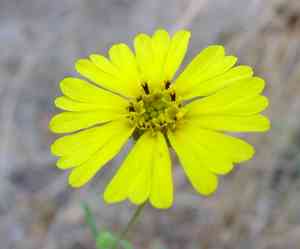
Heermanns tarweed (Holocarpha heermannii)
Also known as: Heermann's tarplant
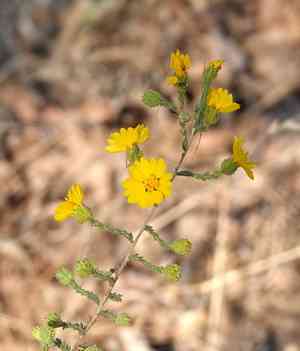
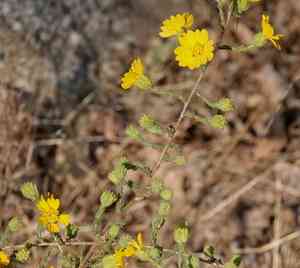
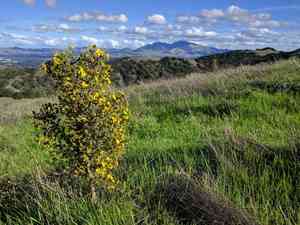
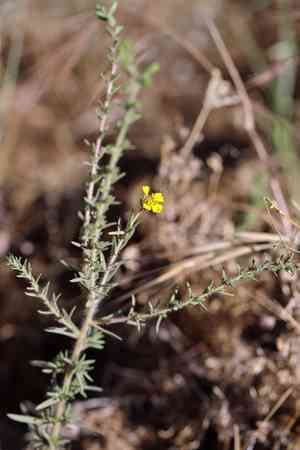
Holocarpha heermannii is an annual herb that typically grows upright, ranging in height from 20 cm to just over 1 meter. The stem is densely covered with glandular, sticky hairs. The plant's leaves can be up to 10 cm long at the base, with smaller leaves found higher up the stem. Its inflorescence consists of branching clusters of flower heads. Each flower head is encased in phyllaries that are sticky due to large resin glands and have a hairy texture. The flower heads contain numerous yellow disc florets and are surrounded by three to ten golden yellow ray florets. Both the ray and disc florets produce different types of achenes.
In This Article
Attributes of Heermanns tarweed
Lifespan
Annual
Plant Type
Herb
Plant Height
Approximately 20 to 100 cm
Spread
Not typically measured, as it is a herbaceous plant with an upright growth habit
Leaf Color
Green
Flower Size
About 2 to 4 cm
Flower Color
Yellow
Images of Heermanns tarweed
Quickly Identify Heermanns tarweed
1
Holocarpha heermannii can be identified by its tall, erect stems which are covered with sticky, aromatic glandular hairs. The leaves are narrow, linear, and slightly toothed. The bright yellow flower heads are composed of both disc and ray florets.
Scientific Classification of Heermanns tarweed
Phylum
Vascular plants
Class
Dicotyledons
Order
Asterales
Family
Daisy
Genus
Holocarpha
Species
Heermanns tarweed
Planting and Growing of Heermanns tarweed
Care Difficulty
Easy
Watering Schedule
Every 2 days
Sunlight Requirements
Full sun
Sunshine Duration
4-8 hours
Ideal Temperature
60-75℉
Soil Type
Potting Mix, Peat Mix
Soil pH
6.5-7.5
Fertilizer Type
Balanced
Pruning Season
Spring, Summer
Pruning Area
Branches, Leaves
Pruning Frequency
2 times a year
Repotting Season
Spring
Pot Type
Plastic, Ceramic
 How to Water Heermanns tarweed?
Holocarpha heermannii prefers moderate watering; you should water it thoroughly with 500 ml each time to ensure adequate moisture reaches the roots. It's essential to let the topsoil dry out between waterings to prevent root rot.
What are the symptoms of an underwatered Heermanns tarweed?
›
What should I do if my Heermanns tarweed is not getting enough water?
›
What are the symptoms of an overwatered Heermanns tarweed?
›
How to save an overwatered Heermanns tarweed?
›
 What Are the Sunlight Requirements for Heermanns tarweed?
Holocarpha heermannii thrives in full sun, ideally with 6-8 hours of direct sunlight. Fulfillment of this light requirement fosters robust growth and prolific flowering, essential for the plant's aesthetic appeal and ecological role in pollinator support.
What is the best location for Holocarpha heermannii?
›
How can I maximize sunlight exposure?
›
Why is it necessary for Holocarpha heermannii to have full sun?
›
 What Is the Ideal Temperature Range for Heermanns tarweed?
The optimal temperature range for Holocarpha heermannii is between 60°F and 75°F. This range ensures healthy growth and robust flowering. Consistent exposure to temperatures within this range helps maintain ideal metabolism and growth rates, enhancing the plant's vitality and resilience.
 What Soil is Best for Heermanns tarweed?
Holocarpha heermannii flourishes in well-drained soil to prevent root rot. Good drainage mimics its native habitat, ensuring the roots stay healthy and oxygenated. This plant thrives in soil with moderate nutrients. It doesn't require overly rich soil, which can lead to excessive growth and reduced flowering. Well-aerated soil is crucial for Holocarpha heermannii. Aeration helps maintain root health by allowing air and water to reach the plant's roots effectively.
 How to Fertilize Heermanns tarweed?
Holocarpha heermannii typically requires moderate fertilization due to its adaptation to low-nutrient soils. Apply a balanced liquid fertilizer diluted to half strength (1 tablespoon per gallon) to avoid overwhelming the plant. Avoid overly rich mixtures, as it can lead to nutrient burn.
 How to Prune Heermanns tarweed?
Begin by identifying and removing any dead or damaged stems and leaves. This allows the plant to allocate its energy to producing new growth rather than sustaining damaged parts. After addressing the health of the plant, proceed to shape it. Trim back overgrown branches to maintain a compact and tidy shape, allowing sunlight to reach the inner parts of the plant effectively. To promote a bushier appearance, trim back the tips of the branches slightly. This will stimulate lateral growth and result in a fuller, more robust plant.
More About Pruning Techniques→
 How to Propagate Heermanns tarweed plant?
1
Collect seeds from mature Holocarpha heermannii plants during late summer. Ensure the seeds are dry and free of any plant debris before storage.
2
Prepare seed trays or pots with well-draining soil. Lightly water the soil to make it evenly moist before planting the seeds.
3
Spread the seeds evenly on the soil surface and cover them lightly with a thin layer of soil or sand. This mimics their natural growing conditions and aids germination.
 How to Repot Heermanns tarweed plant?
1
The ideal time to repot Holocarpha heermannii is when you notice roots emerging from the drainage holes or the plant looks overcrowded. These are clear signals that the plant requires more space to continue thriving and spreading its roots effectively.
2
Select a pot that is one to two inches larger in diameter than the existing one. The new pot should have ample drainage holes. A slightly larger pot allows for better root expansion while preventing waterlogging, which helps in maintaining the plant's health and vibrant growth.
3
Opt for a well-draining sandy mix. This type of soil ensures excellent drainage and mimics Holocarpha heermannii's natural habitat, preventing root rot and promoting healthy root development by allowing sufficient air circulation.



