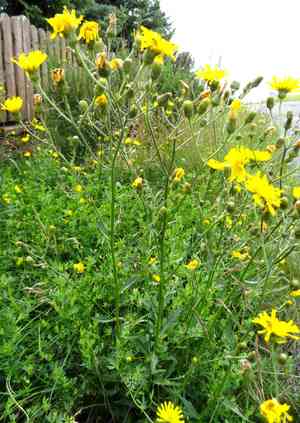
Smooth hawkweed (Hieracium laevigatum)
Also known as: Smooth Hawkweed
Canada thistle, a member of the sunflower family, is a highly adaptable perennial. It thrives in diverse habitats, including thin woodlands, fields, and even on walls. In the United States, it is classified as a noxious weed.
In This Article
Attributes of Smooth hawkweed
Lifespan
Perennial
Plant Type
Herb
Plant Height
60 cm
Spread
Not applicable
Leaf Color
Green
Flower Size
1.9 cm to 3 cm
Flower Color
Yellow
Images of Smooth hawkweed


Quickly Identify Smooth hawkweed
1
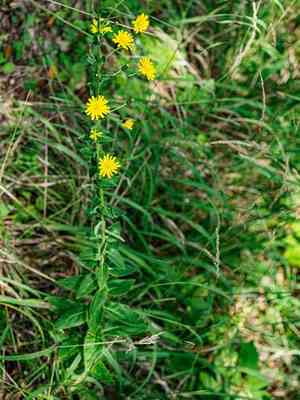
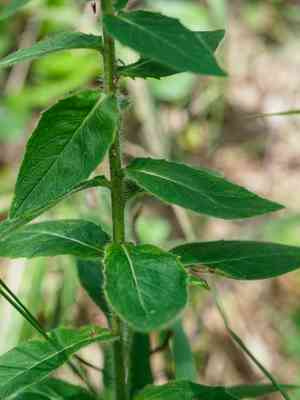
To identify Hieracium laevigatum, look for its smooth, hairless stems and leaves. The basal leaves are generally broader, while the upper stem leaves are narrow. The flower heads are typically bright yellow and arranged in dense clusters.
Scientific Classification of Smooth hawkweed
Phylum
Vascular plants
Class
Dicotyledons
Order
Asterales
Family
Daisy
Genus
Hawkweeds
Species
Smooth hawkweed
Planting and Growing of Smooth hawkweed
Care Difficulty
Easy
Watering Schedule
Every 2 days
Sunlight Requirements
Full sun
Sunshine Duration
4-8 hours
Ideal Temperature
60-75℉
Soil Type
Potting Mix, Peat Mix
Soil pH
6.5-7.5
Fertilizer Type
Balanced
Pruning Season
Spring, Summer
Pruning Area
Branches, Leaves
Pruning Frequency
Once a year
Repotting Season
Spring
Pot Type
Plastic, Ceramic
 How to Water Smooth hawkweed?
For Hieracium laevigatum, ensure the soil is moist but not waterlogged. It's essential to water deeply, allowing the roots to fully absorb the moisture. Ideally, water until you see some drainage from the bottom of the pot but do not allow it to sit in excess water.
What are the symptoms of an underwatered Smooth hawkweed?
›
What should I do if my Smooth hawkweed is not getting enough water?
›
What are the symptoms of an overwatered Smooth hawkweed?
›
How to save an overwatered Smooth hawkweed?
›
 What Are the Sunlight Requirements for Smooth hawkweed?
Partial to full sun with at least 6 to 8 hours of sunlight daily. Sufficient light leads to healthy growth, improved flowering, and overall plant vigor.
More About Sunlight Requirements Techniques→
What is the ideal lighting condition for Hieracium laevigatum?
›
How can you achieve ideal lighting conditions for Hieracium laevigatum?
›
What are the benefits of ideal lighting conditions for Hieracium laevigatum?
›
 What Is the Ideal Temperature Range for Smooth hawkweed?
For Hieracium laevigatum, an ideal growing environment is one where the temperatures are consistent between 60°F and 75°F. This range not only supports healthy photosynthesis but also ensures optimal nutrient uptake, enabling robust growth and flowering. Maintaining this temperature helps prevent stress conditions that could lead to poor health of the plant.
 What Soil is Best for Smooth hawkweed?
Hieracium laevigatum thrives best in well-drained soils, ensuring that the roots do not become waterlogged. Proper drainage prevents root rot and supports healthy growth. The plant prefers moderately fertile soils that provide essential nutrients for its growth. This supports robust foliage and flower development, enhancing overall plant vigor. A gritty or sandy soil texture is ideal, allowing ample aeration around the root zone. This property promotes efficient nutrient uptake and root expansion.
 How to Fertilize Smooth hawkweed?
Hieracium laevigatum responds well to a moderate fertilization approach. For liquid fertilizers, use a balanced solution diluted to half-strength to avoid root burn. Typically, apply about 1-2 tablespoons of liquid fertilizer per plant each session to ensure optimal growth without overloading the soil. For slow-release granules, distribute around 2-3 ounces per square foot of soil to create a steady nutrient supply throughout the season.
 How to Prune Smooth hawkweed?
Start by removing any dead or damaged leaves to open up the plant for better air circulation. This also helps in preventing potential fungal disease due to trapped moisture in dense foliage. Look for stems that are leggy or overgrown and cut them back to a set of leaves or a healthy node. This promotes bushier growth and keeps the overall plant shape more compact and visually appealing.
More About Pruning Techniques→
 How to Propagate Smooth hawkweed plant?
1
Fill the seed tray with a quality seed-starting mix. Gently pat down the soil to remove air pockets. Water the soil lightly before planting, ensuring it is moist but not waterlogged.
2
Scatter seeds evenly across the surface of the prepared soil. Cover the seeds with a thin layer of soil or vermiculite to protect them while still allowing light to reach them if needed.
3
Carefully remove the plant from its pot or dig it up from the ground. Use a sharp knife or shears to divide the root ball into smaller sections, each with enough roots and shoots.
 How to Repot Smooth hawkweed plant?
1
Repotting is essential when the plant appears root-bound, showing roots emerging from drainage holes, or its growth appears stunted. These signs usually manifest in the early growth periods, so acting promptly enhances plant vigor.
2
Select a pot that is 2-3 inches larger than the current one. Ensure it has ample drainage to prevent root rot. A slightly roomy pot promotes healthy growth but avoids an excess soil mass that can retain moisture.
3
Use a light and well-draining soil mix, preferably one rich in organic matter. This soil type encourages proper aeration and prevents waterlogging, creating a harmonious environment for root expansion.
Learn More About Smooth hawkweed Diseases
Anthracnose
Bacterial Leaf Spot
Bacterial Soft Rot
Bacterial Wilt
Chemical Injury
Damping-off
Downy Mildew
Drought Stress
Fusarium Wilt
Gray Mold
Leaf Curl
Leaf Spot
Mosaic
Nutrient Deficiency
Nutrient Toxicity
Powdery Mildew
Root Rot
Root-knot Nematode
Rusts
Sooty Mold
Spider Mites
Temperature Stress
Thrips Damage
White Mold



