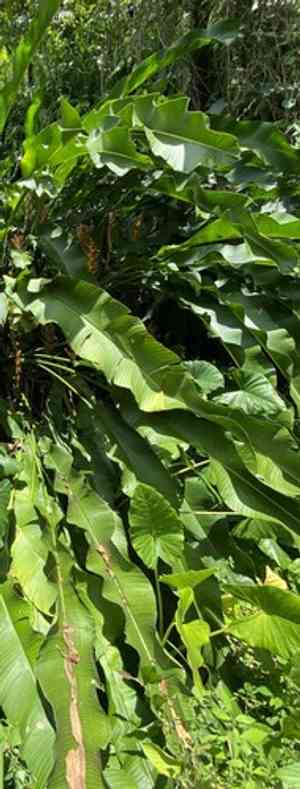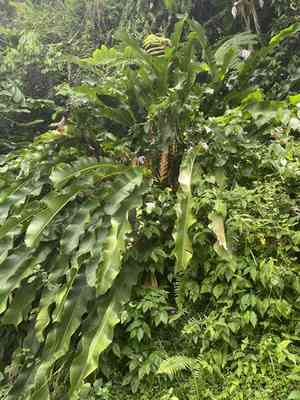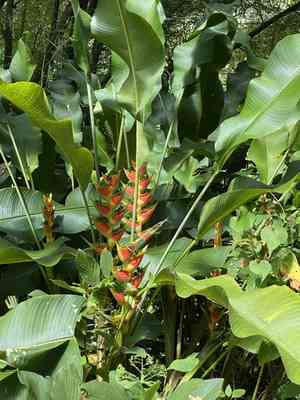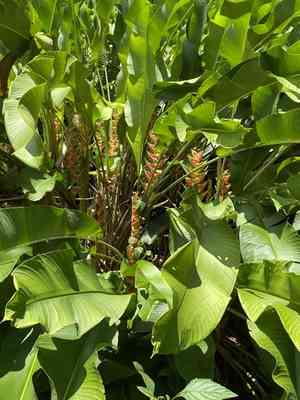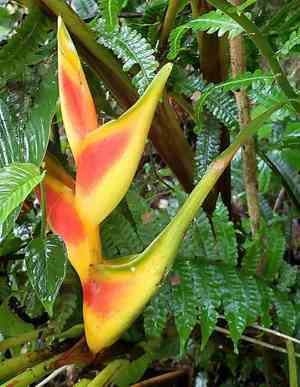
red christmas(Heliconia wagneriana)

red christmas (Heliconia wagneriana)

Also known as: christmas heliconia

Planting Red Christmas plants, often referring to Poinsettias, offers multiple benefits for your garden:

1. **Visual Impact**: Their striking red bracts provide a festive and eye-catching display.
2. **Holiday Tradition**: These plants are synonymous with holiday decor, adding seasonal charm.
3. **Low Care Requirements**: Poinsettias are easy to maintain, needing only basic care.
4. **Adaptability**: Suitable for both indoor and outdoor settings, they are versatile additions to any garden.
5. **Cultural Significance**: They symbolize joy and celebration, enhancing the garden's emotional and festive atmosphere.

In summary, Red Christmas plants can bring vibrant color, festive spirit, and ease of care to your garden, making them a delightful choice.

Attributes of red christmas

Lifespan
Perennial
Plant Type
Shrub
Plant Height
1.5 to 4.5 m
Spread
1-2 meters
Leaf Color
Green
Flower Size
5-10 cm
Flower Color
Green Red Yellow Gold

ForwardPlant - Identify plants with a snap

Identify and diagnose plants, get toxicity alerts, and explore safety guides for all types of fungi.

Try for Free

Images of red christmas

red christmas(Heliconia wagneriana)

Quickly Identify red christmas

1
Heliconia wagneriana can be identified by its long, banana-like leaves and its distinctive bracts which are bright red or pink with yellow or green edges. The actual flowers are small and hidden within the bracts.

Scientific Classification of red christmas

Phylum
Vascular plants
Class
Monocotyledons
Order
Zingiberales
Family
Heliconia
Genus
Lobster-claws
Species
red christmas

Planting and Growing of red christmas

Care Difficulty
Moderate
Watering Schedule
Every 4 days
Sunlight Requirements
Partial sun
Sunshine Duration
6-10 hours
Ideal Temperature
70-85℉
Soil Type
Potting Mix, Peat Mix
Soil pH
5.5-7.5
Fertilizer Type
Balanced
Pruning Season
Spring, Summer
Pruning Area
Branches, Leaves
Pruning Frequency
2 times a year
Repotting Season
Spring
Pot Type
Plastic, Ceramic

water icon How to Water red christmas?

For Heliconia wagneriana, it's important to water so that the soil remains consistently moist but not waterlogged. Aim for about 500 ml of water each time, ensuring that moisture reaches well down to the root zone without leaving standing water.
What are the symptoms of an underwatered red christmas?
What should I do if my red christmas is not getting enough water?
What are the symptoms of an overwatered red christmas?
How to save an overwatered red christmas?

sunlight icon What Are the Sunlight Requirements for red christmas?

Sunlight Requirements: Partial sun, Full sun
Duration of light: 6 to 8 hours daily
This plant prefers partial to full sun, benefiting from bright to moderate light conditions. Ideal light promotes optimal energy absorption for robust growth and brilliant flowers.
What is Heliconia wagneriana's ideal sunlight level?
How can I ensure optimal lighting indoors?
Why is ideal lighting important for Heliconia wagneriana?

temperature icon What Is the Ideal Temperature Range for red christmas?

Ideal Temperature: 70 ~ 85℉
The ideal temperature range for Heliconia wagneriana is between 70°F and 85°F. In this range, the plant can thrive, showing vibrant colors in its foliage and flowers. Temperatures within this range promote optimal photosynthesis and overall health, supporting the plant’s biological processes efficiently.

soil icon What Soil is Best for red christmas?

Soil type: Loam, Sandy loam
Soil PH: 5.5 ~ 7.5
Heliconia wagneriana thrives in nutrient-rich soil that supports robust root development and vibrant foliage. High organic matter content enhances microbial activity, improving soil fertility and boosting the plant's overall health. This plant prefers well-draining soil that prevents waterlogging, which can lead to root rot. Adequate drainage ensures roots receive the necessary oxygen, promoting vigorous growth and flowering. Heliconia wagneriana benefits from soil that retains sufficient moisture without becoming waterlogged. Consistent moisture availability supports sustained growth and helps maintain lush, healthy leaves.

fertilize icon How to Fertilize red christmas?

Fertilizer type: Balanced
Heliconia wagneriana benefits from a balanced nutrient intake. Use a well-balanced fertilizer with an N-P-K ratio of 10-10-10 or similar. For liquid fertilizers, dilute to half the recommended strength to avoid root burn.

prune icon How to Prune red christmas?

Pruning Time: Spring, Summer, Autumn
Begin by inspecting the plant to locate any dead, damaged, or diseased stalks. Use clean, sharp shears to remove these stalks at their base. This encourages new growth and diverts energy to healthier parts of the plant. Trim back excess foliage to shape the plant to your desired form. Heliconia wagneriana has a beautiful natural structure, so be careful to maintain its unique silhouette while removing any crowding or overlapping leaves. More About Pruning Techniques

propagate icon How to Propagate red christmas plant?

Propagate Time: Spring, Early Summer
1
Collect ripe seeds from the Heliconia wagneriana and soak them in warm water for 24 hours to enhance germination rates. Prepare a sterilized container with seed-starting mix.
2
Select healthy, vigorous stems for cuttings. Cut about 4-6 inches long, remove lower leaves, dip the cut end in rooting hormone, and plant in moist soil.
3
Carefully uproot the plant, ensuring minimal root damage. Divide the rhizome into sections with at least one growing eye, and plant in suitable containers.
More About Propagating Techniques

repot icon How to Repot red christmas plant?

Repotting frequency: Every 2-3 years
1
Heliconia wagneriana shows signs like reduced growth, roots protruding from the pot, or water not draining properly as indicators for repotting. Ideally, it is best to repot during the growing season to minimize stress.
2
Select a pot that is 1-2 inches larger in diameter than the current one. Materials like terracotta or plastic work well, ensuring the container has drainage holes. This choice helps in providing ample space and prevents waterlogged roots.
3
Opt for a well-draining potting mix, ideally one that mimics the plant's natural environment. A mix containing peat, perlite, and sand is beneficial as it balances moisture retention with proper drainage, crucial for healthy root growth.

ForwardPlant - Identify plants with a snap

Find the best spots for them to optimize their health, simply using your phone.

Try for Free