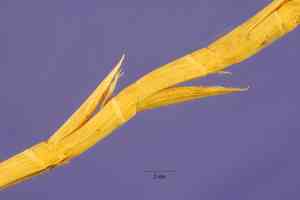
Barb grass (Hainardia cylindrica)
Also known as: Thintail grass
Barb grass (Hainardia cylindrica), also known as Thintail, is an annual grass that can reach up to 46 cm in height. It commonly thrives in coastal areas, particularly in salt marshes and wetlands with alkaline soils. This grass features small green flowers that typically bloom in the spring.
In This Article
Attributes of Barb grass
Lifespan
Annual
Plant Type
Grass
Plant Height
40 cm
Spread
Not applicable
Leaf Color
Green
Flower Size
0.5-1 cm
Flower Color
Greenish to yellowish
Quickly Identify Barb grass
1
This plant can be identified by its cylindrical spikelets and slender, flexible stems. The spikelets tend to be arranged in a dense, barrel-like formation.
Scientific Classification of Barb grass
Phylum
Vascular plants
Class
Monocotyledons
Order
Poales
Family
Grass
Genus
Barbgrass
Species
Barb grass
Planting and Growing of Barb grass
Care Difficulty
Easy
Watering Schedule
Every 2 days
Sunlight Requirements
Full sun
Sunshine Duration
6-10 hours
Ideal Temperature
60-77℉
Soil Type
Potting Mix, Peat Mix
Soil pH
6.5-7.5
Fertilizer Type
Balanced
Pruning Season
Spring, Summer
Pruning Area
Branches, Leaves
Pruning Frequency
2 times a year
Repotting Season
Spring
Pot Type
Plastic, Ceramic
 How to Water Barb grass?
For Hainardia cylindrica, the amount of water per session should be approximately 500 ml. This amount ensures that the soil is thoroughly moistened, but not waterlogged. The goal is to reach optimal soil moisture that supports root health without promoting rot. The soil should feel evenly damp about an inch beneath the surface, ensuring the roots have access to sufficient moisture.
What are the symptoms of an underwatered Barb grass?
›
What should I do if my Barb grass is not getting enough water?
›
What are the symptoms of an overwatered Barb grass?
›
How to save an overwatered Barb grass?
›
 What Are the Sunlight Requirements for Barb grass?
Hainardia cylindrica performs best in full to partial sunlight environments. This balance provides enough energy for robust growth, ensuring productive metabolic processes and minimizing stress-related issues, which promote healthy foliage and flowering.
What kind of sunlight does Hainardia cylindrica thrive in?
›
How can we achieve these ideal lighting conditions?
›
What benefits arise from ideal sunlight conditions for Hainardia cylindrica?
›
 What Is the Ideal Temperature Range for Barb grass?
The ideal temperature range for cultivating Hainardia cylindrica is between 60°F to 77°F. Within this range, the plant can perform physiological processes efficiently, such as photosynthesis, water uptake, and nutrient absorption, ensuring healthy growth and development.
 What Soil is Best for Barb grass?
Hainardia cylindrica thrives in well-drained soil, ensuring that water doesn't linger and cause root rot. Well-drained soil allows the roots to breathe and prevents fungal growth, facilitating robust plant development. While it can tolerate poor soil, nutrient-rich soil enhances its growth. A soil rich in organic matter provides essential nutrients that support the plant's metabolic activities, leading to healthier and more vigorous growth. The plant prefers soils with low salinity levels, as high salt concentrations can hinder water uptake. Maintaining low salinity ensures that the plant remains hydrated and metabolically active, promoting better growth and resilience.
 How to Fertilize Barb grass?
For Hainardia cylindrica, using a balanced 10-10-10 fertilizer is recommended. When applying liquid fertilizer, ensure the solution is diluted to half-strength to avoid over-fertilization. This is usually around 1 teaspoon per gallon of water.
 How to Prune Barb grass?
Begin by inspecting Hainardia cylindrica for any dead, damaged, or diseased stems. Removing these parts first is crucial as they can drain the plant’s nutrients and spread disease. Use sharp pruning shears to make clean cuts just above the node of healthy tissue. Once dead and damaged areas are removed, focus on shaping the plant for a neat appearance. Trim any overgrown areas to maintain the plant's natural shape. This helps light penetrate through the foliage, encouraging healthy growth throughout. In dense areas of the plant, selectively remove stems to prevent overcrowding. This thinning process enhances air circulation, which is vital to prevent fungal infections and allows better nutrient distribution.
More About Pruning Techniques→
 How to Propagate Barb grass plant?
1
Fill the seed tray with a moist, sterile potting mix. Ensure that the soil has good drainage to prevent waterlogging, which can hinder germination and promote disease.
2
Scatter the Hainardia cylindrica seeds evenly on the surface of the potting mix. Avoid covering the seeds with too much soil as they need some light to germinate. Lightly press them into the soil instead.
3
Gently water the tray to keep the soil moist but not soggy. Cover the tray with clear plastic or a lid to maintain humidity, but ensure there is venting to allow some air circulation.
 How to Repot Barb grass plant?
1
Hainardia cylindrica shows a few signs when it's time to repot. If you notice roots starting to circle the pot's perimeter or coming through the drainage holes, it's definitely time. Additionally, a stunted growth or the soil drying out quickly can also signal the need for new growing space. Aim for repotting during milder months like spring or autumn for easier transition.
2
Select a pot that is only slightly larger than the current one. This helps prevent the risks associated with root rot, as it allows the soil to dry out more efficiently. Ensure that the pot has ample drainage holes to avoid water accumulation. Choose materials like terra cotta which encourage moisture evaporation, particularly vital for plants needing well-drained soil.
3
Opt for well-draining sandy soil, suited perfectly for Hainardia cylindrica's growth needs. This type of soil prevents the plant's roots from sitting in water, thus mitigating the threat of rot. Enriched with organic matter, sandier soils also offer nutrients without compromising the required drainage, ensuring a healthy root system and vigorous plant growth.
Learn More About Barb grass Diseases
Anthracnose
Bacterial Leaf Spot
Bacterial Wilt
Chemical Injury
Cyst Nematode
Damping-off
Downy Mildew
Drought Stress
Fusarium Wilt
Gray Mold
Leaf Spot
Mosaic
Nutrient Deficiency
Nutrient Toxicity
Powdery Mildew
Root Rot
Root-knot Nematode
Rusts
Sooty Mold
Spider Mites
Temperature Stress
Thrips Damage
White Mold



