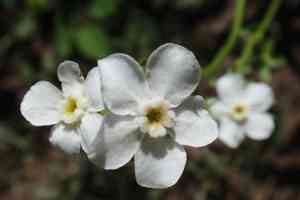
California stickseed (Hackelia californica)
Also known as: California stickseed, Bugloss
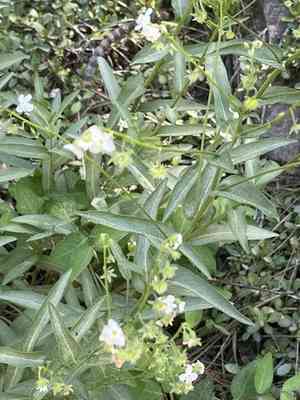
The California stickseed, a native perennial herb, features clusters of purple or blue flowers and bristly leaves. It flourishes across California's varied climates, from coastal zones to mountainous regions, thanks to its strong adaptability. The plant grows upright, reaching up to three feet, with rough, lance-shaped leaves. Its burr-like fruits facilitate seed dispersal by attaching to animals and humans, enhancing its ability to spread across different environments.
In This Article
Attributes of California stickseed
Lifespan
Perennial
Plant Type
Herb
Plant Height
0.5 to 1.5 meters
Spread
Typically not applicable for this type of plant
Leaf Color
Green
Flower Size
Approximately 1 cm
Flower Color
Blue to purple
Images of California stickseed
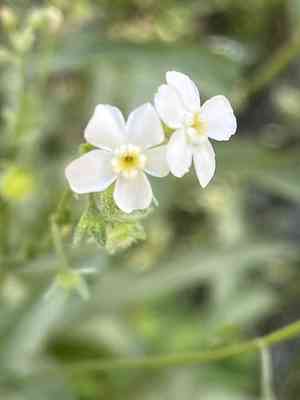
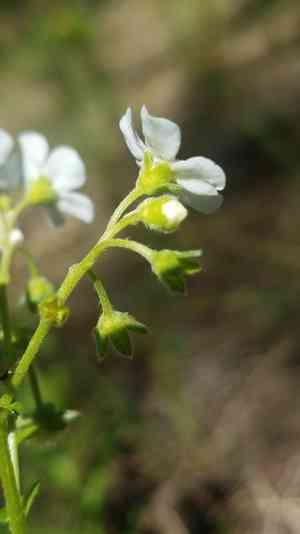
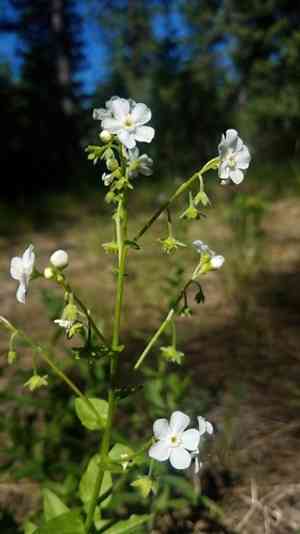
Quickly Identify California stickseed
1
The plant can be identified by its bristly hairs, blue to purple flowers in small clusters, and lance-shaped leaves. The fruit is covered in barbed prickles that stick to animal fur and clothing.
Scientific Classification of California stickseed
Phylum
Vascular plants
Class
Dicotyledons
Order
Boraginales
Family
Borage
Genus
Stickseeds
Species
California stickseed
Planting and Growing of California stickseed
Care Difficulty
Moderate
Watering Schedule
Every 3 days
Sunlight Requirements
Partial sun
Sunshine Duration
6-10 hours
Ideal Temperature
65-75℉
Soil Type
Potting Mix, Peat Mix
Soil pH
6.5-7.5
Fertilizer Type
Balanced
Pruning Season
Spring, Summer
Pruning Area
Branches, Leaves
Pruning Frequency
3 times a year
Repotting Season
Spring
Pot Type
Plastic, Ceramic
 How to Water California stickseed?
Hackelia californica prefers its soil to be kept consistently moist but not soggy. Watering with about 200 ml each time ensures that the water reaches the roots without drowning them, maintaining a balance that mimics its natural habitat. Aim to saturate the soil until water begins to drain from the bottom of the pot, indicating enough moisture has reached the root zone.
What are the symptoms of an underwatered California stickseed?
›
What should I do if my California stickseed is not getting enough water?
›
What are the symptoms of an overwatered California stickseed?
›
How to save an overwatered California stickseed?
›
 What Are the Sunlight Requirements for California stickseed?
Hackelia californica thrives in partial sun to full shade environments. Ideal light fosters healthy foliage, stimulates flower development, and reduces stress-related issues, making it an optimal growing choice.
What is the ideal light intensity?
›
How to achieve ideal light conditions?
›
Benefits of ideal light conditions?
›
 What Is the Ideal Temperature Range for California stickseed?
Hackelia californica thrives best within a temperature range of 65°F to 75°F. At these temperatures, the plant can efficiently perform photosynthesis, enabling proper growth and development. This range allows the plant to maintain its physiological processes without stress.
 What Soil is Best for California stickseed?
Hackelia californica thrives best in well-draining soil because excess moisture can lead to root rot. Loam or sandy loam provides the ideal environment for preventing waterlogging while ensuring that roots remain aerated and healthy. Rich soil with abundant nutrients fosters robust growth and vibrant blooms. This plant benefits from soil that contains organic matter, which enhances fertility and supports sustained development during the growing season. While it is crucial for the soil to drain well, retaining some moisture is beneficial to Hackelia californica. Adequate moisture ensures that the plant remains hydrated without risking water stress, crucial during dry spells.
 How to Fertilize California stickseed?
For Hackelia californica, the recommended amount of fertilizer is moderate. Using a balanced fertilizer with equal parts of nitrogen, phosphorus, and potassium is advisable. A diluted liquid fertilizer at half strength works well every two weeks during the growing season.
 How to Prune California stickseed?
Begin pruning Hackelia californica in spring, as it starts its active growth phase. Use sharp, clean shears to cut back dead or damaged stems first. Trim away any crowded areas to improve air circulation, focusing on the plant's interior. Aim to retain the plant's natural shape, removing any overly long or errant shoots to maintain its bushy appearance. Take care not to cut back more than one-third of the plant at any time to avoid stressing it.
More About Pruning Techniques→
 How to Propagate California stickseed plant?
1
Harvest seeds when the seed pods have dried on the plant naturally. Carefully remove them without breaking the pods to maximize viable seed collection.
2
Create a loose, well-draining soil mix rich in organic matter. The mix should retain some moisture but drain excess water to prevent rot, essential for both seeds and root cuttings.
3
Select healthy parent plants and gently unearth some roots. Using a clean knife, cut sections of root approximately 2 to 3 inches long to be used for propagation.
 How to Repot California stickseed plant?
1
Hackelia californica shows signals of needing repotting when growth appears stunted, the plant dries out quickly, or roots emerge from drainage holes. Optimal repotting times are during active growth phases in spring or early summer to reduce stress and encourage rapid recovery.
2
Select a pot that is 1-2 inches larger than the current one with ample drainage holes. This ensures adequate space for root expansion and prevents overwatering, promoting a healthy root system. A terracotta pot can additionally help regulate soil moisture.
3
Choose a well-draining loam mix, enriched with organic matter, to enhance aeration and prevent root rot. This type of soil structure supports healthy root growth by maintaining moisture balance while delivering nutrients effectively.
Learn More About California stickseed Diseases
Anthracnose
Bacterial Leaf Spot
Bacterial Soft Rot
Bacterial Wilt
Black Spot
Chemical Injury
Crown Gall
Cyst Nematode
Damping-off
Downy Mildew
Drought Stress
Fusarium Wilt
Gray Mold
Leaf Spot
Mosaic
Nutrient Deficiency
Nutrient Toxicity
Powdery Mildew
Root Rot
Root-knot Nematode
Rusts
Sooty Mold
Spider Mites
Temperature Stress
Thrips Damage
White Mold



