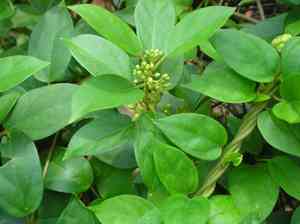
Australian cowplant (Gymnema sylvestre)
Also known as: Periploca of the woods
The Australian cowplant (Gymnema sylvestre) commonly inhabits tropical and subtropical forests, aligning with its Latin name 'sylvestre,' meaning 'of the forest.' It also adapts well to home gardens where it prefers well-drained, nutrient-rich soil.
In This Article
Attributes of Australian cowplant
Lifespan
Perennial
Plant Type
Vine
Plant Height
4 m
Spread
30 cm
Leaf Color
Dark green
Flower Size
2 mm
Flower Color
Yellow Green
Images of Australian cowplant
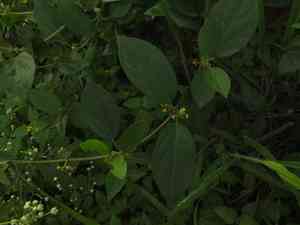
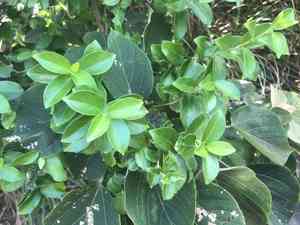
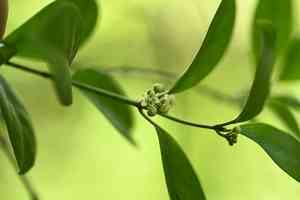
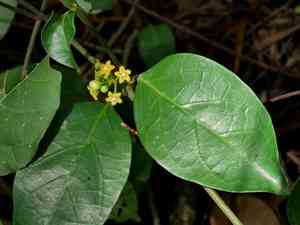
Quickly Identify Australian cowplant
1
Gymnema sylvestre can be identified by its opposite, oval-shaped leaves with a smooth surface and distinct midrib. The plant produces small, yellow flowers in clusters, and its leaves are pronounced with a fine hair on the undersides.
Scientific Classification of Australian cowplant
Phylum
Vascular plants
Class
Dicotyledons
Order
Gentianales
Family
Dogbane
Genus
Gymnema
Species
Australian cowplant
Planting and Growing of Australian cowplant
Care Difficulty
Easy
Watering Schedule
Every 2 days
Sunlight Requirements
Partial sun
Sunshine Duration
6-8 hours
Ideal Temperature
75-85℉
Soil Type
Potting Mix, Peat Mix
Soil pH
6.5-7.5
Fertilizer Type
Balanced
Pruning Season
Spring, Summer
Pruning Area
Branches, Leaves
Pruning Frequency
2 times a year
Repotting Season
Spring
Pot Type
Plastic, Terracotta
 How to Water Australian cowplant?
For Gymnema sylvestre, it is essential to maintain consistent moisture in the soil, ideally giving it around 250 milliliters each time. The soil should be moderately moist but not soggy, aiming to reach a balance where excess water drains away to prevent root rot.
What are the symptoms of an underwatered Australian cowplant?
›
What should I do if my Australian cowplant is not getting enough water?
›
What are the symptoms of an overwatered Australian cowplant?
›
How to save an overwatered Australian cowplant?
›
 What Are the Sunlight Requirements for Australian cowplant?
Partial sun exposure is ideal for Gymnema sylvestre. It benefits from morning sun and afternoon shade, promoting healthy leaf development and preventing stress from extreme light exposure.
How much sun does Gymnema sylvestre need?
›
Solutions for achieving ideal lighting
›
Benefits of ideal lighting
›
 What Is the Ideal Temperature Range for Australian cowplant?
The ideal temperature range for Gymnema sylvestre is between 75°F and 85°F. This range provides the optimal conditions for growth and development, ensuring the plant thrives. Maintaining this temperature helps in proper photosynthesis and nutrient uptake.
 What Soil is Best for Australian cowplant?
Gymnema sylvestre thrives in well-drained soils, preventing water accumulation around the roots. This drainage ensures healthy growth and prevents root diseases. A soil rich in organic matter and nutrients supports the robust growth of Gymnema sylvestre, enhancing its medicinal properties and vitality. Gymnema sylvestre benefits from moderately fertile soil, offering balanced nutrients that foster sustainable plant health without over-fertilization.
 How to Fertilize Australian cowplant?
Gymnema sylvestre prefers a light feeding approach. When using liquid fertilizer, apply a half-strength solution to avoid over-fertilizing. The plant thrives in nutrient-poor environments naturally, so a modest application is generally adequate.
 How to Prune Australian cowplant?
Using sharp and clean pruning shears is essential when trimming Gymnema sylvestre. Dull tools can cause ragged cuts which may become entry points for diseases. Always disinfect your shears before and after pruning to prevent the spread of pathogens. A clean cut promotes quicker healing and reduces stress on the plant. Inspect your Gymnema sylvestre for any dead or brown stems. Removing these sections is vital to redirect the plant's energy towards new growth, improving its vigor. Prune back to the nearest healthy part of the stem to maintain the plant's aesthetic and structural integrity. To promote a bushier appearance, trim above a node where you want new growth to emerge. This method encourages side shoots, resulting in a fuller and more visually appealing plant. Ensure cuts are made at a 45-degree angle for optimal growth. If your Gymnema sylvestre has grown too tall or leggy, cut back the main stem to control its height. This will help the plant maintain a manageable size, especially if it's grown indoors or in limited space. Always assess the plant's environment before making drastic cuts to reduce stress.
 How to Propagate Australian cowplant plant?
1
Before sowing, Gymnema sylvestre seeds should be cleaned and soaked in water overnight. This helps in softening the seed coat and can enhance germination rates, making seedlings emerge more uniformly.
2
Choose healthy, non-flowering stems and cut them 4-6 inches long. Remove leaves from the lower part of the cutting. Plant the cuttings in well-drained soil, ensuring the nodes are buried to promote root development.
3
The cuttings and seeds require consistent moisture. Use a mist bottle to lightly spray water, maintaining a humid environment. Ensure soil remains moist but not waterlogged to prevent root rot.
 How to Repot Australian cowplant plant?
1
Repotting should occur when the roots start circling the bottom of the pot or when growth becomes stunted. Another clear sign is if the soil seems to dry out more quickly than usual after watering. These are indications that your Gymnema sylvestre needs more space and fresh soil to thrive.
2
Select a pot that is about 2 inches larger in diameter than the current pot. Ensure it has drainage holes to prevent water from accumulating and causing root rot. A pot that's too large can retain excess moisture, leading to root issues, so opt for a modest increase in size.
3
Choose a well-draining potting mix enriched with organic matter. This blend prevents root rot by allowing excess water to escape while providing nutrients. Amend the mix with some sand or perlite to enhance drainage, which is crucial for a plant like Gymnema sylvestre that prefers not to sit in soggy conditions.
Learn More About Australian cowplant Diseases
Anthracnose
Bacterial Leaf Spot
Bacterial Soft Rot
Bacterial Wilt
Black Spot
Chemical Injury
Crown Gall
Cyst Nematode
Damping-off
Downy Mildew
Drought Stress
Fusarium Wilt
Gray Mold
Leaf Curl
Leaf Spot
Mosaic
Nutrient Deficiency
Nutrient Toxicity
Powdery Mildew
Root Rot
Root-knot Nematode
Rusts
Sooty Mold
Spider Mites
Temperature Stress
Thrips Damage
White Mold



