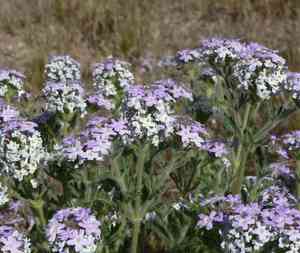
Southwestern mock vervain (Glandularia gooddingii)
Also known as: Goodding's Verbena, Southwestern Mock Vervain
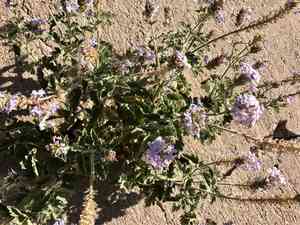
The plant in question is likely the Southwestern mock vervain, a perennial herb known for its sprawling growth. It often covers the ground in sunny, arid regions. Its striking purple, funnel-shaped flowers cluster at the ends of stems, attracting pollinators. This plant also features serrated leaves and is well-adapted to drought conditions, thriving in harsh, dry environments.
In This Article
Attributes of Southwestern mock vervain
Lifespan
Perennial
Plant Type
Herb
Plant Height
0 mm to 30 cm
Spread
Can spread up to 60 cm (24 inches)
Leaf Color
Green
Flower Size
Approximately 2.5 cm (1 inch)
Flower Color
Purple to lavender
Images of Southwestern mock vervain
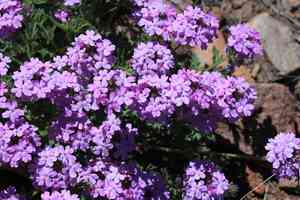
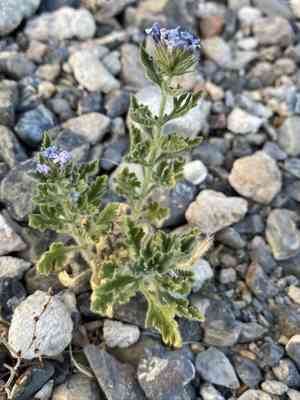
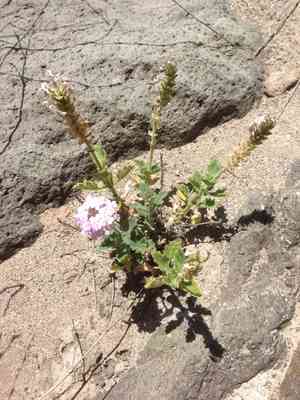
Quickly Identify Southwestern mock vervain
1
This plant can be identified by its bright purple to lavender flower clusters, deeply lobed leaves, and a glandular, hairy stem. It typically grows in rocky or sandy soils.
Scientific Classification of Southwestern mock vervain
Phylum
Vascular plants
Class
Dicotyledons
Order
Lamiales
Family
Verbena
Genus
Mock vervain
Species
Southwestern mock vervain
Planting and Growing of Southwestern mock vervain
Care Difficulty
Easy
Watering Schedule
Every 2 days
Sunlight Requirements
Full sun
Sunshine Duration
4-8 hours
Ideal Temperature
60-75℉
Soil Type
Potting Mix, Peat Mix
Soil pH
6.5-7.5
Fertilizer Type
Balanced
Pruning Season
Spring, Summer
Pruning Area
Branches, Leaves
Pruning Frequency
Once a year
Repotting Season
Spring
Pot Type
Plastic, Ceramic
 How to Water Southwestern mock vervain?
Glandularia gooddingii thrives with moderate watering. The principle to follow is to water thoroughly until the soil is moist but not waterlogged. Ensure that the top inch of soil is dry before watering again.
What are the symptoms of an underwatered Southwestern mock vervain?
›
What should I do if my Southwestern mock vervain is not getting enough water?
›
What are the symptoms of an overwatered Southwestern mock vervain?
›
How to save an overwatered Southwestern mock vervain?
›
 What Are the Sunlight Requirements for Southwestern mock vervain?
Preferring full to partial sun, Glandularia gooddingii thrives when basked in 6-8 hours of sunlight. This exposure ensures robust flowering, vibrant leaves, and ideal growth conditions.
How much sun does Glandularia gooddingii need?
›
What happens if it gets too much sun?
›
How can I ensure it gets the right amount of light?
›
 What Is the Ideal Temperature Range for Southwestern mock vervain?
The ideal temperature range for the growth of Glandularia gooddingii is between 60°F and 75°F. This range provides a suitable balance for photosynthesis and respiration, ensuring optimal growth and development. Proper temperature management within this range can lead to vibrant blooming and healthy foliage.
 What Soil is Best for Southwestern mock vervain?
Glandularia gooddingii thrives in soil that provides excellent drainage. This prevents waterlogging, which can lead to root rot, ensuring the plant's health and encouraging lush growth. This plant requires soil with moderate nutrient content. Rich soil can lead to excessive leaf growth and poor flowering, while nutrient-poor soil may stunt development. The plant prefers a soil texture that is light and airy, which facilitates root expansion and enhances overall stability and growth efficiency.
 How to Fertilize Southwestern mock vervain?
When fertilizing Glandularia gooddingii, use a balanced fertilizer at half the recommended strength, approximately 100 ml per plant. Over-fertilizing can lead to excess salt build-up and root damage, while under-fertilizing can result in poor growth and fewer blooms.
 How to Prune Southwestern mock vervain?
Begin by removing any dead or damaged stems. This improves air circulation and reduces the risk of fungal diseases, promoting healthy growth. Trim back overgrown or leggy areas to maintain a rounded, bushy shape. This not only improves aesthetics but also encourages more blooms. Avoid cutting back more than one-third of the plant at a time. Over-pruning can stress the plant and impact its flowering capability.
More About Pruning Techniques→
 How to Propagate Southwestern mock vervain plant?
1
Start by filling a seed tray with a seed-starting mix. Sow the seeds on the surface of the mix and lightly cover with a thin layer of sand or vermiculite. Water gently to moisten the soil. Keep the tray in a bright location, ensuring consistent moisture until germination occurs.
2
Select a healthy stem from the parent plant and make a clean cut using sterilized pruners. The cutting should be about 4-6 inches long. Remove the lower leaves, ensuring at least two leaves remain at the top. Dip the cut end in rooting hormone to enhance root development.
3
Plant cuttings into a pot filled with a mix of perlite and peat. Ensure that the cuttings are inserted at least a couple of inches into the soil. Mist the cuttings regularly and cover them with a plastic bag to maintain humidity. Place the pot in a location with bright, indirect light.
 How to Repot Southwestern mock vervain plant?
1
Repot this plant when you notice roots spiraling around the pot's bottom, or when the soil is depleting its nutrients. Wilting despite proper watering may also indicate it's time. Optimal repotting occurs in spring or summer when the plant is actively growing, ensuring a swift recovery.
2
Select a pot that is 1-2 inches larger in diameter than the current one. Ensure it has drainage holes to prevent waterlogging, which can cause root rot. A slightly bigger size allows roots space to grow and access to more nutrients, promoting healthier plant development.
3
Use a well-draining soil mix, incorporating materials like perlite or coarse sand to enhance drainage. This prevents water retention, reducing the risk of root diseases and encouraging robust plant growth by allowing oxygen to reach the roots effectively.
Learn More About Southwestern mock vervain Diseases
Anthracnose
Bacterial Leaf Spot
Bacterial Wilt
Chemical Injury
Crown Gall
Damping-off
Downy Mildew
Drought Stress
Fusarium Wilt
Gray Mold
Leaf Curl
Leaf Spot
Mosaic
Nutrient Deficiency
Nutrient Toxicity
Powdery Mildew
Root Rot
Root-knot Nematode
Rusts
Sooty Mold
Spider Mites
Temperature Stress
Thrips Damage
White Mold



