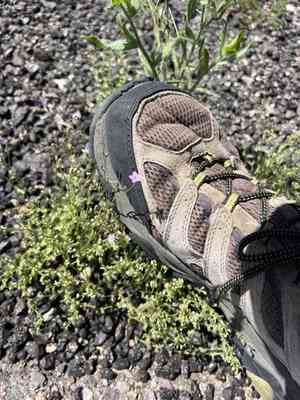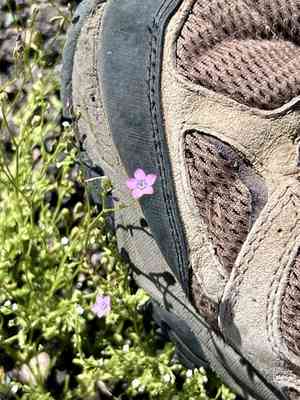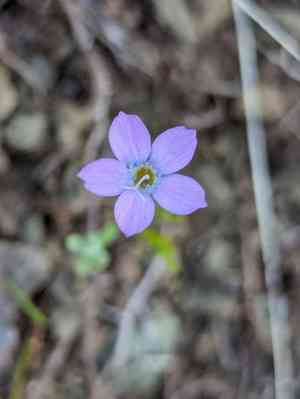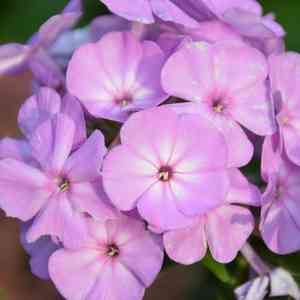
Lesser yellowthroat gilia(Gilia flavocincta)

Lesser yellowthroat gilia (Gilia flavocincta)

Also known as: Yellowthroat Gilia, Yellow-eyed Gilia

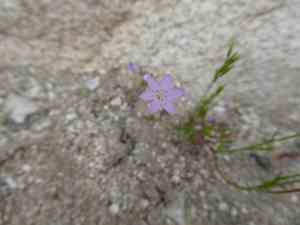
The lesser yellowthroat gilia (Gilia flavocincta) is a resilient wildflower, easily recognized by its slender, upright growth and narrow leaves. Its eye-catching flowers, which feature a striking combination of yellow edges and a deep purple throat, are designed to attract pollinators. This wildflower is well-suited to arid landscapes due to several key adaptations. Its deep taproots enable it to reach water far below the surface, while its small leaves minimize water loss. Additionally, the seeds of the lesser yellowthroat gilia can remain dormant until conditions are favorable, ensuring the plant's survival in dry, open areas. These characteristics collectively enable it to flourish in harsh, dry environments.

Attributes of Lesser yellowthroat gilia

Lifespan
Annual
Plant Type
Herb
Plant Height
0 mm to 30 cm
Spread
N/A
Leaf Color
Green
Flower Size
1-2 cm
Flower Color
Blue to violet with a yellow throat

ForwardPlant - Identify plants with a snap

Identify and diagnose plants, get toxicity alerts, and explore safety guides for all types of fungi.

Try for Free

Images of Lesser yellowthroat gilia
Lesser yellowthroat gilia(Gilia flavocincta)

Quickly Identify Lesser yellowthroat gilia

1
Gilia flavocincta can be identified by its delicate, pinnately dissected leaves and its characteristic blue to violet flowers with a distinct yellow throat. The plant often grows in sandy or rocky soils.

Scientific Classification of Lesser yellowthroat gilia

Phylum
Vascular plants
Class
Dicotyledons
Order
Ericales
Family
Phlox
Genus
Gilia
Species
Lesser yellowthroat gilia

Planting and Growing of Lesser yellowthroat gilia

Care Difficulty
Moderate
Watering Schedule
Every 2 days
Sunlight Requirements
Full sun
Sunshine Duration
4-6 hours
Ideal Temperature
60-80℉
Soil Type
Potting Mix, Peat Mix
Soil pH
6.5-7.5
Fertilizer Type
Balanced
Pruning Season
Spring, Summer
Pruning Area
Branches, Leaves
Pruning Frequency
2 times a year
Repotting Season
Spring
Pot Type
Plastic, Ceramic

water icon How to Water Lesser yellowthroat gilia?

Gilia flavocincta requires careful attention to its watering needs. When watering, ensure that you provide around 150 milliliters of water per session, soaking the soil deeply enough to reach the roots but not leaving it waterlogged. This deep watering ensures that the roots receive adequate moisture, promoting healthy growth while preventing root rot.
What are the symptoms of an underwatered Lesser yellowthroat gilia?
What should I do if my Lesser yellowthroat gilia is not getting enough water?
What are the symptoms of an overwatered Lesser yellowthroat gilia?
How to save an overwatered Lesser yellowthroat gilia?

sunlight icon What Are the Sunlight Requirements for Lesser yellowthroat gilia?

Sunlight Requirements: Full sun, Partial sun
Duration of light: 6 to 8 hours daily
The ideal light range for Gilia flavocincta involves full to partial sunlight exposure. This condition not only supports robust plant health but also ensures vibrant bloom coloration, enhancing its visual appeal and ecological function.
What is the best lighting setup for Gilia flavocincta?
How can I achieve this lighting condition?
What benefits does the right lighting offer Gilia flavocincta?

temperature icon What Is the Ideal Temperature Range for Lesser yellowthroat gilia?

Ideal Temperature: 60 ~ 80℉
The ideal temperature range for Gilia flavocincta is between 60°F and 80°F. This range ensures optimal growth and flowering. At these temperatures, the metabolism of the plant is at its most efficient, enhancing its ability to synthesize nutrients and maximize photosynthesis.

soil icon What Soil is Best for Lesser yellowthroat gilia?

Soil type: Sandy soil, Sandy loam
Soil PH: 6.5 ~ 7.5
Gilia flavocincta thrives in well-draining soils, allowing excess water to quickly move away from the roots. This prevents root rot and simulates its natural dry habitat. This plant requires a nutrient-lean soil, as nutrient-rich soils can impair growth. It mirrors its native desert-like conditions where nutrients are sparse. Sandy loams with moderate moisture retention suit Gilia flavocincta, offering enough water without saturation, ensuring the plant remains vigorous.

fertilize icon How to Fertilize Lesser yellowthroat gilia?

Fertilizer type: Balanced
When fertilizing Gilia flavocincta, apply a well-balanced liquid fertilizer at half the recommended strength to avoid over-fertilization. Ensure the soil is moist before applying the fertilizer to help with absorption. For slow-release fertilizers, use 1/4 cup per plant in early spring, as too much can lead to nutrient burn.

prune icon How to Prune Lesser yellowthroat gilia?

Pruning Time: Spring, Summer
Begin by examining the plant and identifying any stems that are dead, broken, or damaged. Trim these back to the base to encourage new, healthy growth. After dealing with unhealthy growth, move to shaping the plant. Trim back any overly long or wayward stems to maintain a compact and bushy shape, enhancing its natural beauty. Cut back spent flowers or seed pods to encourage the plant to divert its energy into producing new blooms rather than seeds. This promotes a longer flowering season. More About Pruning Techniques

propagate icon How to Propagate Lesser yellowthroat gilia plant?

Propagate Time: Spring, Early spring, Late spring
1
Sprinkle Gilia flavocincta seeds evenly onto the surface of a filled seed tray with fine potting mix. Cover them lightly with a thin layer of vermiculite to protect against drying and pests.
2
Moisten the potting mix with a fine mist spray to avoid disturbance of the seeds. Regularly check moisture levels to keep the seeds hydrated without waterlogging.
3
Place the seed trays under indirect sunlight or use grow lights for 12-14 hours daily. Light is crucial for photosynthesis and stimulating seed germination.
More About Propagating Techniques

repot icon How to Repot Lesser yellowthroat gilia plant?

Repotting frequency: Every 2-3 years
1
The best signals for repotting Gilia flavocincta are slowed growth, compacted root systems emerging from drainage holes, and poor soil drainage. Spring and early summer are optimal periods for repotting, as the plant's growth is more vigorous during this time, allowing for easier recovery from transplant shock.
2
Select a pot that is 1-2 inches larger in diameter than the current one. Ensure it has ample drainage holes to prevent waterlogging, which can be detrimental to Gilia flavocincta. A slightly bigger pot ensures space for root expansion, contributing to healthier plant growth without causing excessive soil moisture retention.
3
Opt for a well-drained sandy soil mix with excellent aeration. This type of soil mimics the plant’s natural habitat, prevents root rot, and promotes better nutrient absorption. A soil with good aeration supports robust root development, encouraging a more vibrant and flourishing plant.

ForwardPlant - Identify plants with a snap

Find the best spots for them to optimize their health, simply using your phone.

Try for Free