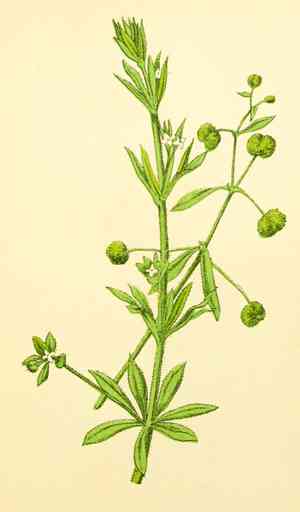
Southern cleavers (Galium verrucosum)
Also known as: None
The anis-lab herb is a small, branched therophyte, typically growing between 5 and 20 centimeters in height. The stalk is notably rough in texture. Its leaves measure approximately 1.3 to 4 centimeters in length and 1.5 to 5 millimeters in width, featuring a rough edge with forward-facing spikes. The leaves are arranged in whorls of five to six. This herb typically flowers during the summer season.
In This Article
Attributes of Southern cleavers
Lifespan
Annual
Plant Type
Herb
Plant Height
30-60 cm
Spread
Not applicable
Leaf Color
Green
Flower Size
1-2 mm
Flower Color
White
Images of Southern cleavers
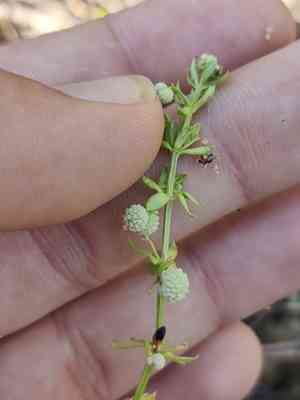
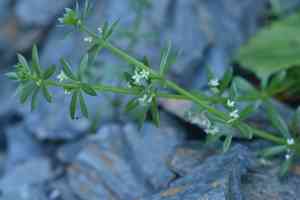
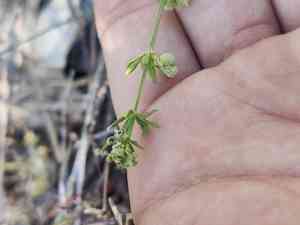
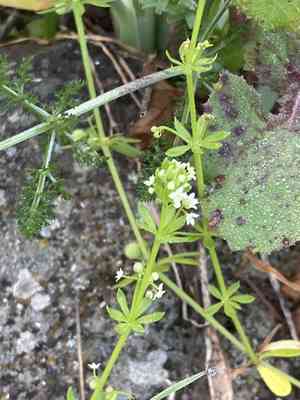
Quickly Identify Southern cleavers
1
To identify Galium verrucosum, look for its small, white, four-petaled flowers and its characteristic whorled leaves arranged in groups of 6-8 per node. The plant also has a slightly rough texture due to tiny wart-like projections on the stems.
Scientific Classification of Southern cleavers
Phylum
Vascular plants
Class
Dicotyledons
Order
Gentianales
Family
Madder
Genus
Bedstraws
Species
Southern cleavers
Planting and Growing of Southern cleavers
Care Difficulty
Easy
Watering Schedule
Every 2 days
Sunlight Requirements
Partial sun
Sunshine Duration
4-8 hours
Ideal Temperature
65-75℉
Soil Type
Potting Mix, Peat Mix
Soil pH
6.5-7.5
Fertilizer Type
Balanced
Pruning Season
Spring, Summer
Pruning Area
Branches, Leaves
Pruning Frequency
2 times a year
Repotting Season
Spring
Pot Type
Plastic, Ceramic
 How to Water Southern cleavers?
Galium verrucosum prefers its soil to be moderately moist. When watering, ensure you apply about 200ml of water each time. The goal is to moisten the soil thoroughly, but avoid waterlogging. A general rule of thumb is to allow the top 2 cm of the soil to dry out before watering again.
What are the symptoms of an underwatered Southern cleavers?
›
What should I do if my Southern cleavers is not getting enough water?
›
What are the symptoms of an overwatered Southern cleavers?
›
How to save an overwatered Southern cleavers?
›
 What Are the Sunlight Requirements for Southern cleavers?
Partial sun exposure, ideally 4 to 6 hours, allows Galium verrucosum to perform photosynthesis efficiently while avoiding the stress of full sun exposure. This range ensures robust growth and vibrant coloration in its leaves.
What is the best lighting condition for Galium verrucosum?
›
How can I ensure my plant receives perfect lighting?
›
What are the benefits of providing ideal lighting for Galium verrucosum?
›
 What Is the Ideal Temperature Range for Southern cleavers?
The ideal temperature range for cultivating Galium verrucosum is between 65°F and 75°F. Within this range, the plant can maintain optimal metabolic functions, leading to healthy growth and robust flowers. Staying within these temperatures helps ensure the plant receives adequate energy for vital processes such as photosynthesis. Furthermore, the ideal temperature supports proper nutrient uptake and minimizes stress, resulting in a resilient plant well-equipped to handle minor fluctuations in growing conditions.
 What Soil is Best for Southern cleavers?
Galium verrucosum thrives in well-draining soil as it prevents root rot and provides optimal oxygen levels. This ensures the plant absorbs nutrients effectively and promotes robust growth. A soil rich in organic matter supports the healthy development of Galium verrucosum, enhancing root establishment and fostering vigorous foliage. Compost or natural fertilizers can boost nutrient content. While well-draining, the soil should retain enough moisture to support Galium verrucosum's growth, especially during dry spells. This balance helps in maintaining consistent hydration without waterlogging the roots.
 How to Fertilize Southern cleavers?
Galium verrucosum doesn't require excessive fertilization. Use a mild balanced liquid fertilizer diluted to half strength, ensuring the nutrients are not too concentrated for the plant's delicate root system. When using granular fertilizers, aim for about 1/4 cup per square foot, mixed well into the soil to prevent root burn.
 How to Prune Southern cleavers?
Start by examining the plant to identify any old or dead growth. These parts will appear brown or wilted. Removing these will give the plant more energy to focus on new, healthy growth. Use sharp pruning shears to cut back the stems strategically, shaping the plant as desired, but maintaining the natural form. Focus on areas where the plant seems particularly dense to improve sunlight penetration. Make clean cuts on the stems just above a pair of leaves or a leaf node. This encourages new growth at these points, promoting a fuller and healthier plant.
More About Pruning Techniques→
 How to Propagate Southern cleavers plant?
1
Choose seeds from healthy, robust plants to increase chances of successful germination. These seeds should be dry, mature, and free from any signs of disease or damage.
2
Select non-flowering shoots, about 4-6 inches long, for cuttings. Ensure each cutting has a few sets of leaves and trim the base at a 45-degree angle for better rooting.
3
Plant the seeds or cuttings in well-draining soil. Water them lightly but make sure the soil remains moist, not soggy, to prevent rot and encourage root growth.
 How to Repot Southern cleavers plant?
1
Galium verrucosum, commonly known as the warty bedstraw, should be repotted when you notice roots growing out of drainage holes or the soil drying out too quickly. These are signs that the plant has outgrown its current home and requires a fresh setting to continue thriving. Spring is an ideal time as the plant is entering its active growth phase.
2
Select a pot only slightly larger than the current one, with ample drainage holes. A clay pot can be beneficial as it allows for better air circulation and moisture evaporation, preventing root rot. A well-sized pot ensures the plant doesn't swim in excess soil, which can lead to overwatering issues.
3
Opt for a well-draining potting mix, ideally a combination that includes sand, perlite, or peat moss. Such a mix mimics the plant's natural environment, allowing roots to breathe and reducing the risk of waterlogging and root rot, ensuring the health and vigor of your Galium verrucosum.



