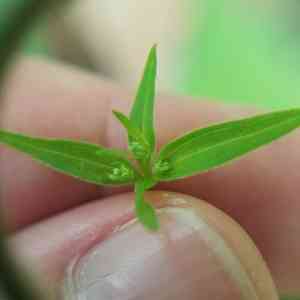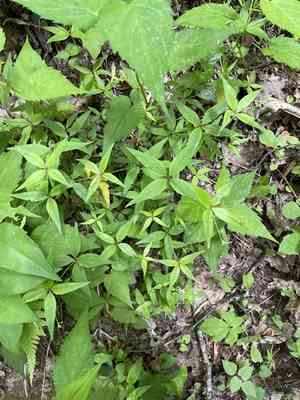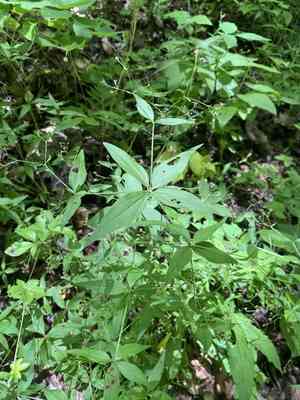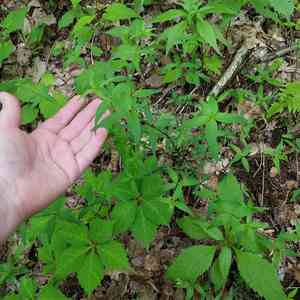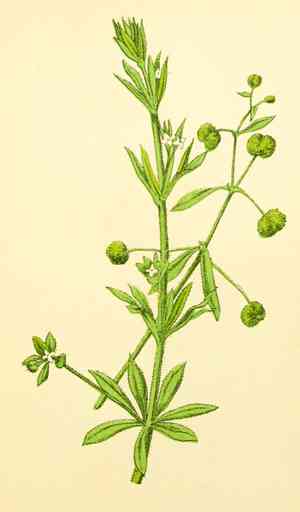
Purple bedstraw(Galium latifolium)

Purple bedstraw (Galium latifolium)

Also known as: Purple Bedstraw

Purple bedstraw (Galium boreale) is a hardy perennial herbaceous plant characterized by its slender, square stems and whorled, narrow leaves, typically grouped in fours. The plant produces small, star-shaped flowers that are usually white or pale purple, forming delicate clusters that bloom from late spring to early summer.

Preferring moist, well-drained soils, purple bedstraw is commonly found in a variety of settings, including meadows, open woods, grasslands, and stream banks. It thrives in environments with full sun to partial shade, showcasing its adaptability across different light conditions. The plant's rhizomatous root system aids in its perennial growth and spread, making it a resilient species in its native habitats throughout temperate regions of the Northern Hemisphere.

Attributes of Purple bedstraw

Lifespan
Perennial
Plant Height
30 cm to 91 cm
Spread
Typically no distinct crown; the plant has a spreading habit
Leaf Color
Green
Flower Size
Approximately 2 to 4 mm
Flower Color
White to purple

ForwardPlant - Identify plants with a snap

Identify and diagnose plants, get toxicity alerts, and explore safety guides for all types of fungi.

Try for Free

Images of Purple bedstraw

Purple bedstraw(Galium latifolium)

Quickly Identify Purple bedstraw

1
Galium latifolium can be identified by its whorled leaves, which are arranged in groups of six to eight around the stem. The leaves are broad and elliptic, and the small, white to purple flowers form clusters at the top of the plant.

Scientific Classification of Purple bedstraw

Phylum
Vascular plants
Class
Dicotyledons
Order
Gentianales
Family
Madder
Genus
Bedstraws
Species
Purple bedstraw

Planting and Growing of Purple bedstraw

Care Difficulty
Moderate
Watering Schedule
Every 2 days
Sunlight Requirements
Partial sun
Sunshine Duration
6-10 hours
Ideal Temperature
60-75℉
Soil Type
Potting Mix, Peat Mix
Soil pH
6.5-7.5
Fertilizer Type
Balanced
Pruning Season
Spring, Summer
Pruning Area
Branches, Leaves
Pruning Frequency
Once a year
Repotting Season
Spring
Pot Type
Plastic, Ceramic

water icon How to Water Purple bedstraw?

Galium latifolium thrives best with moderate watering. A general rule of thumb is to provide approximately 500 ml of water each time. This ensures the soil is adequately moist without causing over-saturation; water accessibly while ensuring it drains effectively.
What are the symptoms of an underwatered Purple bedstraw?
What should I do if my Purple bedstraw is not getting enough water?
What are the symptoms of an overwatered Purple bedstraw?
How to save an overwatered Purple bedstraw?

sunlight icon What Are the Sunlight Requirements for Purple bedstraw?

Sunlight Requirements: Partial sun
Duration of light: 4-6 hours per day
Galium latifolium thrives in partial sun. This preferred light range ensures energy-efficient photosynthesis, fostering strong, healthy growth and optimal blooms, enriching its ornamental appeal.
What kind of sunlight does Galium latifolium prefer?
How can you achieve ideal lighting for Galium latifolium?
What are the benefits of providing ideal light for Galium latifolium?

temperature icon What Is the Ideal Temperature Range for Purple bedstraw?

Ideal Temperature: 60 ~ 75℉
Galium latifolium thrives best in temperatures ranging from 60 to 75 °F. This range allows the plant to maintain optimal physiological functions, avoiding stress that might hinder its growth and flowering. These temperatures are suitable for both photosynthesis and the plant's metabolic rate, ensuring it can absorb essential nutrients efficiently.

soil icon What Soil is Best for Purple bedstraw?

Soil type: Loam, Sandy loam
Soil PH: 6.5 ~ 7.5
Galium latifolium thrives best in well-draining soil as it prevents waterlogging which can lead to root rot. This type of soil ensures that while the roots have access to water, excess moisture does not pose a threat, providing a balanced hydration environment. Nutrient-rich soil is crucial for Galium latifolium, as it supports healthy plant growth and foliage development. The presence of essential nutrients like nitrogen, phosphorus, and potassium aids in its lush, broad-leaf foliage, enhancing both vigor and appearance. The soil should maintain moderate moisture levels, providing Galium latifolium consistent access to water. This balance prevents drought stress while also avoiding over-saturation, crucial for sustaining the plant’s growth cycle without causing harm.

fertilize icon How to Fertilize Purple bedstraw?

Fertilizer type: Balanced
For Galium latifolium, the recommended fertilizer amount should be modest. Use a balanced 10-10-10 liquid fertilizer, diluted to half strength, and apply approximately 1 liter per square meter of soil. Solid or slow-release fertilizers should be used sparingly, following package instructions and avoiding over-application to prevent nutrient burn.

prune icon How to Prune Purple bedstraw?

Pruning Time: Spring, Summer
Start by inspecting the plant for any dead or damaged stems and remove them first. Then, proceed to prune back any straggly or overgrown shoots to encourage more compact growth. Focus on maintaining a balanced shape by trimming back any branches that disrupt the plant's natural form. Always make cuts just above a leaf node to ensure healthy regrowth. Prune in early spring and mid-summer for optimal results. Use the technique of 'pinching' the tips of new growth to promote branching and denser foliage. This not only improves the aesthetic appearance but also increases the number of blooms. Avoid pruning during late fall or winter as it can make the plant susceptible to frost damage. More About Pruning Techniques

propagate icon How to Propagate Purple bedstraw plant?

Propagate Time: Spring, Early summer, Late spring
1
Fill seed trays with a well-draining potting mix. Sow the seeds on the surface and cover them lightly with soil. Maintain a consistent level of moisture and provide indirect light.
2
Cut a healthy stem from the parent plant using a sharp knife. Remove leaves from the lower half, dip the cut end in rooting hormone, and plant in moist potting mix.
3
Dig up a mature plant and carefully divide it into smaller sections. Each section should have roots and shoots. Replant immediately in prepared soil in a new location.
More About Propagating Techniques

repot icon How to Repot Purple bedstraw plant?

Repotting frequency: Every 2-3 years
1
Repotting Galium latifolium is best done when you notice signs such as roots crowding out the drainage holes, soil compacted or depleted, or water draining unusually fast. Spring is ideal as it gives the plant ample time to adjust to its new environment and resume growth with the increasing daylight and warmth.
2
Select a pot that is one size larger than the current one and ensure it has adequate drainage holes. Choosing a slightly larger pot prevents over-moisture and root rot while allowing the plant room for future growth. A clay or terracotta pot can also enhance breathability and moisture control.
3
Opt for a well-draining organic mix tailored for herbaceous plants. A blend containing peat moss, perlite, and a bit of sand offers the perfect balance of moisture retention and drainage, which encourages healthy roots and prevents waterlogging—common pitfalls of dense, moisture-rich soils.

ForwardPlant - Identify plants with a snap

Find the best spots for them to optimize their health, simply using your phone.

Try for Free