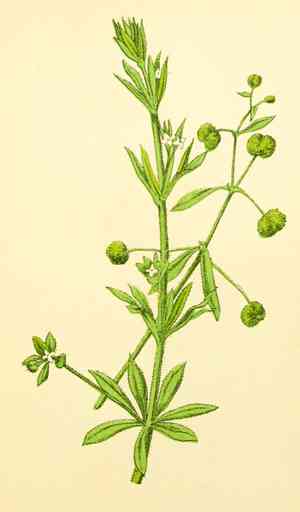
Licorice bedstraw (Galium circaezans)
Also known as: Hairy wild licorice, Woods bedstraw
Licorice bedstraw (Galium circaezans) is native to deciduous forests in eastern North America. It serves as a food source for a variety of insects such as moths, aphids, and ants, and eastern box turtles sometimes consume its leaves. The plant spreads by producing bur-covered seed pods that latch onto the fur of animals or the clothing of humans, enabling it to propagate effectively.
In This Article
Attributes of Licorice bedstraw
Lifespan
Perennial
Plant Type
Herb
Plant Height
30 cm to 61 cm
Spread
30 cm to 60 cm
Leaf Color
Green Blue
Flower Size
3 mm
Flower Color
White Yellow Green
Images of Licorice bedstraw
Quickly Identify Licorice bedstraw
1
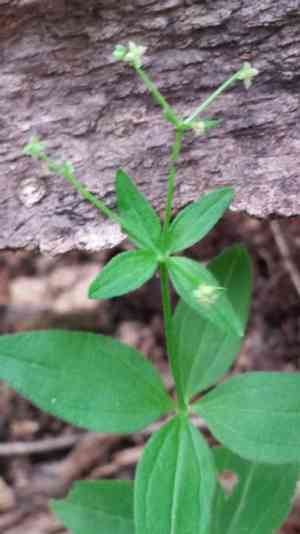
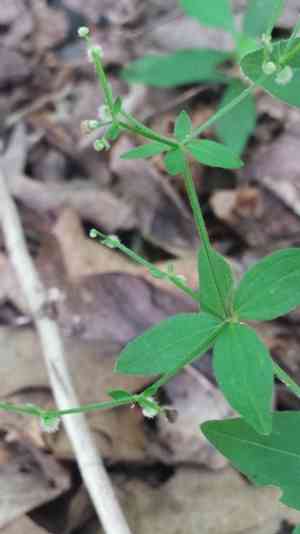
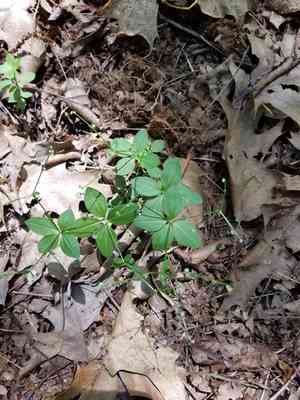
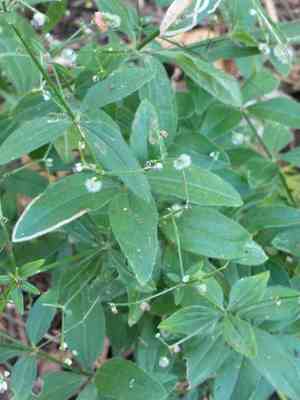
Galium circaezans can be identified by its whorled leaves, usually in groups of four, and its small, rounded flowers that appear in clusters. The plant also has a distinctive quadrangular stem that is slightly rough to the touch.
Scientific Classification of Licorice bedstraw
Phylum
Vascular plants
Class
Dicotyledons
Order
Gentianales
Family
Madder
Genus
Bedstraws
Species
Licorice bedstraw
Planting and Growing of Licorice bedstraw
Care Difficulty
Easy
Watering Schedule
Every 2 days
Sunlight Requirements
Partial sun
Sunshine Duration
4-8 hours
Ideal Temperature
65-75℉
Soil Type
Potting Mix, Peat Mix
Soil pH
6.5-7.5
Fertilizer Type
Balanced
Pruning Season
Spring, Summer
Pruning Area
Branches, Leaves
Pruning Frequency
2 times a year
Repotting Season
Spring
Pot Type
Plastic, Ceramic
 How to Water Licorice bedstraw?
For Galium circaezans, each watering session should deliver around 200 milliliters of water. This amount ensures that the soil is thoroughly moistened without becoming waterlogged. It's essential to allow the top inch of soil to dry out between waterings, as this plant prefers well-drained conditions.
What are the symptoms of an underwatered Licorice bedstraw?
›
What should I do if my Licorice bedstraw is not getting enough water?
›
What are the symptoms of an overwatered Licorice bedstraw?
›
How to save an overwatered Licorice bedstraw?
›
 What Are the Sunlight Requirements for Licorice bedstraw?
Partial sun or full shade conditions allow Galium circaezans to thrive, enhancing its vibrant green leaves and supporting its natural growth cycle. Ideal lighting promotes robust foliage and healthy root development.
More About Sunlight Requirements Techniques→
What are the ideal lighting conditions for Galium circaezans?
›
How can I ensure Galium circaezans receives its ideal lighting conditions?
›
What benefits does Galium circaezans receive from ideal lighting?
›
 What Is the Ideal Temperature Range for Licorice bedstraw?
The ideal temperature range for cultivating Galium circaezans is between 65°F and 75°F. This range promotes healthy growth by providing a balanced environment that supports metabolic processes, photosynthesis, and nutrient absorption efficiently. Within this range, the plant can actively grow and flourish, developing robust stems and leaves.
 What Soil is Best for Licorice bedstraw?
Galium circaezans thrives in well-draining soil, which helps prevent root rot by ensuring that water doesn't accumulate around the roots. This characteristic allows the plant to absorb nutrients more efficiently. A soil rich in organic matter is ideal for Galium circaezans, providing the necessary nutrients for healthy growth and vibrant foliage. Adding compost can enhance soil fertility, supporting the plant's overall health. While the soil should drain well, it also benefits from a moderate moisture retention capacity. This ensures that the plant remains hydrated, especially during dry spells, without the risk of waterlogging.
 How to Fertilize Licorice bedstraw?
For Galium circaezans, a small to moderate amount of fertilizer is generally sufficient due to its native woodland habitat. Use a balanced, water-soluble fertilizer at one-fourth strength, ensuring not to over-dose, as these plants are adapted to nutrient-poor environments.
 How to Prune Licorice bedstraw?
Begin by identifying the stems that are overcrowded, damaged, or crossing each other. These are the primary targets for trimming to allow for better air circulation and light penetration. Always use sharp and clean pruning shears to make precise cuts. This minimizes damage to the plant and reduces the risk of disease transmission. When pruning, make cuts just above a set of leaves or nodes. This encourages the plant to produce new, bushier growth rather than long, sparse stems. If you're aiming to shape the plant, prune to achieve a rounded form, trimming stems at different heights for a more natural look.
More About Pruning Techniques→
 How to Propagate Licorice bedstraw plant?
1
Begin by collecting ripe seeds from mature plants. Clean them of any debris and soak them in warm water for 24 hours to enhance germination.
2
Distribute the seeds evenly over the surface of pre-moistened potting mix in seed trays. Cover them lightly with soil, about twice the depth of the seed size.
3
Place the seed trays in a location with indirect sunlight. Keep the soil moist but not waterlogged, and maintain a temperature between 65-75°F for the best germination results.
 How to Repot Licorice bedstraw plant?
1
Galium circaezans typically needs repotting when its roots are circling the pot or peeking through drainage holes. Spring or autumn are ideal as the plant experiences less stress during these cooler, more temperate times. A good rule is to repot every two years or when growth seems stunted.
2
Select a pot that's only slightly larger than the current one, as Galium circaezans prefer coziness for root growth. A pot too large may retain excess water, leading to root rot. Make sure it has drainage holes to facilitate excess water escape, ensuring the roots stay healthy.
3
Opt for well-draining, loamy soil that permits air and water to penetrate easily. This type of soil prevents soggy conditions, reducing the likelihood of root rot. Its richness in organic matter also ensures gradual nutrient release, promoting steady plant growth.



