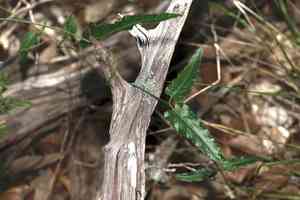
Wavy-leaf twinevine (Funastrum crispum)
Also known as: Milkweed Vine, Fringepod, Twining Milkweed
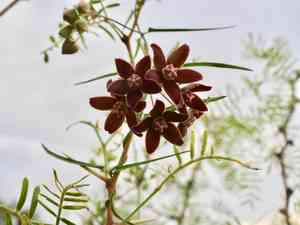
The Wavy-leaf Twinevine is a hardy, climbing plant well-adapted to arid environments. Its pointed leaves help it secure itself to other plants, allowing it to reach for sunlight. The vine is notable for its small, star-shaped flowers with curled edges, which provide an attractive contrast to its tough surroundings.
In This Article
Attributes of Wavy-leaf twinevine
Lifespan
Perennial
Plant Type
Vine, Herb
Plant Height
Up to 3 meters (10 feet)
Spread
N/A - It is a vine, does not form a traditional crown
Leaf Color
Green
Flower Size
Approx. 1 cm (0.4 inches)
Flower Color
White to pinkish
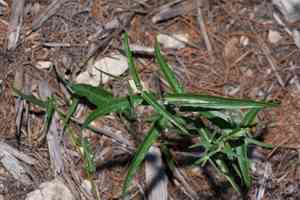
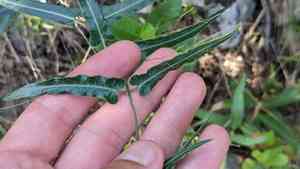
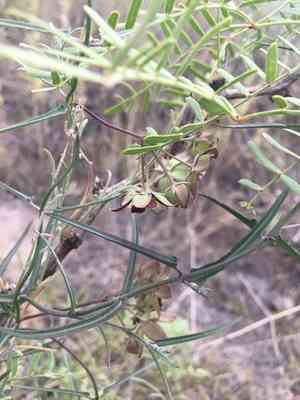
Images of Wavy-leaf twinevine
Quickly Identify Wavy-leaf twinevine
1
This plant can be identified by its twining stems, opposite leaves, and clusters of small, star-shaped flowers. The leaves are typically ovate to heart-shaped, and the flowers are white to pinkish in color.
Scientific Classification of Wavy-leaf twinevine
Phylum
Vascular plants
Class
Dicotyledons
Order
Gentianales
Family
Dogbane
Genus
Twinevines
Species
Wavy-leaf twinevine
Planting and Growing of Wavy-leaf twinevine
Care Difficulty
Moderate
Watering Schedule
Every 2 days
Sunlight Requirements
Partial sun
Sunshine Duration
4-6 hours
Ideal Temperature
70-85℉
Soil Type
Potting Mix, Peat Mix
Soil pH
6.5-7.5
Fertilizer Type
Balanced
Pruning Season
Spring, Summer
Pruning Area
Branches, Leaves
Pruning Frequency
2 times a year
Repotting Season
Spring
Pot Type
Ceramic, Plastic
 How to Water Wavy-leaf twinevine?
When watering Funastrum crispum, ensure that the soil is thoroughly moistened without becoming waterlogged. Aim for about 250 ml of water per watering session. This amount allows the water to reach the roots effectively without oversaturating the soil, which is essential for maintaining optimal plant health.
What are the symptoms of an underwatered Wavy-leaf twinevine?
›
What should I do if my Wavy-leaf twinevine is not getting enough water?
›
What are the symptoms of an overwatered Wavy-leaf twinevine?
›
How to save an overwatered Wavy-leaf twinevine?
›
 What Are the Sunlight Requirements for Wavy-leaf twinevine?
Partial sunlight throughout the day ensures steady growth and vibrant foliage. It prevents sunburn while allowing sufficient photosynthesis for healthy development.
Optimal light exposure
›
Managing light with seasonal changes
›
Balancing light for optimum growth
›
 What Is the Ideal Temperature Range for Wavy-leaf twinevine?
Maintaining an ideal temperature range of 70°F to 85°F is crucial for Funastrum crispum as it ensures optimal growth and metabolic functions. The plant performs best within this range, facilitating photosynthesis and nutrient uptake efficiently.
 What Soil is Best for Wavy-leaf twinevine?
Funastrum crispum thrives in well-drained soil, which helps prevent root rot by allowing excess water to escape. This is crucial because stagnant water can suffocate the roots and lead to decaying. Well-drained soil ensures healthy oxygen flow to the roots and optimal growth. Incorporating plenty of organic matter into the soil provides essential nutrients for Funastrum crispum. Organic matter improves soil structure, fertility, and moisture retention, making it beneficial for sustained plant health. It supports beneficial microbial activity, which in turn helps the plant to access nutrients more effectively. This plant prefers soil that retains some moisture without being overly wet. Consistent moisture levels help Funastrum crispum maintain its vigor and promote healthy growth. Excessively dry soil can stress the plant, while overly wet conditions can cause root problems. Finding a balance in soil moisture is key.
 How to Fertilize Wavy-leaf twinevine?
When fertilizing Funastrum crispum, use a balanced liquid fertilizer diluted to half the recommended strength. For granular fertilizers, apply a light top dressing each time, ensuring it does not exceed a tablespoon per plant.
 How to Prune Wavy-leaf twinevine?
Begin by inspecting the plant for any dead or damaged stems. Removing these helps the plant focus its energy on healthier growth and prevents the spread of disease. Prune to improve the plant's shape by cutting back excessive growth and maintaining a balanced silhouette. This can enhance its aesthetic appeal while preventing any part from overshadowing another. Prune lightly from the plant's tips to encourage bushiness and more blooms. This technique stimulates the growth of side shoots which can lead to a fuller appearance.
More About Pruning Techniques→
 How to Propagate Wavy-leaf twinevine plant?
1
Start by collecting seeds from mature Funastrum crispum pods. Dry the seeds in a cool, dark place for a few days. Once dried, you can scarify the seeds gently using sandpaper to help with germination before planting them in seed trays filled with a well-draining soil mix.
2
Select healthy stems that are free from disease or pest damage. Use pruning shears to take cuttings about 4-6 inches long. Strip the lower leaves and dip the cut end in rooting hormone to encourage faster root development before planting them in a sand and peat moss mixture.
3
After dipping in rooting hormone, place the cuttings in a prepared growing medium. Ensure that at least a third of the cutting is submerged in the soil. Water lightly and cover with a plastic bag or use a propagator to maintain humidity until new growth appears.
 How to Repot Wavy-leaf twinevine plant?
1
Repot Funastrum crispum when you notice roots filling the pot, emerging through drainage holes, or when growth noticeably slows. These signs typically indicate it's time to give your plant more room to grow and ensure its roots aren't becoming overly compacted.
2
Select a pot that's one size larger than the current one, ideally with drainage holes. This ensures excess water can escape, minimizing the risk of root rot. A slightly larger pot provides room for root expansion without letting the plant become waterlogged, promoting healthy growth.
3
Opt for a well-draining cactus mix, perhaps with added perlite or sand to enhance drainage. This combination prevents waterlogging, allowing roots to breathe and reducing the risk of fungal infections, thereby supporting vibrant, healthy growth.
Toxicity
Ingestion
WARNING
The judgment on toxicity and danger is for reference only. We DO NOT GUARANTEE any accuracy of such judgment. Therefore, you SHALL NOT rely on such judgment. It is IMPORTANT TO SEEK PROFESSIONAL ADVICE in advance when necessary.
Learn More About Wavy-leaf twinevine Diseases
Anthracnose
Bacterial Leaf Spot
Bacterial Soft Rot
Bacterial Wilt
Chemical Injury
Crown Gall
Cyst Nematode
Damping-off
Downy Mildew
Drought Stress
Fusarium Wilt
Gray Mold
Leaf Curl
Leaf Spot
Mosaic
Nutrient Deficiency
Nutrient Toxicity
Powdery Mildew
Root Rot
Root-knot Nematode
Rusts
Sooty Mold
Spider Mites
Temperature Stress
Thrips Damage
White Mold



