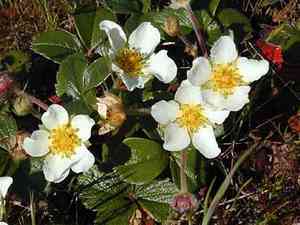
Beach strawberry (Fragaria chiloensis)
Also known as: Chilean strawberry
The plant you seem to be describing is the Orange Jessamine (Murraya paniculata). This evergreen shrub features trifoliate, glossy leaves and produces clusters of fragrant white flowers. It's known for attracting various beneficial insects, such as moths and butterflies.
In This Article
Attributes of Beach strawberry
Lifespan
Perennial, Annual
Plant Type
Herb
Plant Height
0 mm to 30 cm
Spread
30 cm
Leaf Color
Green
Flower Size
2.5 cm
Flower Color
White
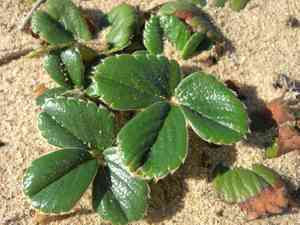
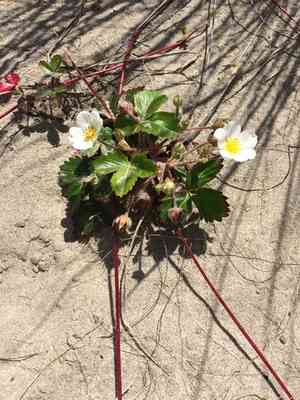
Images of Beach strawberry


Quickly Identify Beach strawberry
1
Identify Fragaria chiloensis by its glossy green, trifoliate leaves with serrated edges, and white flowers with five petals. The fruit is typically small, red, and covered with tiny seeds.
Scientific Classification of Beach strawberry
Phylum
Vascular plants
Class
Dicotyledons
Order
Rosales
Family
Rose
Genus
Strawberries
Species
Beach strawberry
Planting and Growing of Beach strawberry
Care Difficulty
Easy
Watering Schedule
Every 4 days
Sunlight Requirements
Full sun
Sunshine Duration
4-8 hours
Ideal Temperature
60-75℉
Soil Type
Potting Mix, Peat Mix
Soil pH
5.5-7.5
Fertilizer Type
Balanced
Pruning Season
Spring, Summer
Pruning Area
Branches, Leaves
Pruning Frequency
2 times a year
Repotting Season
Spring
Pot Type
Plastic, Ceramic
 How to Water Beach strawberry?
For Fragaria chiloensis, the watering amount should be about 250 milliliters per session. The key is to ensure that the soil is consistently moist but not waterlogged. Like a sponge lightly squeezed, the soil should feel damp but not dripping with water. This delicate balance helps in maintaining the plant's health.
What are the symptoms of an underwatered Beach strawberry?
›
What should I do if my Beach strawberry is not getting enough water?
›
What are the symptoms of an overwatered Beach strawberry?
›
How to save an overwatered Beach strawberry?
›
 What Are the Sunlight Requirements for Beach strawberry?
For Fragaria chiloensis, full sun or partial sun environments promote ideal growth, ensuring ample energy for photosynthesis. This light range supports strong berry yield, healthy foliage, and overall plant vitality.
More About Sunlight Requirements Techniques→
Why is full sun ideal?
›
How can I achieve ideal lighting conditions?
›
What benefits does ideal lighting offer?
›
 What Is the Ideal Temperature Range for Beach strawberry?
The ideal temperature range for Fragaria chiloensis, also known as the Beach Strawberry, is between 60°F and 75°F. This range is optimal for growth because it supports the plant's physiological processes, ensuring optimal photosynthesis and growth. Maintaining temperatures within this range enhances flowering and fruit development, which is crucial for high-quality strawberry yield.
 What Soil is Best for Beach strawberry?
Fragaria chiloensis prefers well-drained soil to prevent root rot and other waterlogging-related issues. Ensuring good drainage improves root oxygenation, which is crucial for healthy growth and fruit production. Soil enriched with organic matter or compost provides essential nutrients and fosters beneficial microbial life, leading to enhanced plant vigor and yield. Although drainage is important, maintaining adequate moisture levels in the soil is crucial for consistent strawberry development and optimal fruit size.
 How to Fertilize Beach strawberry?
For Fragaria chiloensis, applying fertilizer must be done with care to prevent overfeeding. Typically, apply a balanced 10-10-10 liquid fertilizer at a rate of 1/2 teaspoon per gallon of water every two weeks, ensuring even distribution around the plant’s base without directly hitting foliage to avoid burn.
 How to Prune Beach strawberry?
Before pruning, ensure you have a pair of sharp, clean pruning shears. Disinfect the tools with alcohol or a disinfectant solution to prevent the spread of diseases. Dress in comfortable clothing for easy movement. Start by removing any dead, diseased, or damaged leaves. Follow by trimming back any runners that aren't necessary, to redirect energy into fruit production. Cut back any branches that cross or are too close together to ensure good air circulation. Trim the plant to maintain its desired shape. Control excessive growth by cutting back the outermost stems. This not only improves plant health but also encourages more prolific flowering.
More About Pruning Techniques→
 How to Propagate Beach strawberry plant?
1
Select healthy, disease-free stems and cut segments that are about 10-15 cm long. Remove leaves from the lower half of the cutting to reduce transpiration and dip the cut end into rooting hormone powder to enhance root growth.
2
Soak the seeds in water for 12-24 hours to increase germination rates. Sow them on the surface of a well-draining potting mix and lightly cover with soil. Ensure the seeds are placed in a warm, sunny location and kept moist until germination.
3
Select a low-growing branch and bend it to the soil, ensuring it makes contact. Scrape a small section of the branch to expose the cambium layer and cover this part with soil, anchoring it with a stake or wire. Once roots are established, separate the new plant.
 How to Repot Beach strawberry plant?
1
Fragaria chiloensis, or the beach strawberry, shows it needs repotting when its roots begin to circle the container or emerge from the drainage holes. Overtaking the pot space often stunts growth; therefore, early spring or summer, when the plant begins actively growing, is ideal for repotting.
2
Select a pot that is 2-3 inches larger in diameter than the current one and has good drainage holes. This allows for better root expansion, preventing waterlogging and promoting healthy root development. An appropriately sized pot helps in managing soil moisture and ensures the plant does not dry out quickly or remain too wet.
3
Opt for a well-draining loamy soil that is rich in organic matter. This soil type retains adequate moisture while allowing excess water to drain away easily, preventing root rot. Loamy soil also provides essential nutrients that support robust plant growth and fruiting.



