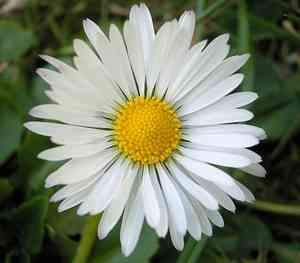
Slender golden-top (Euthamia caroliniana)
Also known as: Carolina grass-leaved goldenrod
Goldenrod (Solidago spp.) is a perennial herb notable for its vibrant yellow flower clusters and narrow, lance-shaped leaves. It flourishes in open, sunny areas and often forms extensive colonies, providing essential nourishment for pollinators such as bees and butterflies. Recognizable by its upright stem and adaptability to various soil types, Goldenrod is both resilient and ecologically significant.
In This Article
Attributes of Slender golden-top
Lifespan
Perennial
Plant Type
Herb
Plant Height
30 cm to 91 cm
Spread
45 cm to 60 cm
Leaf Color
Green
Flower Size
About 3 to 5 mm
Flower Color
Yellow
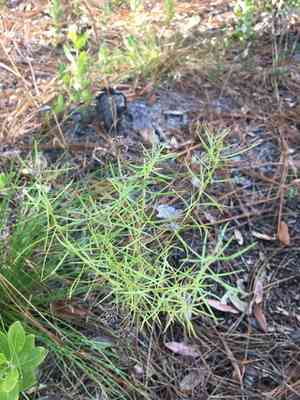
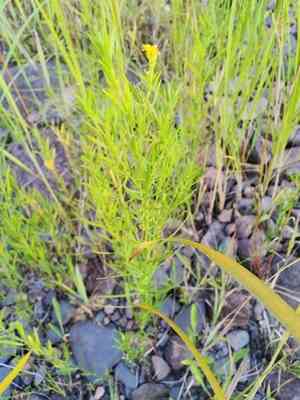
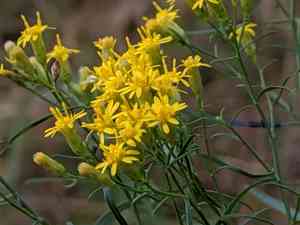
Images of Slender golden-top

Quickly Identify Slender golden-top
1
Grass-like foliage under 1 inch wide, delicate and sparse, distinguishes slender golden-top from similar plants.
2
Multi-branched stems with tiny, soft yellow flowers in dense clusters characterize slender golden-top's appearance.
3
Distinctly angled stem reaching 1-3 feet, with varying textures (smooth or hairy), key for identification.
4
Vibrant green, narrow grass-like leaves up to 3 inches long, basal and alternate arrangement with resin dots.
5
Small, bright yellow daisy-like flowers in dense clusters with erect stems, 0.2 inches wide, August to December blooming.
Scientific Classification of Slender golden-top
Phylum
Vascular plants
Class
Dicotyledons
Order
Asterales
Family
Daisy
Genus
Goldentops
Species
Slender golden-top
Planting and Growing of Slender golden-top
Care Difficulty
Easy
Watering Schedule
Every 2 days
Sunlight Requirements
Full sun
Sunshine Duration
4-8 hours
Ideal Temperature
65-75℉
Soil Type
Potting Mix, Peat Mix
Soil pH
5.5-7.5
Fertilizer Type
Balanced
Pruning Season
Spring, Summer
Pruning Area
Branches, Leaves
Pruning Frequency
2 times a year
Repotting Season
Spring
Pot Type
Plastic, Ceramic
 How to Water Slender golden-top?
Euthamia caroliniana prefers a moderate watering approach. Water the plant with about 250 milliliters each time, ensuring that the soil is evenly moist but not waterlogged. The goal is to keep the soil consistently moist, aiming for a balance where the water reaches the root zone without creating standing water. Checking soil moisture before watering can prevent over-saturation.
What are the symptoms of an underwatered Slender golden-top?
›
What should I do if my Slender golden-top is not getting enough water?
›
What are the symptoms of an overwatered Slender golden-top?
›
How to save an overwatered Slender golden-top?
›
 What Are the Sunlight Requirements for Slender golden-top?
Euthamia caroliniana thrives best under full sunlight, ideally between 8 to 10 hours daily. Adequate sunlight ensures robust growth, effective photosynthesis, and abundant flowering.
What type of sunlight does Euthamia caroliniana prefer?
›
How can you achieve ideal lighting for this plant?
›
What benefits does ideal lighting provide to Euthamia caroliniana?
›
 What Is the Ideal Temperature Range for Slender golden-top?
Euthamia caroliniana thrives best within a temperature range of 65°F to 75°F. This range provides optimal conditions for metabolic processes and promotes vigorous growth.
 What Soil is Best for Slender golden-top?
Euthamia caroliniana thrives best in well-drained soils. This preference helps prevent waterlogging, which can lead to root rot. The porous nature of such soil ensures healthy root development and promotes vibrant plant growth. While nutrient-rich soil is beneficial, Euthamia caroliniana can adapt to less fertile environments. Having the right balance of nutrients ensures robust growth and encourages the development of its signature bright blooms. The soil should have moderate moisture retention ability, ensuring that the plant does not dry out completely between waterings. This aspect is crucial for maintaining the plant's hydration while still allowing oxygen to reach the roots.
 How to Fertilize Slender golden-top?
When fertilizing Euthamia caroliniana, it's essential to be cautious and not over-fertilize. Use a balanced, all-purpose liquid fertilizer diluted to half strength, approximately 1 ounce per gallon of water. This ensures that the plant receives adequate nutrients without risking root burn or fertilizer build-up in the soil.
 How to Prune Slender golden-top?
Begin by examining the plant for any dead or diseased stems. Cut these back to the base or just above a healthy node to redirect energy to healthier parts. Trim the plant to maintain a desirable shape. Cut back to a node or just above a set of leaves to encourage a fuller appearance that will promote new, healthy growth. After pruning, ensure to clear away any fallen leaves or cut stems from around the plant base. This prevents pests and diseases from harboring in the debris.
More About Pruning Techniques→
 How to Propagate Slender golden-top plant?
1
Collect the seeds from mature Euthamia caroliniana plants after flowering. Allow them to dry and store them in a cool, dry place until ready to plant. Ensure seeds are free from any debris or plant material.
2
When the plants are mature and healthy, dig up the clumps during spring or early summer. Carefully divide the root ball into smaller sections, ensuring each division has roots attached.
3
Plant the seeds or divisions into well-draining soil, ensuring they are at the recommended depth. Water thoroughly after planting to establish contact between the roots and the soil. Maintain moisture for optimal growth.
 How to Repot Slender golden-top plant?
1
Euthamia caroliniana shows signs that it needs repotting when its roots begin to emerge from the drainage holes or when the plant's growth appears stunted despite optimal care. Also, if the soil seems overly compacted or retains too much water, it's a surefire signal to consider repotting, ensuring the plant thrives.
2
Choose a pot that is 1-2 inches larger in diameter than the current one. Ensure it has drainage holes to prevent waterlogging, which helps in providing a healthy root environment. The material can be terracotta or plastic, with terracotta offering breathability and reducing root rotting risks.
3
Opt for a well-draining sandy soil mix, enriched with organic matter to provide nutrition and adequate drainage. This type of soil simulates its natural habitat, allowing the roots to breathe while retaining essential moisture levels, promoting robust growth.
Learn More About Slender golden-top Diseases
Anthracnose
Bacterial Leaf Spot
Bacterial Soft Rot
Bacterial Wilt
Black Spot
Chemical Injury
Crown Gall
Cyst Nematode
Damping-off
Downy Mildew
Drought Stress
Fusarium Wilt
Gray Mold
Leaf Curl
Leaf Spot
Mosaic
Nutrient Deficiency
Nutrient Toxicity
Powdery Mildew
Root Rot
Root-knot Nematode
Rusts
Sooty Mold
Spider Mites
Temperature Stress
Thrips Damage
White Mold



