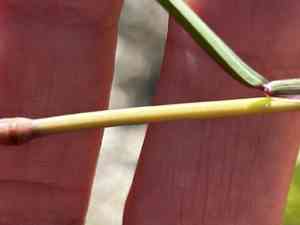
Caribbean fingergrass (Eustachys paspaloides)
Also known as: Sandbur grass
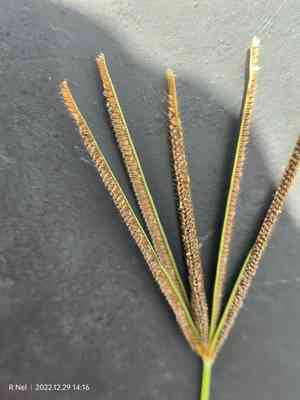
The grass you're referring to is likely Caribbean fingergrass. This resilient perennial grass adapts well to open, sunny areas and features narrow leaves that form dense, low tufts. Its fine-textured seed heads look like tiny bottle brushes. Thriving in sandy soils, Caribbean fingergrass often colonizes disturbed sites and has a robust root system that helps in erosion control, highlighting its ecological importance.
In This Article
Attributes of Caribbean fingergrass
Lifespan
Perennial
Plant Height
20-60 cm
Spread
N/A
Leaf Color
Green
Flower Size
N/A
Flower Color
Greenish to purplish
Images of Caribbean fingergrass
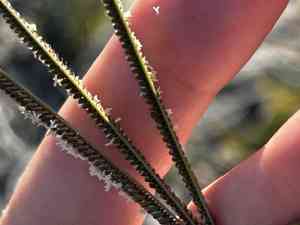
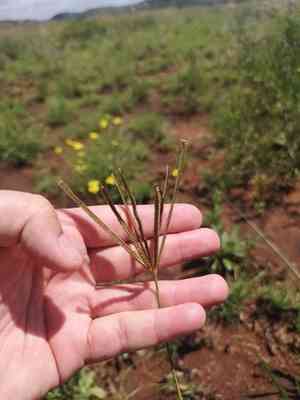
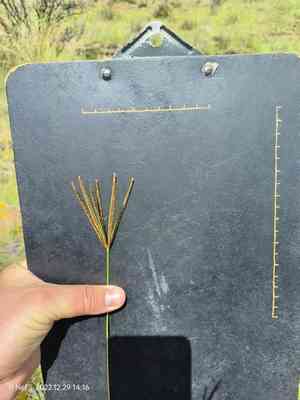
Quickly Identify Caribbean fingergrass
1
This plant can be identified by its narrow, erect leaves and the distinctively spaced clusters of spiky burs that form at the tips of the stems.
Scientific Classification of Caribbean fingergrass
Phylum
Vascular plants
Class
Monocotyledons
Order
Poales
Family
Grass
Genus
Fan grass
Species
Caribbean fingergrass
Planting and Growing of Caribbean fingergrass
Care Difficulty
Moderate
Watering Schedule
Every 2 days
Sunlight Requirements
Full sun
Sunshine Duration
4-8 hours
Ideal Temperature
75-85℉
Soil Type
Potting Mix, Peat Mix
Soil pH
6.5-7.5
Fertilizer Type
Balanced
Pruning Season
Spring, Summer
Pruning Area
Branches, Leaves
Pruning Frequency
2 times a year
Repotting Season
Spring
Pot Type
Plastic, Ceramic
 How to Water Caribbean fingergrass?
Eustachys paspaloides appreciates a balanced watering approach where the soil is kept consistently moist but not soggy. Aim to provide around 500 milliliters per watering session, ensuring that the hydration reaches the root zone without waterlogging the soil. This plant thrives when its roots have access to moisture without being submerged in excess water.
What are the symptoms of an underwatered Caribbean fingergrass?
›
What should I do if my Caribbean fingergrass is not getting enough water?
›
What are the symptoms of an overwatered Caribbean fingergrass?
›
How to save an overwatered Caribbean fingergrass?
›
 What Are the Sunlight Requirements for Caribbean fingergrass?
Being suited for full sun to partial sun environments, Eustachys paspaloides benefits from a balanced light exposure regime. This optimizes its metabolic functions, resulting in optimal vigor and productivity.
Optimal Sun Exposure
›
Light Adjustment Solutions
›
Benefits of Ideal Lighting
›
 What Is the Ideal Temperature Range for Caribbean fingergrass?
The ideal temperature range for Eustachys paspaloides cultivation lies between 75°F and 85°F. Within this range, the plant maintains optimal metabolic functions and demonstrates robust growth. Ensuring temperatures remain within this band minimizes stress and promotes healthy development, making it crucial for gardeners and cultivators aiming to achieve the best outcomes.
 What Soil is Best for Caribbean fingergrass?
Eustachys paspaloides thrives in nutrient-rich soil, which supports robust growth and vibrant foliage. Soils with balanced organic content and necessary nutrients enhance root development and overall plant health. This plant prefers soil that drains well, preventing root rot and other moisture-related issues. Sandy loam and loam soils provide the perfect drainage, ensuring roots receive adequate oxygen. While good drainage is essential, Eustachys paspaloides also requires consistent soil moisture. Balanced moisture availability aids in maintaining the plant's structural integrity and vitality.
 How to Fertilize Caribbean fingergrass?
Eustachys paspaloides, commonly known as 'Eustach,' benefits from a balanced fertilizer application. A liquid fertilizer with an N-P-K ratio of 20-20-20 is ideal, diluted at a rate of 5ml per 1 liter of water. This mixture ensures even distribution and avoids nutrient burn. For slow-release options, a granular fertilizer applied at 50 grams per square meter offers sustained nourishment, promoting healthy root and leaf growth.
 How to Prune Caribbean fingergrass?
Eustachys paspaloides can become stressed if too much of its foliage is removed at one time. Limit cuts to strategic areas to maintain its structure and health. Over-pruning can reduce photosynthesis efficiency and potentially stunt the plant’s growth.
More About Pruning Techniques→
 How to Propagate Caribbean fingergrass plant?
1
Gently remove the plant from its container and shake off excess soil to expose the root system. Inspect the roots and identify natural divisions, usually where multiple stems branch. Using a clean sharp knife, cut through the roots to separate the sections. Each section should have its own root system for a higher success rate.
2
Fill a seed tray with a well-draining seed-starting mix and gently press the seeds into the soil. Cover the seeds lightly with soil but do not bury them deeply, as light encourages germination. Water lightly to avoid washing the seeds away.
3
Once divided, plant each section into an individual pot filled with fresh potting mix. Make sure the roots are spread and covered with soil. Water the newly potted divisions thoroughly to settle the soil and eliminate air pockets.
 How to Repot Caribbean fingergrass plant?
1
Eustachys paspaloides shows signs for repotting when its roots begin to circle the inside of the pot, indicating root bounding. Additionally, if you notice reduced growth or leaves appearing unhealthy despite proper care, it may be time to repot. The best times for repotting are in spring and early summer, as this allows the plant to establish in its new pot during the active growing season.
2
When selecting a pot for Eustachys paspaloides, opt for one that is 2-3 inches larger in diameter than its current container. This extra space supports vigorous root growth without overwhelming the plant with too much soil, which might retain excess moisture. Ensure the pot has adequate drainage holes to prevent waterlogging, as the plant prefers well-aerated conditions.
3
Choose a well-drained sandy soil mix to suit the needs of Eustachys paspaloides. Sandy soils prevent excess water retention that could risk root rot. A mix of sand, peat, and compost helps ensure proper drainage while providing essential nutrients, replicating the plant's natural habitat and promoting healthy growth.



