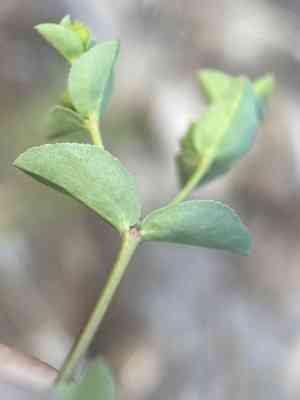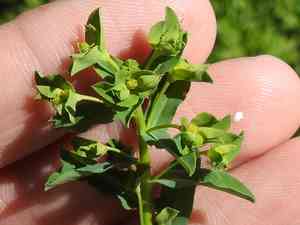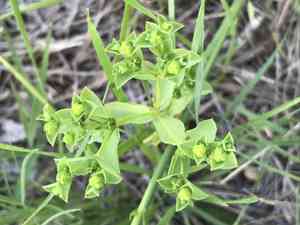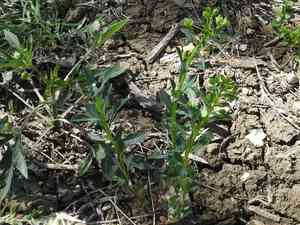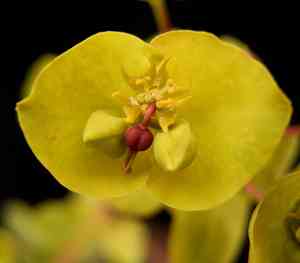
Warty spurge(Euphorbia spathulata)

Warty spurge (Euphorbia spathulata)

Also known as: Reticulate-seeded spurge

Warty spurge (Euphorbia verrucosa) is a distinctive perennial herb notable for its wart-covered green stems. Unlike many other spurge species, it has the following characteristics and growing preferences:

**Characteristics:**
- **Height:** Typically reaches 10-50 cm in height.
- **Stems:** Green and covered with wart-like bumps.
- **Leaves:** Small, lance-shaped, and alternately arranged.
- **Flowers:** Inconspicuous yellow-green, grouped in small clusters at the stem tips.
- **Sap:** Contains a milky latex that can be irritating to the skin.

**Preferred Growing Conditions:**
- **Light:** Thrives in full sun to partial shade.
- **Soil:** Prefers well-drained, sandy or rocky soils.
- **Water:** Adapted to dry conditions; requires minimal watering.
- **Climate:** Grows best in temperate regions, tolerating harsh winters.

Warty spurge is commonly found in open fields, grasslands, and along roadsides, often in rocky or sandy soils. It is important to manage its growth to prevent it from becoming invasive.

Attributes of Warty spurge

Lifespan
Annual, Perennial
Plant Type
Herb
Plant Height
15 cm to 46 cm
Spread
4.5 m to 11 m
Leaf Color
Green
Flower Size
0.5-1.5 cm
Flower Color
Yellow Green

ForwardPlant - Identify plants with a snap

Identify and diagnose plants, get toxicity alerts, and explore safety guides for all types of fungi.

Try for Free

Images of Warty spurge

Warty spurge(Euphorbia spathulata)

Quickly Identify Warty spurge

1
The plant can be identified by its spatula-shaped leaves, which are wider at the tip and narrower at the base. Leaves are arranged alternately and have a somewhat succulent texture. The stems are often covered in small, wart-like protrusions.

Scientific Classification of Warty spurge

Phylum
Vascular plants
Class
Dicotyledons
Order
Malpighiales
Family
Spurge
Genus
Spurges
Species
Warty spurge

Planting and Growing of Warty spurge

Care Difficulty
Easy
Watering Schedule
Every 3 days
Sunlight Requirements
Partial sun
Sunshine Duration
6-10 hours
Ideal Temperature
65-75℉
Soil Type
Potting Mix, Peat Mix
Soil pH
6.5-7.5
Fertilizer Type
Balanced
Pruning Season
Spring, Summer
Pruning Area
Branches, Leaves
Pruning Frequency
2 times a year
Repotting Season
Spring
Pot Type
Plastic, Ceramic

water icon How to Water Warty spurge?

Euphorbia spathulata should be watered thoroughly enough to make the soil completely moist but not soggy, which typically amounts to around 250ml per watering session. It's crucial to ensure proper drainage to prevent root rot.
What are the symptoms of an underwatered Warty spurge?
What should I do if my Warty spurge is not getting enough water?
What are the symptoms of an overwatered Warty spurge?
How to save an overwatered Warty spurge?

sunlight icon What Are the Sunlight Requirements for Warty spurge?

Sunlight Requirements: Partial sun
Duration of light: 4 to 6 hours
Euphorbia spathulata thrives in partial sun. This exposure allows for steady growth and vibrant foliage without the risk of sunburn associated with full sun.
Optimal Lighting Question
Specific Measures
Achieving Optimal Lighting Effects
More About Sunlight Requirements Techniques

temperature icon What Is the Ideal Temperature Range for Warty spurge?

Ideal Temperature: 65 ~ 75℉
For optimal growth and development, Euphorbia spathulata thrives best in temperatures ranging from 65°F to 75°F. This temperature range provides the necessary warmth for photosynthesis, nutrient uptake, and overall plant vigor. Maintaining this range can promote vigorous growth and a healthy plant structure.

soil icon What Soil is Best for Warty spurge?

Soil type: Loam, Sandy loam
Soil PH: 6.5 ~ 7.5
Euphorbia spathulata thrives in well-draining soil, preventing waterlogging which can lead to root rot. Ensuring proper soil drainage helps the plant's roots breathe and access sufficient nutrients. A nutritionally balanced soil rich in organic matter supports the robust growth of Euphorbia spathulata. Such a soil provides essential nutrients, enhancing both foliage and flower production. While drainage is crucial, the soil must also retain adequate moisture to sustain Euphorbia spathulata during dry periods. This balance is vital to prevent stress and maintain consistent growth.

fertilize icon How to Fertilize Warty spurge?

Fertilizer type: Balanced
For Euphorbia spathulata, it's important to use a balanced, water-soluble fertilizer at a dilution rate of half strength. During its active growing season, which typically ranges from spring to early autumn, ensure each feeding provides no more than 100-150 mg of nitrogen per plant. Adjust amounts according to its size and pot, ensuring the solution is well-diluted to prevent root burn.

prune icon How to Prune Warty spurge?

Pruning Time: Spring, Summer, Autumn
To maintain a compact and attractive shape, prune back any overgrown stems. Start by removing any dead or damaged parts. Trim the stems back to encourage branching and a fuller appearance. Aim to cut just above a node or a pair of leaves for the best results. If your Euphorbia spathulata is getting too large for its spot, cut back longer stems by up to one-third their length. This not only keeps the plant in check but encourages new, vigorous growth. It's an effective way to manage the overall size without harming the plant. More About Pruning Techniques

propagate icon How to Propagate Warty spurge plant?

Propagate Time: Spring, Early spring, Early summer
1
Prepare a seed tray with a well-draining mix and plant Euphorbia spathulata seeds just under the surface. Keep the tray warm and moist to facilitate germination in a few weeks.
2
Select a healthy, non-flowering stem and cut it just below a node. Remove the lower leaves, dip the end in rooting hormone, and plant it in a moist, well-draining medium.
3
Carefully dig up a mature Euphorbia spathulata plant and use a knife to divide the root clump into smaller sections, ensuring each has roots and shoots. Replant immediately and water thoroughly.

repot icon How to Repot Warty spurge plant?

Repotting frequency: Every 2-3 years
1
Euphorbia spathulata requires repotting when its roots begin to outgrow the container, crawling out through drainage holes or causing the pot to bulge. Additionally, a noticeable reduction in growth rate or overall plant vitality may signal that repotting is necessary. Spring or autumn is the optimal season for repotting, as these periods promote an active root growth phase, ensuring the plant recuperates swiftly in its new home.
2
Selecting a suitable pot is crucial for a successful repotting process. Opt for a container that is 1-2 inches larger in diameter than the current one to allow ample room for growth. Ensure the pot has adequate drainage holes to prevent waterlogging, which can lead to root rot. A durable material that regulates temperature and retains moisture beneficially, like terracotta, is advisable for Euphorbia spathulata.
3
The soil choice is pivotal, as Euphorbia spathulata thrives in well-draining, sandy loam soil enriched with organic matter. This composition mimics its natural habitat by facilitating moisture retention while concurrently allowing excess water to escape, thus preventing root rot. A mixture containing perlite, coco coir, and some general-purpose potting soil creates an ideal balance for healthy growth.

ForwardPlant - Identify plants with a snap

Find the best spots for them to optimize their health, simply using your phone.

Try for Free

Toxicity

Ingestion or contact with skin and eyes

Identify toxic plants for your safety

Learn which plants are harmful to you and your pets, and make informed choices for a safer home!

Try for Free
WARNING
The judgment on toxicity and danger is for reference only. We DO NOT GUARANTEE any accuracy of such judgment. Therefore, you SHALL NOT rely on such judgment. It is IMPORTANT TO SEEK PROFESSIONAL ADVICE in advance when necessary.