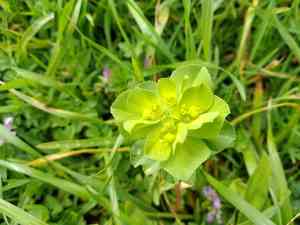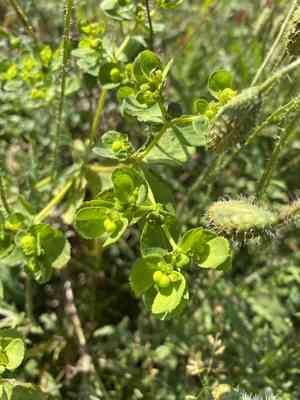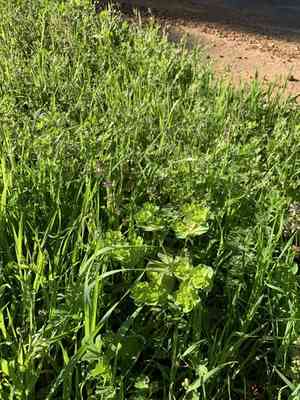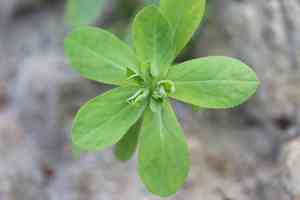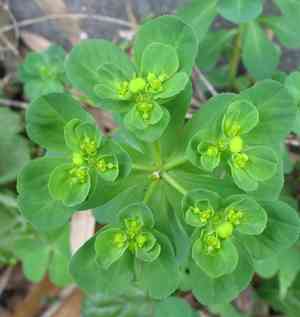
Sun spurge(Euphorbia helioscopia)

Sun spurge (Euphorbia helioscopia)

Also known as: Umbrella milkweed

Sun spurge (Euphorbia helioscopia) is a winter annual commonly found in diverse settings, including gardens and wastelands. It is characterized by its red stems and toothed leaves, which release a toxic milky sap when damaged. The plant produces pale yellow flowers that bloom from spring through summer, followed by fruit. Often regarded as a weed, sun spurge thrives in various environments.

Attributes of Sun spurge

Lifespan
Annual, Biennial
Plant Type
Herb
Plant Height
10 cm to 50 cm
Spread
50 cm
Leaf Color
Green Yellow
Flower Size
2 mm
Flower Color
Yellow Green

ForwardPlant - Identify plants with a snap

Identify and diagnose plants, get toxicity alerts, and explore safety guides for all types of fungi.

Try for Free

Images of Sun spurge

Sun spurge(Euphorbia helioscopia)

Quickly Identify Sun spurge

1
Identify Euphorbia helioscopia by its unique umbrella-like flower arrangements and the milky latex that exudes from broken stems. The leaves are ovate to obovate with serrated edges and are arranged alternately or spirally around the stem.

Scientific Classification of Sun spurge

Phylum
Vascular plants
Class
Dicotyledons
Order
Malpighiales
Family
Spurge
Genus
Spurges
Species
Sun spurge

Planting and Growing of Sun spurge

Care Difficulty
Easy
Watering Schedule
Every 2 days
Sunlight Requirements
Full sun
Sunshine Duration
6-8 hours
Ideal Temperature
60-75℉
Soil Type
Potting Mix, Peat Mix
Soil pH
6-7.5
Fertilizer Type
Balanced
Pruning Season
Spring, Summer
Pruning Area
Branches, Leaves
Pruning Frequency
2 times a year
Repotting Season
Spring
Pot Type
Plastic, Ceramic

water icon How to Water Sun spurge?

For Euphorbia helioscopia, the amount of water should be just enough to moisten the soil without making it soggy. Aim to pour approximately 200ml of water per watering. The principle here is to ensure that the soil is evenly moist, allowing the roots to access enough moisture without sitting in waterlogged conditions.
What are the symptoms of an underwatered Sun spurge?
What should I do if my Sun spurge is not getting enough water?
What are the symptoms of an overwatered Sun spurge?
How to save an overwatered Sun spurge?

sunlight icon What Are the Sunlight Requirements for Sun spurge?

Sunlight Requirements: Full sun, Partial sun
Duration of light: 6-8 hours of sunlight
Partial sun provides about 6-8 hours of sunlight. This range promotes a balanced energy intake, ensuring Euphorbia helioscopia thrives with robust foliage and potential flowering.
What are the best lighting conditions?
How to achieve optimal lighting?
Benefits of ideal light exposure?

temperature icon What Is the Ideal Temperature Range for Sun spurge?

Ideal Temperature: 60 ~ 75℉
Euphorbia helioscopia thrives best in temperatures ranging from 60 to 75°F. This range ensures that the plant's metabolic functions work efficiently, promoting healthy growth and reproduction. Maintaining this temperature band is crucial for achieving optimal plant development.

soil icon What Soil is Best for Sun spurge?

Soil type: Loam, Sandy loam, Sandy soil
Soil PH: 6 ~ 7.5
Euphorbia helioscopia thrives best in well-drained soil. This prevents waterlogging which can lead to root rot, ensuring the plant's roots receive adequate air flow and remain healthy. Adding organic matter to the soil can improve fertility, providing essential nutrients that the plant needs to grow and bloom vigorously. This plant prefers soil that retains some moisture but isn't constantly wet. This balance ensures that Euphorbia helioscopia can absorb water as needed without the risk of fungal diseases.

fertilize icon How to Fertilize Sun spurge?

Fertilizer type: Balanced
For Euphorbia helioscopia, a balanced approach is key. Use liquid fertilizer at half-strength every two weeks and apply 40 grams of slow-release pellets quarterly. This maintains optimal growth without stressing the plant.

prune icon How to Prune Sun spurge?

Pruning Time: Spring, Summer
Begin by identifying any dead or damaged branches and remove them first. Use sharp pruning shears to cut cleanly just above a leaf node or lateral branch. Trim back excessively long or unruly stems to maintain the desired shape and size. Focus on thinning out areas that might be too dense to improve air circulation. After pruning, discard the trimmings carefully, particularly if they are sap-covered, to prevent any unwanted skin contact.

propagate icon How to Propagate Sun spurge plant?

Propagate Time: Spring, Early spring
1
Start by filling a seed tray with potting soil. Plant the seeds shallowly into the soil, covering them lightly. Keep the tray in a warm, sunny place, maintaining soil moisture without overwatering.
2
Once the seedlings have developed a strong root system and true leaves, they can be transplanted into individual pots or directly into the garden. Handle the seedlings with care to avoid damaging the roots.
3
After transplanting, establish a regular watering routine. Ensure the soil remains moist but not waterlogged, to support the growth of the young plants without causing root rot.

repot icon How to Repot Sun spurge plant?

Repotting frequency: Once every two years
1
Euphorbia helioscopia typically signals it's ready for repotting when the roots start to emerge from the drainage holes or its growth noticeably slows down. The plant might also appear root-bound, with roots visibly circling the pot. Performing the repotting process during its active growth period in spring or early summer promotes optimal recovery and growth adaptation to its new environment.
2
Select a pot that is approximately 2 inches larger in diameter than the current one. Ensure that it has adequate drainage holes to prevent waterlogging, which could otherwise lead to root rot. A slightly breathable material like terracotta is preferred, as it allows excess moisture to evaporate, keeping the root system healthy and vibrant.
3
Choose a well-draining sandy mix that replicates the plant’s native environment. Sand-based soil ensures that water drains quickly, preventing root rot and allowing the plant to thrive. Adding perlite or pumice can further enhance drainage, providing a robust foundation for the plant's growth and health.

ForwardPlant - Identify plants with a snap

Find the best spots for them to optimize their health, simply using your phone.

Try for Free

Toxicity of Sun spurge

Is Sun spurge toxic to humans?

Sun spurge is a highly toxic plant, possessing harmful toxins in its leaves, roots, and stems. Additionally, it secretes a latex or sap that is especially hazardous due to its elevated concentration of toxic compounds. When sun spurge makes direct contact with the skin, it can cause irritation and severe inflammation in the affected region, with the intensity of the reaction increasing if there is an open wound present. Ingesting sun spurge may result in symptoms such as nausea, vomiting, and heightened sensitivity to light. Furthermore, repeated consumption of sun spurge could potentially lead to cancer development, as the plant contains carcinogenic properties.

Is Sun spurge toxic to cat?

Sun spurge, commonly referred to as Sun spurge, exhibits a moderate toxicity level for cats. Exposure may happen if a cat comes into contact with or consumes any part of the plant, particularly through the plant's sap. The toxic agents in this plant are Diterpene esters. After exposure, cats may show various negative symptoms indicating physical distress. Pet owners should remain alert and, if they believe their cat has been poisoned by sun spurge, it is crucial to obtain prompt veterinary assistance to safeguard their pet's health and welfare.

Is Sun spurge toxic to dog?

Sun spurge presents a moderate risk of toxicity for dogs. Canines can be poisoned by sun spurge through dermal exposure to the plant's sap or by accidentally consuming it. Symptoms of poisoning in dogs may include vomiting, diarrhea, excessive salivation, and potentially more severe adverse reactions depending on the extent of exposure. The toxic agents in sun spurge that lead to these symptoms are the diterpene esters located within the plant's sap. If a dog comes into contact with or ingests any part of sun spurge, it is essential to seek prompt veterinary assistance to ensure adequate treatment and management of the symptoms.

Identify toxic plants for your safety

Learn which plants are harmful to you and your pets, and make informed choices for a safer home!

Try for Free
WARNING
The judgment on toxicity and danger is for reference only. We DO NOT GUARANTEE any accuracy of such judgment. Therefore, you SHALL NOT rely on such judgment. It is IMPORTANT TO SEEK PROFESSIONAL ADVICE in advance when necessary.
More About Toxic Techniques