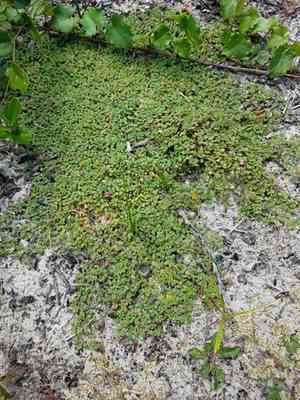
Heartleaf sandmat (Euphorbia cordifolia)
Also known as: None identified
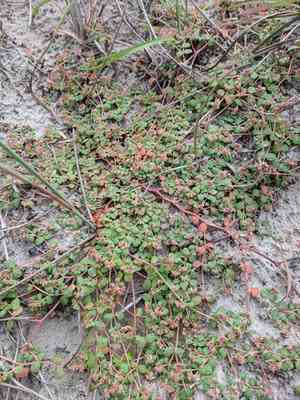
The heartleaf sandmat (Chamaesyce cardiophylla) is well-adapted to arid environments through several distinctive features:
1. **Deep Root System:** Its extensive taproot system penetrates deep into the soil, accessing water reserves unavailable to plants with shallower roots.
2. **Reduced Leaf Size:** The small, heart-shaped leaves minimize surface area, reducing water loss through transpiration.
3. **Water-Conserving Photosynthesis:** Utilizing C4 photosynthesis, the plant efficiently manages water use, keeping stomata closed during the hottest parts of the day.
4. **Prostrate Growth Habit:** Growing close to the ground, it reduces exposure to harsh sunlight and wind, thereby conserving moisture.
5. **Dormant Seeds:** Seeds remain dormant during droughts and germinate quickly when moisture is present, ensuring survival through varying conditions.
These adaptations enable the heartleaf sandmat to flourish in the challenging conditions of arid regions.
Attributes of Heartleaf sandmat
Images of Heartleaf sandmat
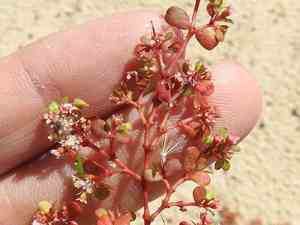
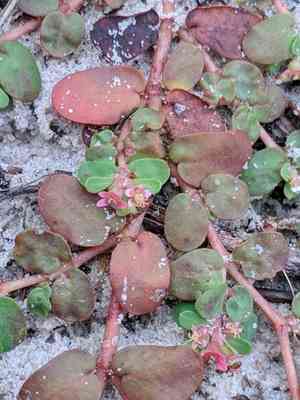
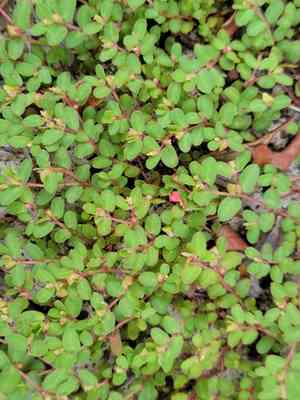
Quickly Identify Heartleaf sandmat
Scientific Classification of Heartleaf sandmat
Planting and Growing of Heartleaf sandmat
 How to Water Heartleaf sandmat?
 What Are the Sunlight Requirements for Heartleaf sandmat?
 What Is the Ideal Temperature Range for Heartleaf sandmat?
 What Soil is Best for Heartleaf sandmat?
 How to Fertilize Heartleaf sandmat?
 How to Prune Heartleaf sandmat?
 How to Propagate Heartleaf sandmat plant?
 How to Repot Heartleaf sandmat plant?
Toxicity
Ingestion, Dermal contact


