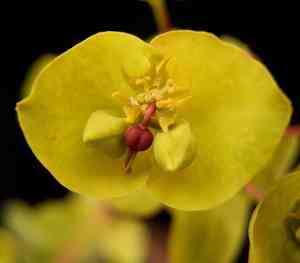
Candelabra tree (Euphorbia cooperi)
Also known as: Candelabra Euphorbia, Tree Euphorbia
The candelabra tree, native to South Africa, resembles a cactus with its thick, water-storing branches. These branches have a cylindrical shape and bear small leaves that fall off during dry periods, conserving moisture. This adaptation helps the tree survive in arid climates. In spring, it features colorful cyathia, enhancing its striking appearance.
In This Article
Attributes of Candelabra tree
Lifespan
Perennial
Plant Type
Tree, Succulent
Plant Height
3 to 5 meters
Spread
1 to 3 meters
Leaf Color
Green
Flower Size
Small (~1 cm)
Flower Color
Yellow-green
Images of Candelabra tree


Quickly Identify Candelabra tree
1
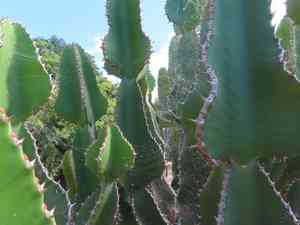
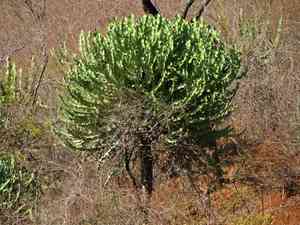
Euphorbia cooperi can be identified by its prominently ridged and segmented succulent stems, which are often arranged in a candelabra-like shape. These plants may also produce small, yellow-green flowers.
Scientific Classification of Candelabra tree
Phylum
Vascular plants
Class
Dicotyledons
Order
Malpighiales
Family
Spurge
Genus
Spurges
Species
Candelabra tree
Planting and Growing of Candelabra tree
Care Difficulty
Easy
Watering Schedule
Every 2 days
Sunlight Requirements
Full sun
Sunshine Duration
4-6 hours
Ideal Temperature
65-80℉
Soil Type
Potting Mix, Peat Mix
Soil pH
6.5-7.5
Fertilizer Type
Balanced
Pruning Season
Spring, Summer
Pruning Area
Branches, Leaves
Pruning Frequency
2 times a year
Repotting Season
Spring
Pot Type
Plastic, Terracotta
 How to Water Candelabra tree?
Euphorbia cooperi, commonly known as the candelabra tree, should be watered with around 200 ml each session. Ensure the top inch of soil dries out between waterings. Over-watering can cause root rot, while under-watering may lead to shrivelled branches. Water slowly so that the soil absorbs moisture evenly.
What are the symptoms of an underwatered Candelabra tree?
›
What should I do if my Candelabra tree is not getting enough water?
›
What are the symptoms of an overwatered Candelabra tree?
›
How to save an overwatered Candelabra tree?
›
 What Are the Sunlight Requirements for Candelabra tree?
Euphorbia cooperi thrives in areas with full sun exposure but can adapt to partial sun. This lighting supports healthy growth, lush foliage, and robust structural development.
How can Euphorbia cooperi attain its ideal lighting?
›
What are the benefits of optimal lighting for Euphorbia cooperi?
›
What measures should be taken to manage light effectively?
›
 What Is the Ideal Temperature Range for Candelabra tree?
The ideal temperature range for growing Euphorbia cooperi is between 65°F and 80°F. Maintaining this temperature range ensures optimal physiological processes, including photosynthesis and nutrient uptake, promoting healthy growth. Ensure the temperatures stay within this range by using climate control systems if you are growing this plant indoors.
 What Soil is Best for Candelabra tree?
Euphorbia cooperi thrives in well-draining soil to prevent root rot, a common issue in overly moist conditions. This quality allows oxygen to reach the roots, promoting healthy growth and preventing waterborne diseases. While being somewhat tolerant of poor soils, Euphorbia cooperi appreciates a nutrient-rich environment for optimal growth. Nutrients in the substrate support robust stem and leaf development, enhancing the plant's ornamental value. Although preferring drier conditions, the soil should retain some moisture to support intermittent periods without watering. This balance ensures the plant remains hydrated without becoming waterlogged, crucial in maintaining its structural integrity.
 How to Fertilize Candelabra tree?
For Euphorbia cooperi, use a balanced liquid fertilizer, diluted to half-strength. Apply approximately 50ml of this diluted solution per plant. Ensure even distribution around the base without over-moistening the soil.
 How to Prune Candelabra tree?
Begin by examining the plant for any dead or damaged branches. These can be identified by their dry, brittle appearance and should be removed first to encourage healthy growth. After removing damaged branches, focus on shaping the canopy by trimming back overgrown sections to maintain the plant’s desired size and form. This helps in promoting even growth and can enhance the overall aesthetic of the plant. Identify any branches that are competing for space and light. Removing selectively from crowded areas helps in ensuring each branch receives adequate light and air circulation, fostering a balanced and healthy plant. Cut back any suckers (shoots growing from the base) and water sprouts (vigorous vertical shoots) as these can divert energy from the main growth and disrupt the plant’s structure.
More About Pruning Techniques→
 How to Propagate Candelabra tree plant?
1
Collect seeds from mature Euphorbia cooperi plants. Ensure the seeds are fully ripe, which increases their viability and chances of successful germination.
2
Select healthy stems for cuttings, making sure to cut them just below a node. Remove any leaves from the lower part of the cutting to avoid rot.
3
For both seeds and cuttings, plant them in a well-draining cactus mix soil. This soil type prevents excess moisture and supports root development.
 How to Repot Candelabra tree plant?
1
Euphorbia cooperi needs repotting when you observe roots coming out of the drainage holes or the soil retaining moisture for too long. Pay attention to its growth rate; a slowed-down growth is another sign indicating it's time for a new pot.
2
Select a pot that is one size larger than the current one. The pot should have ample drainage holes to prevent waterlogging. A terracotta pot is a great choice as it allows for better air circulation and moisture evaporation, which is beneficial for Euphorbia cooperi.
3
Opt for a well-draining cactus mix, which typically contains sand, perlite, or pumice for good aeration. This type of soil minimizes the risk of root rot and provides a sturdier environment for the plant to anchor its roots.
Toxicity
ingestion, skin contact
WARNING
The judgment on toxicity and danger is for reference only. We DO NOT GUARANTEE any accuracy of such judgment. Therefore, you SHALL NOT rely on such judgment. It is IMPORTANT TO SEEK PROFESSIONAL ADVICE in advance when necessary.



