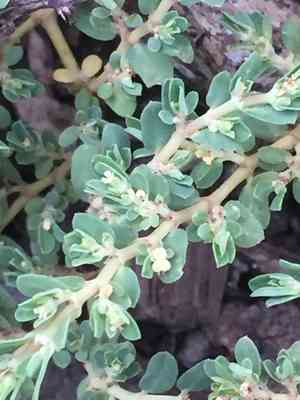
Limestone sandmat (Euphorbia blodgettii)
Also known as: Blodgett's spurge
The limestone sandmat is a hardy perennial succulent that flourishes in rocky or sandy environments. Preferring full sunlight, its cylindrical, fleshy stems are optimized for photosynthesis, minimizing the need for large leaves. This plant typically forms low-growing clusters or mats and produces subtle greenish-yellow flowers from spring to early summer, perfectly adapted to its dry, arid habitat.
In This Article
Attributes of Limestone sandmat
Lifespan
Perennial
Plant Height
Up to 30 cm (12 inches)
Spread
Spreading mat, up to 1 meter (3.3 feet) across
Leaf Color
Green
Flower Size
Less than 1 cm
Flower Color
Yellowish-green
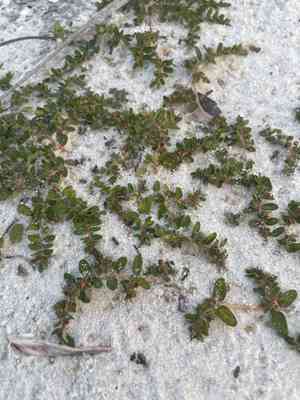
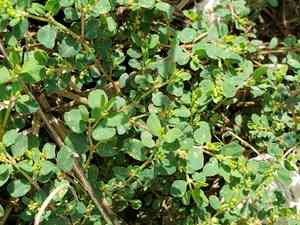
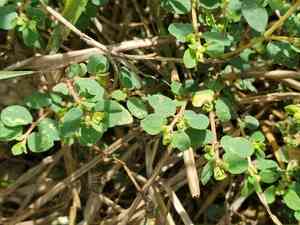
Images of Limestone sandmat
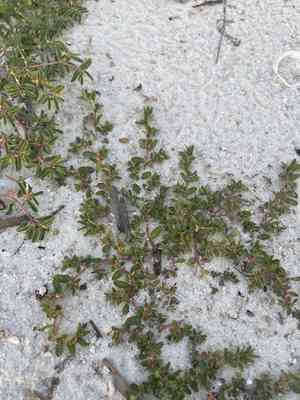
Quickly Identify Limestone sandmat
1
Euphorbia blodgettii can be identified by its small, oblong leaves and tiny yellowish-green flowers. It often grows in low, spreading mats and has a milky sap when broken. The stems are usually reddish in color.
Scientific Classification of Limestone sandmat
Phylum
Vascular plants
Class
Dicotyledons
Order
Malpighiales
Family
Spurge
Genus
Spurges
Species
Limestone sandmat
Planting and Growing of Limestone sandmat
Care Difficulty
Moderate
Watering Schedule
Every 2 days
Sunlight Requirements
Full sun
Sunshine Duration
6-8 hours
Ideal Temperature
65-75℉
Soil Type
Potting Mix, Peat Mix
Soil pH
6.5-7.5
Fertilizer Type
Balanced
Pruning Season
Spring, Summer
Pruning Area
Branches, Leaves
Pruning Frequency
Once a year
Repotting Season
Spring
Pot Type
Plastic, Terracotta
 How to Water Limestone sandmat?
Euphorbia blodgettii requires moderate watering. Water the plant until the topsoil is thoroughly moistened but avoid waterlogging. The goal is to mimic their natural habitat which is characterized by infrequent yet substantial rainfall.
What are the symptoms of an underwatered Limestone sandmat?
›
What should I do if my Limestone sandmat is not getting enough water?
›
What are the symptoms of an overwatered Limestone sandmat?
›
How to save an overwatered Limestone sandmat?
›
 What Are the Sunlight Requirements for Limestone sandmat?
Euphorbia blodgettii does best with partial to full sun, ideally 6-8 hours of sunlight. Ideal lighting ensures healthy, robust growth, preventing issues like legginess or leaf burn.
How much light does Euphorbia blodgettii need?
›
What is the solution to achieve ideal lighting for Euphorbia blodgettii?
›
What are the benefits of providing ideal lighting conditions?
›
 What Is the Ideal Temperature Range for Limestone sandmat?
Euphorbia blodgettii thrives best within a temperature range of 65°F to 75°F. This range provides optimal conditions for growth and physiological processes. Consistent temperatures within this range help maintain the plant's health by supporting adequate photosynthesis rates and nutrient uptake.
 What Soil is Best for Limestone sandmat?
Euphorbia blodgettii thrives in well-drained soils that prevent waterlogging, which can lead to root rot. Ensuring good drainage helps the plant maintain healthy roots and overall vigor. While not overly demanding, adding organic matter can enhance soil fertility, promoting robust growth and vibrant foliage. Enriched soil supports the plant's blooming and resilience. A balanced moisture level is crucial; too dry can stress the plant, while too wet can suffocate the roots. Regular but moderate watering mimics its natural habitat, providing the care it needs.
 How to Fertilize Limestone sandmat?
Euphorbia blodgettii benefits from a balanced fertilizer diluted to half strength. When using liquid fertilizers, apply no more than 1-2 tablespoons per gallon of water to prevent root damage.
 How to Prune Limestone sandmat?
Use sharp, clean pruning shears to trim Euphoria blodgettii. Sharp tools ensure clean cuts, reducing damage to the plant and the chance of disease. Avoid using dull instruments, as they can tear and damage the stems. Start by removing any dead or damaged stems, cutting them at a slight angle. Next, shape the plant by trimming overgrown branches, maintaining the natural form. Be cautious not to over-prune, ensuring a healthy growth pattern. Prune just above leaf nodes to encourage branching and fuller growth. This also helps the plant to maintain its vigor and appearance. Regular pruning encourages new, healthy growth and blooms.
More About Pruning Techniques→
 How to Propagate Limestone sandmat plant?
1
Select a healthy, disease-free stem and use pruning shears to cut a 4-6 inch segment. Remove the lower leaves to expose at least a pair of nodes where roots can potentially emerge.
2
Dip the cut end of the stem into rooting hormone to encourage root growth. Make sure to tap off any excess powder to prevent over-application and potential harm to the plant tissue.
3
Place the treated cutting into a pot filled with a well-draining growing medium. Ensure the cut end is buried at least a couple of inches deep, and gently firm the soil around the base to provide support.
 How to Repot Limestone sandmat plant?
1
Look for signs such as root-bound pots, slow growth, and leaf discoloration. Euphorbia blodgettii needs repotting when roots start to circle the pot or emerge through drainage holes. Spring and autumn are ideal for repotting, as the plant is less stressed and can more easily adjust to its new environment.
2
Select a pot that is one size larger, with sufficient drainage holes at the bottom. A terracotta or clay pot is beneficial as it allows better air circulation and prevents water retention, reducing the risk of root rot. Ensure the pot provides enough space for the plant to establish new roots.
3
Opt for a well-draining cactus or succulent potting mix, which typically includes sand, perlite, and a little organic matter. This type of soil prevents water from lingering around the roots, thereby reducing the risk of rot and ensuring healthy growth. Adding some coarse sand or perlite further enhances drainage.
Toxicity
Ingestion, Skin contact
WARNING
The judgment on toxicity and danger is for reference only. We DO NOT GUARANTEE any accuracy of such judgment. Therefore, you SHALL NOT rely on such judgment. It is IMPORTANT TO SEEK PROFESSIONAL ADVICE in advance when necessary.
Learn More About Limestone sandmat Diseases
Anthracnose
Bacterial Leaf Spot
Bacterial Soft Rot
Bacterial Wilt
Black Spot
Chemical Injury
Crown Gall
Cyst Nematode
Damping-off
Downy Mildew
Drought Stress
Fusarium Wilt
Gray Mold
Leaf Curl
Leaf Spot
Mosaic
Nutrient Deficiency
Nutrient Toxicity
Powdery Mildew
Root Rot
Root-knot Nematode
Rusts
Sooty Mold
Spider Mites
Temperature Stress
Thrips Damage
White Mold


