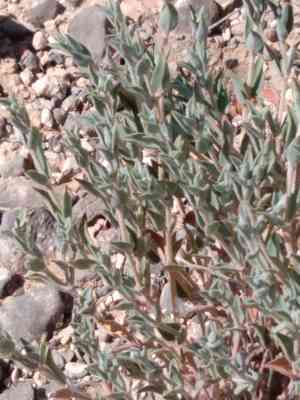
Pointed sandmat (Euphorbia acuta)
Also known as: Nervous Spurge
Pointed sandmat (Chamaesyce serrula) is well-equipped for survival in arid environments. This hardy plant features deep roots that tap into underground water sources. Its small, thick leaves minimize water loss and are coated with a waxy layer to retain moisture. The plant utilizes CAM photosynthesis, opening its stomata at night to reduce water loss. Additionally, its seeds can lie dormant until conditions are favorable. These traits collectively enable pointed sandmat to persist in harsh, dry climates.
In This Article
Attributes of Pointed sandmat
Lifespan
Perennial
Plant Type
Herb, Succulent
Plant Height
30 cm to 91 cm
Spread
1 to 2 feet
Leaf Color
Green
Flower Size
0.1 to 0.3 inches
Flower Color
Yellow-green
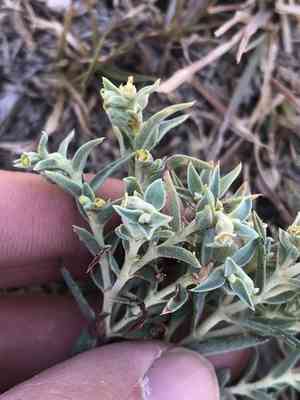
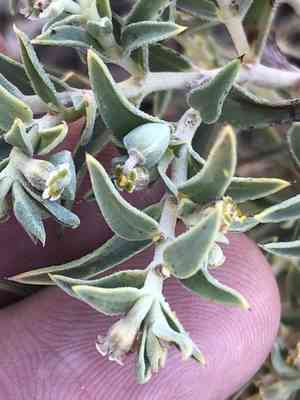
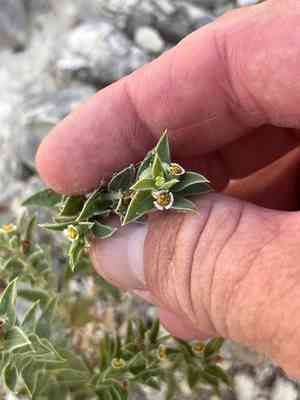
Images of Pointed sandmat
Quickly Identify Pointed sandmat
1
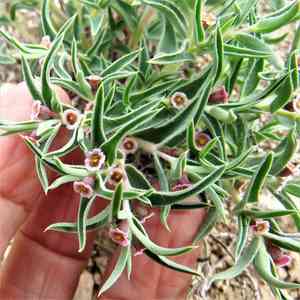
Euphorbia acuta can be identified by its slender, cylindrical stems which are often grooved and segmented. The leaves are small, sparse, and mainly subulate. During the blooming period, it bears small, yellow-green flowers which are arranged in clusters.
Scientific Classification of Pointed sandmat
Phylum
Vascular plants
Class
Dicotyledons
Order
Malpighiales
Family
Spurge
Genus
Spurges
Species
Pointed sandmat
Planting and Growing of Pointed sandmat
Care Difficulty
Easy
Watering Schedule
Every 2 days
Sunlight Requirements
Full sun
Sunshine Duration
4-8 hours
Ideal Temperature
65-75℉
Soil Type
Potting Mix, Peat Mix
Soil pH
6.5-7.5
Fertilizer Type
Balanced
Pruning Season
Spring, Summer
Pruning Area
Branches, Leaves
Pruning Frequency
2 times a year
Repotting Season
Spring
Pot Type
Plastic, Terracotta
 How to Water Pointed sandmat?
Euphorbia acuta requires a modest watering regime, as it is adapted to somewhat arid conditions. Water the plant until the soil is evenly moist but not soaked. The watering should reach a depth where the soil feels lightly dampened, ensuring it's not overly saturated to prevent root rot.
What are the symptoms of an underwatered Pointed sandmat?
›
What should I do if my Pointed sandmat is not getting enough water?
›
What are the symptoms of an overwatered Pointed sandmat?
›
How to save an overwatered Pointed sandmat?
›
 What Are the Sunlight Requirements for Pointed sandmat?
For Euphorbia acuta, an ideal range consists of full to partial sun. This light balance promotes vigorous growth and maximizes flower production when exposed to optimal sunlight.
What is the ideal lighting condition?
›
How can I achieve this ideal lighting?
›
What are the benefits of ideal lighting?
›
 What Is the Ideal Temperature Range for Pointed sandmat?
The ideal temperature range for Euphorbia acuta is between 65°F and 75°F. This range ensures optimal growth and metabolic activities. Within this temperature window, the plant maintains its physiological processes efficiently, promoting healthy development and blooming. Providing a consistent temperature within this range helps in preventing stress and disease susceptibility.
 What Soil is Best for Pointed sandmat?
Euphorbia acuta thrives in well-draining soil that prevents waterlogging, which is crucial for avoiding root rot. This type of soil ensures that the plant's roots have access to necessary oxygen while excess water can escape easily. While not particularly demanding, Euphorbia acuta benefits from soil with moderate nutrient levels. Providing a balanced level of nutrients supports healthy growth and enhances the plant's resilience to environmental stressors. A loose soil structure is vital for Euphorbia acuta as it allows the roots to spread easily and access air and nutrients. Soil that is too compact can limit root expansion and reduce the plant's health and vigor.
 How to Fertilize Pointed sandmat?
Euphorbia acuta requires moderate amounts of fertilizer to thrive. For liquid fertilizers, it is recommended to use a diluted concentration of about 50% of the recommended dose on the label to avoid burning the roots. For slow-release fertilizers, use a balanced 10-10-10 formula at half the label rate once per growing season to provide a steady supply of nutrients over time.
 How to Prune Pointed sandmat?
To maintain a compact shape and promote bushier growth, regularly trim the ends of branches. Remove any growth that begins to elongate excessively, cutting just above a leaf node to encourage branching. If the plant becomes too large for its space, trim back the overall size by cutting back larger branches. Always prune to an outward-facing bud or branch to encourage an open growth habit, ensuring extra space for overall development. During spring, summer, and autumn, focus on maintaining shape and health. Avoid heavy pruning in winter to allow the plant energy conservation. Opt for light, corrective pruning to remove any crowding or dead parts.
More About Pruning Techniques→
 How to Propagate Pointed sandmat plant?
1
Select a healthy section of the plant, preferably from new growth, and cut a 4-6 inch segment at an angle. Remove any leaves from the lower half of the cutting to prevent rot and prepare it for planting.
2
Dip the cut end of the cutting into rooting hormone powder, shaking off any excess. This step is crucial as it promotes root development and increases the chances of successful propagation.
3
Insert the prepared cutting into a pot with a well-draining soil mix. Firm the soil around the base of the cutting and water lightly to settle the soil around the new plant.
 How to Repot Pointed sandmat plant?
1
Repot Euphorbia acuta when you notice the roots growing out of the drainage holes, or if the plant appears top-heavy and unstable. Also, if the soil seems depleted of nutrients, it might be time to repot. Spring and summer are the ideal seasons as the plant is actively growing and can recover more swiftly.
2
The pot should have drainage holes and be slightly larger than the current one, allowing for root growth. A terracotta pot is beneficial as it allows moisture to evaporate, preventing root rot. Ensuring proper pot size and material aids in maintaining healthy and robust growth.
3
Opt for a well-draining cactus mix, which ensures excess moisture does not accumulate at the roots. This mix often contains sand, perlite, or pumice, enhancing drainage and preventing root rot, a common issue with Euphorbia.
Toxicity
Ingestion, Skin contact
WARNING
The judgment on toxicity and danger is for reference only. We DO NOT GUARANTEE any accuracy of such judgment. Therefore, you SHALL NOT rely on such judgment. It is IMPORTANT TO SEEK PROFESSIONAL ADVICE in advance when necessary.
Learn More About Pointed sandmat Diseases
Anthracnose
Bacterial Leaf Spot
Bacterial Soft Rot
Bacterial Wilt
Chemical Injury
Crown Gall
Damping-off
Downy Mildew
Drought Stress
Fusarium Wilt
Gray Mold
Leaf Spot
Mosaic
Nutrient Deficiency
Nutrient Toxicity
Powdery Mildew
Root Rot
Root-knot Nematode
Rusts
Sooty Mold
Spider Mites
Temperature Stress
Thrips Damage
White Mold


