Hyssopleaf thoroughwort(Eupatorium hyssopifolium)

Hyssopleaf thoroughwort (Eupatorium hyssopifolium)

Also known as: Justice Weed

Planting Hyssopleaf thoroughwort (Eupatorium hyssopifolium) in your garden provides several advantages:

1. **Pollinator Magnet**: Its abundant white flowers, blooming in the fall, lure bees, butterflies, and moths, enhancing pollination.
2. **Resilient Plant**: This plant is salt-tolerant and shows strong resistance to mildew, deer, and other herbivores, making it a hardy choice.
3. **Winter Interest**: Even in winter, the dried flower heads remain appealing and offer seeds that attract birds.
4. **Low Maintenance**: Adaptable to various soil types, it requires minimal upkeep once established.
5. **Eco-Friendly**: As a native species, it supports local wildlife and contributes to the health of the ecosystem.

In summary, Hyssopleaf thoroughwort is a robust, attractive addition to any garden, promoting ecological balance and providing year-round interest.

Attributes of Hyssopleaf thoroughwort

Lifespan
Perennial
Plant Type
Herb
Plant Height
1.2 m
Spread
60 cm
Leaf Color
Green Blue
Flower Size
2.5 cm
Flower Color
White

ForwardPlant - Identify plants with a snap

Identify and diagnose plants, get toxicity alerts, and explore safety guides for all types of fungi.

Try for Free

Images of Hyssopleaf thoroughwort

Hyssopleaf thoroughwort(Eupatorium hyssopifolium)

Quickly Identify Hyssopleaf thoroughwort

1
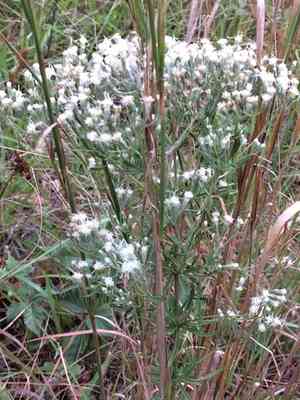
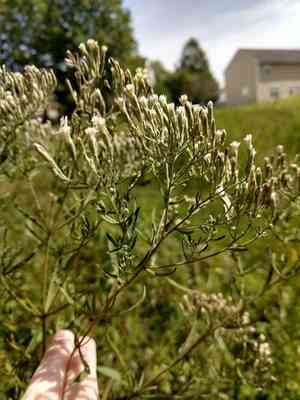
Erect stems, dark purple or brown, slightly hairy, slender (0.1-0.2 inches or 2.5-5 mm).
2
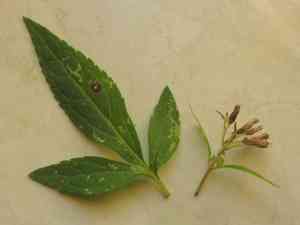
Narrow lanceolate leaves, oppositely arranged, similar to hyssop, 3/4 to 2 inches long.
3
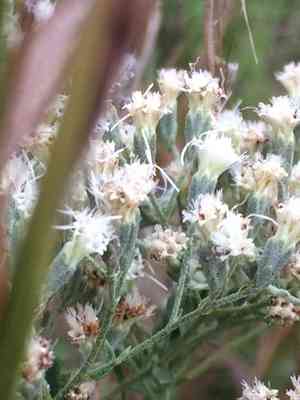
Flat-topped clusters of white tubular disc flowers without ray petals, 5-10 inches across.
4
Small, dry achene fruit with tufted white pappus hairs, light brown, 0.08-0.16 inches long.
5
Leaves in whorls of three or four, rolled inward margins, sessile, 2 to 5 cm long.

Scientific Classification of Hyssopleaf thoroughwort

Phylum
Vascular plants
Class
Dicotyledons
Order
Asterales
Family
Daisy
Genus
Bonesets
Species
Hyssopleaf thoroughwort

Planting and Growing of Hyssopleaf thoroughwort

Care Difficulty
Easy
Watering Schedule
Every 2 days
Sunlight Requirements
Full sun
Sunshine Duration
4-8 hours
Ideal Temperature
60-75℉
Soil Type
Potting Mix, Peat Mix
Soil pH
6.5-7.5
Fertilizer Type
Balanced
Pruning Season
Spring, Summer
Pruning Area
Branches, Leaves
Pruning Frequency
2 times a year
Repotting Season
Spring
Pot Type
Plastic, Terracotta

water icon How to Water Hyssopleaf thoroughwort?

Eupatorium hyssopifolium requires a moderate amount of water but does not like to sit in waterlogged soil. Ensure that the soil is evenly moist but not overly saturated. Watering should stop when a slight excess comes out of the drainage holes.
What are the symptoms of an underwatered Hyssopleaf thoroughwort?
What should I do if my Hyssopleaf thoroughwort is not getting enough water?
What are the symptoms of an overwatered Hyssopleaf thoroughwort?
How to save an overwatered Hyssopleaf thoroughwort?

sunlight icon What Are the Sunlight Requirements for Hyssopleaf thoroughwort?

Sunlight Requirements: Full sun, Partial sun
Duration of light: 4 to 6 hours
Eupatorium hyssopifolium benefits most from partial to full sun, ensuring healthy growth and abundant flowering. Optimal light ranges produce vibrant foliage with improved resistance to stresses and enhanced aesthetic appeal.
What kind of light does Eupatorium hyssopifolium prefer?
How to ensure proper sunlight for Eupatorium hyssopifolium?
What happens if Eupatorium hyssopifolium receives optimal sunlight?
More About Sunlight Requirements Techniques

temperature icon What Is the Ideal Temperature Range for Hyssopleaf thoroughwort?

Ideal Temperature: 60 ~ 75℉
The ideal temperature range for Eupatorium hyssopifolium is between 60°F to 75°F. This range provides the best conditions for growth and flowering. Maintaining this temperature ensures proper metabolic functions and nutrient uptake, leading to a healthier and more vibrant plant.

soil icon What Soil is Best for Hyssopleaf thoroughwort?

Soil type: Sandy soil, Loam, Sandy loam
Soil PH: 6.5 ~ 7.5
Eupatorium hyssopifolium requires soil with excellent drainage capabilities. Good drainage prevents waterlogged conditions, which can lead to root rot. This ensures the plant maintains a healthy root system essential for nutrient uptake and overall growth. A moderately fertile soil is beneficial for Eupatorium hyssopifolium, as it provides essential nutrients while avoiding excessive fertility that could lead to weaker stems. Balanced fertility supports vibrant growth and enhances the plant's blooming potential. Eupatorium hyssopifolium thrives in slightly acidic to neutral pH soils. This pH range ensures optimal nutrient availability and supports beneficial microbial activity, contributing to the plant's overall vigor and resilience.

fertilize icon How to Fertilize Hyssopleaf thoroughwort?

Fertilizer type: Balanced
When applying fertilizer to Eupatorium hyssopifolium, it's important to strike a balance. Use a low to mid-range nitrogen fertilizer, diluting liquid fertilizers to half-strength for monthly applications to avoid overfeeding.

prune icon How to Prune Hyssopleaf thoroughwort?

Pruning Time: Spring, Summer, Autumn
Start by removing any dead or diseased stems. Cut back the older, woody stems to promote new growth. Trim selectively to shape the plant and remove any unruly or crossing branches. Aim to maintain an open center to facilitate light and air circulation. After pruning, water the plant thoroughly to help it recover quickly. If the plant is becoming too woody or sparse, consider a rejuvenation prune. This involves cutting the plant back hard, leaving only a few inches above the ground. This drastic measure will stimulate robust regrowth, refreshing the plant's appearance and vitality. More About Pruning Techniques

propagate icon How to Propagate Hyssopleaf thoroughwort plant?

Propagate Time: Early spring,Spring,Summer
1
Prepare a well-draining soil mix by combining equal parts of peat, perlite, and sand. This mixture encourages root growth and prevents waterlogging.
2
Gently scatter the seeds over the prepared soil bed and lightly press them into the surface. Keep the soil moist but not waterlogged during the germination period, which usually lasts 2 to 4 weeks.
3
Using sharp pruning shears, take 4-6 inch cuttings from a healthy plant, ensuring at least two nodes are present. Dip the cut end in rooting hormone and plant it in the prepared soil mix.

repot icon How to Repot Hyssopleaf thoroughwort plant?

Repotting frequency: every 2-3 years
1
Eupatorium hyssopifolium shows signs of needing repotting when its roots begin to circle the pot or peek out of the drainage holes. Another indication is slow growth despite optimal care. Typically, this plant is best repotted in spring or autumn, allowing it to settle in mild temperatures.
2
Select a pot one size larger than the current one, ensuring it has ample drainage holes. A terracotta pot is ideal as it allows moisture control and provides weight, adding stability to the plant, which can grow to a significant height.
3
Opt for a well-drained sandy loam soil. This mixture ensures proper water drainage, preventing root rot while providing sufficient nutrients. Adding a bit of perlite or coarse sand will further improve soil aeration, benefiting root health.

ForwardPlant - Identify plants with a snap

Find the best spots for them to optimize their health, simply using your phone.

Try for Free

Toxicity

Ingestion

Identify toxic plants for your safety

Learn which plants are harmful to you and your pets, and make informed choices for a safer home!

Try for Free
WARNING
The judgment on toxicity and danger is for reference only. We DO NOT GUARANTEE any accuracy of such judgment. Therefore, you SHALL NOT rely on such judgment. It is IMPORTANT TO SEEK PROFESSIONAL ADVICE in advance when necessary.