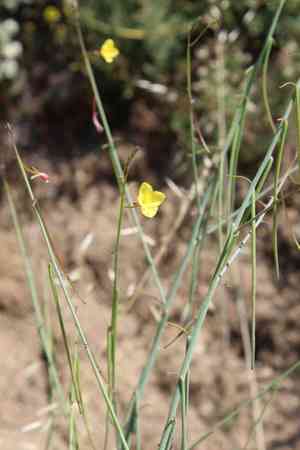
California primrose (Eulobus californicus)
Also known as: Mustard evening-primrose
Eulobus californicus, commonly known as the California primrose, belongs to the evening primrose family. It is indigenous to California, Arizona, and northwestern Mexico, thriving on arid slopes and plains. During the spring, its flowers serve as a food source for White Line Sphinx Moth caterpillars.
In This Article
Attributes of California primrose
Lifespan
Annual, Perennial
Plant Type
Herb
Plant Height
1.5 m
Spread
Not applicable (herbaceous plant)
Leaf Color
Green
Flower Size
6 mm to 1.4 cm
Flower Color
Yellow
Images of California primrose
Quickly Identify California primrose
1
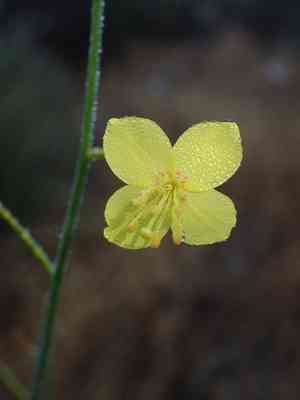
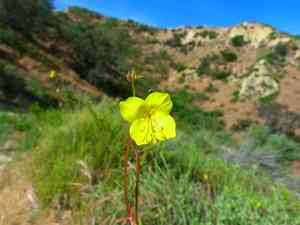
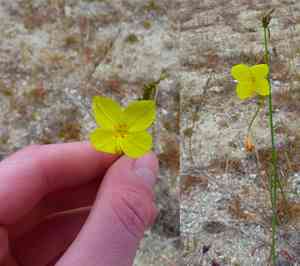
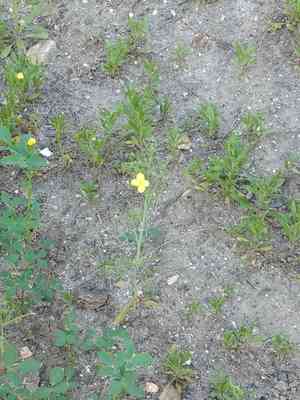
This plant can be identified by its bright yellow, four-petaled flowers, elongated seed pods, and narrowly lance-shaped leaves. The flowers typically bloom in spring and early summer.
Scientific Classification of California primrose
Phylum
Vascular plants
Class
Dicotyledons
Order
Myrtales
Family
Evening primrose
Genus
Eulobus
Species
California primrose
Planting and Growing of California primrose
Care Difficulty
Easy
Watering Schedule
Every 2 days
Sunlight Requirements
Full sun
Sunshine Duration
4-8 hours
Ideal Temperature
70-80℉
Soil Type
Potting Mix, Peat Mix
Soil pH
6.5-7.5
Fertilizer Type
Balanced
Pruning Season
Spring, Summer
Pruning Area
Branches, Leaves
Pruning Frequency
2 times a year
Repotting Season
Spring
Pot Type
Plastic, Ceramic
 How to Water California primrose?
Eulobus californicus, known for thriving in arid environments, requires about 250 milliliters of water per session. The philosophy here is that while you quench its thirst, it should never be drenched. Ensuring the soil dampens rather than saturates is key.
What are the symptoms of an underwatered California primrose?
›
What should I do if my California primrose is not getting enough water?
›
What are the symptoms of an overwatered California primrose?
›
How to save an overwatered California primrose?
›
 What Are the Sunlight Requirements for California primrose?
Eulobus californicus thrives in full sun environments, allowing it to showcase vibrant foliage and abundant blooms. Ideal sun exposure promotes photosynthesis, resulting in robust growth and flowering, ultimately enhancing its visual appeal.
Optimal Sunlight Exposure
›
Adapting to Seasonal Changes
›
Managing Cloudy Day Challenges
›
 What Is the Ideal Temperature Range for California primrose?
For the successful cultivation of Eulobus californicus, the ideal temperature range lies between 70°F and 80°F. This range helps in ensuring optimal growth and blooming. Within this bracket, the plant is able to photosynthesize efficiently, resulting in vibrant foliage and robust blooms.
 What Soil is Best for California primrose?
Eulobus californicus thrives in well-drained soils which prevent waterlogging that can cause root rot. This ensures healthy root systems and optimal nutrient uptake, promoting vigorous growth. Although not overly demanding, Eulobus californicus benefits from soils with moderate nutrient levels, ensuring adequate growth and vibrant blooming throughout its growing season. Maintaining the soil pH close to neutral (around 6.5 to 7.5) allows for optimal nutrient absorption, enhancing plant health and flower production, which is critical for its ornamental appeal.
 How to Fertilize California primrose?
When fertilizing Eulobus californicus, it's important to use a balanced fertilizer with an N-P-K ratio of around 10-10-10. For liquid fertilizers, apply at a concentration of 1 tablespoon per gallon of water. For slow-release fertilizers, distribute 1/4 cup around the base of the plant evenly.
 How to Prune California primrose?
Begin by identifying any dead, diseased, or damaged branches on your Eulobus californicus. These need to be removed first to ensure a healthier, more vibrant plant. If your plant has any sprawling or leggy growth, cut back these stems to a healthy bud. This encourages the plant to grow more densely and bushy, enhancing its overall appearance. To maintain a neat and aesthetic shape, carefully prune around the plant, following its natural form. This ensures that the Eulobus californicus retains its desired profile and continues to thrive.
More About Pruning Techniques→
 How to Propagate California primrose plant?
1
Harvest seeds from mature Eulobus californicus plants when seed pods are dry. Ensure seeds are completely dry before storage, as moisture can lead to mold growth.
2
Take 4-6 inch cuttings from healthy stems. Remove the lower leaves and dip the cut end in rooting hormone to enhance root development before planting.
3
Insert cuttings into a well-drained soil mix. Water thoroughly and cover with a plastic dome or bag to maintain humidity while roots develop.
 How to Repot California primrose plant?
1
Eulobus californicus shows signs of needing repotting when its roots start emerging through the drainage holes or when it becomes root-bound, stifling growth. Another signal is when soil dries out too quickly, indicating it can no longer retain moisture efficiently. Spring and early summer are ideal for repotting, as the plant is actively growing, aiding root recovery.
2
Select a pot only slightly larger than the current one, with good drainage holes. This helps prevent waterlogging, which is crucial to avoid root rot in Eulobus californicus. Preferably, choose a terracotta pot to aid in moisture absorption and allow the roots to 'breathe.'
3
Opt for a well-draining sandy mix with a blend of coarse sand, coir, and some perlite. This type of soil mimics the plant’s natural habitat, ensuring adequate drainage and aeration while preventing water retention that could lead to root rot.
Learn More About California primrose Diseases
Anthracnose
Bacterial Leaf Spot
Bacterial Soft Rot
Bacterial Wilt
Black Spot
Chemical Injury
Crown Gall
Cyst Nematode
Damping-off
Downy Mildew
Drought Stress
Fusarium Wilt
Gray Mold
Leaf Curl
Leaf Spot
Mosaic
Nutrient Deficiency
Nutrient Toxicity
Powdery Mildew
Root Rot
Root-knot Nematode
Rusts
Sooty Mold
Spider Mites
Temperature Stress
Thrips Damage
White Mold



