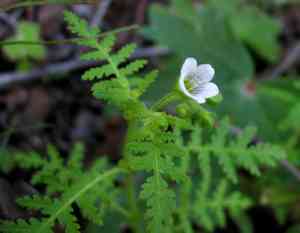
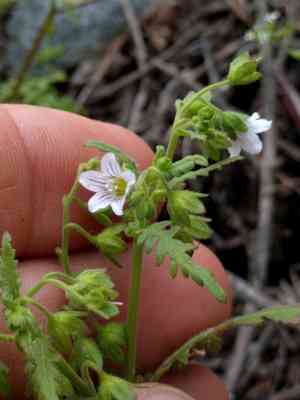
Spotted hideseed (Eucrypta chrysanthemifolia)
Also known as: None
Artemisia douglasiana, or California Mugwort, is a plant native to California and also found throughout the western United States. Its leaves resemble those of the chrysanthemum and are covered in dense hairs that give off a vinegary scent.
In This Article
Attributes of Spotted hideseed
Lifespan
Annual
Plant Type
Herb
Plant Height
49 cm to 91 cm
Spread
60 cm
Leaf Color
Green
Flower Size
6 mm
Flower Color
White Purple
Images of Spotted hideseed
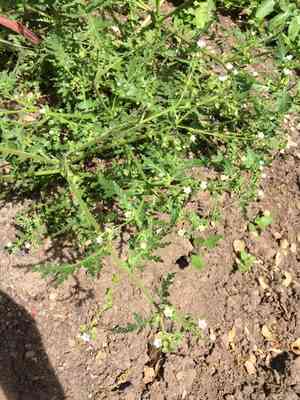
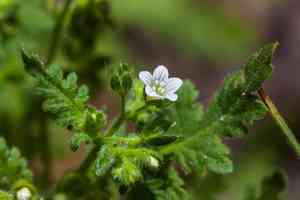
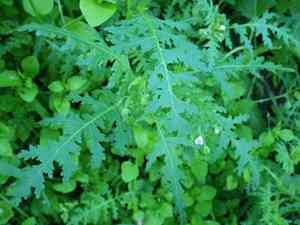
Quickly Identify Spotted hideseed
1
Eucrypta chrysanthemifolia can be identified by its finely divided, fern-like leaves that resemble those of a chrysanthemum, hence the species name. The small white flowers are clustered, and the plant has a tendency to grow in dry, sunny environments.
Scientific Classification of Spotted hideseed
Phylum
Vascular plants
Class
Dicotyledons
Order
Boraginales
Family
Waterleaf
Genus
Eucrypta
Species
Spotted hideseed
Planting and Growing of Spotted hideseed
Care Difficulty
Easy
Watering Schedule
Every 2 days
Sunlight Requirements
Full sun
Sunshine Duration
6-8 hours
Ideal Temperature
65-75℉
Soil Type
Potting Mix, Peat Mix
Soil pH
6.5-7.5
Fertilizer Type
Balanced
Pruning Season
Spring, Summer
Pruning Area
Branches, Leaves
Pruning Frequency
2 times a year
Repotting Season
Spring
Pot Type
Plastic, Ceramic
 How to Water Spotted hideseed?
Eucrypta chrysanthemifolia requires moderate watering, approximately 200 milliliters per session. Ensure that the soil is moist but not soggy, mimicking its natural habitat’s well-draining conditions. The goal is to moisten the soil thoroughly until excess starts to drain out, indicating it's reached capacity.
What are the symptoms of an underwatered Spotted hideseed?
›
What should I do if my Spotted hideseed is not getting enough water?
›
What are the symptoms of an overwatered Spotted hideseed?
›
How to save an overwatered Spotted hideseed?
›
 What Are the Sunlight Requirements for Spotted hideseed?
Eucrypta chrysanthemifolia prefers full to partial sunlight. The ideal lighting is crucial as it enhances photosynthesis, encouraging better growth and bloom cycles, resulting in a healthier and more aesthetically pleasing plant.
What type of light does Eucrypta chrysanthemifolia thrive in?
›
How do I ensure Eucrypta chrysanthemifolia gets its ideal amount of light?
›
What are the benefits of providing ideal lighting for Eucrypta chrysanthemifolia?
›
 What Is the Ideal Temperature Range for Spotted hideseed?
The ideal temperature range for growing Eucrypta chrysanthemifolia is between 65°F and 75°F. This range allows for optimal metabolic processes and photosynthesis, promoting healthy growth and flowering. Maintaining consistent temperatures within this range helps prevent stress and supports optimal hydration and nutrient absorption.
 What Soil is Best for Spotted hideseed?
Eucrypta chrysanthemifolia thrives in well-draining soil that prevents excessive water retention. This type of soil is crucial because it helps avoid root rot, ensuring the plant absorbs the right amount of nutrients and water without getting waterlogged. The plant benefits from a nutrient-rich soil, which contributes to its vibrant growth and blooming. Ample nutrients ensure healthy foliage and robust flowering, allowing the plant to display its characteristic beauty. A moderate amount of organic matter in the soil enhances its fertility and structure, promoting better root development. This, in turn, supports the plant's overall vigor and resilience against environmental stresses.
 How to Fertilize Spotted hideseed?
Eucrypta chrysanthemifolia thrives with a balanced amount of nutrients. Using a 1-1-1 ratio liquid fertilizer, apply at a concentration of half-strength to avoid nutrient burn. For solid fertilizers, a thin layer of slow-release granules is sufficient, taking care not to over-fertilize which might damage roots.
 How to Prune Spotted hideseed?
Using clean, sharp scissors or pruning shears is crucial when pruning Eucrypta chrysanthemifolia. Clean tools help in making precise cuts and prevent the spread of plant diseases. When choosing tools, make sure they're small enough to maneuver through dense foliage and sharp enough to make clean cuts without crushing the stems. Begin by cutting back any dead or damaged leaves carefully, encouraging healthier new growth. Stage your cuts just above a leaf node to stimulate the plant's branching. This method will help maintain the plant's natural shape and also control its size while promoting a bushier growth habit. Eucrypta chrysanthemifolia benefits from shaping, which not only enhances its visual appeal but also improves airflow around the plant. Prune outer branches lightly to maintain a rounded, full appearance. This is especially important if the plant is part of a landscape or garden design, as it keeps the plant looking tidy while supporting healthy growth.
More About Pruning Techniques→
 How to Propagate Spotted hideseed plant?
1
Fill seed trays with a well-drained potting mix. Level the surface and press down lightly to eliminate air pockets, ensuring that the soil is evenly distributed for optimal seed contact.
2
Gently sprinkle the seeds of Eucrypta chrysanthemifolia on the surface of the soil. Cover them lightly with a thin layer of potting mix or vermiculite to maintain humidity and protect the seeds without burying them too deeply.
3
Use a fine mist spray to water the seeds evenly. Ensure the soil is moist but not saturated, as excessive moisture can lead to fungal growth or seed rot. Keep the seed tray in a warm area for optimal germination.
 How to Repot Spotted hideseed plant?
1
Eucrypta chrysanthemifolia should be repotted when you notice its roots starting to grow out of the drainage holes or when the plant seems to be growing slower than usual. This generally indicates that the plant has outgrown its current pot. It's ideal to check in Spring or Summer when the plant is most active, ensuring it can recover quickly from the stress of repotting.
2
Select a pot that is slightly larger than the current one, with good drainage holes at the bottom. A pot that's too small will restrict root growth, while one that's too large can retain excessive moisture, risking root rot. Opting for a material like clay can help in regulating moisture levels and promoting healthy root aeration.
3
For this plant, choose a well-draining sandy mix to mimic its natural environment. This type of soil prevents water from lingering around the roots, thus reducing the risk of root rot. The sandy texture also allows for better airflow to the roots, promoting healthier growth overall.
Toxicity
Ingestion, skin contact
WARNING
The judgment on toxicity and danger is for reference only. We DO NOT GUARANTEE any accuracy of such judgment. Therefore, you SHALL NOT rely on such judgment. It is IMPORTANT TO SEEK PROFESSIONAL ADVICE in advance when necessary.
Learn More About Spotted hideseed Diseases
Anthracnose
Bacterial Leaf Spot
Bacterial Soft Rot
Bacterial Wilt
Black Spot
Chemical Injury
Crown Gall
Cyst Nematode
Damping-off
Downy Mildew
Drought Stress
Fusarium Wilt
Gray Mold
Leaf Curl
Leaf Spot
Mosaic
Nutrient Deficiency
Nutrient Toxicity
Powdery Mildew
Root Rot
Root-knot Nematode
Rusts
Sooty Mold
Spider Mites
Temperature Stress
Thrips Damage
White Mold



