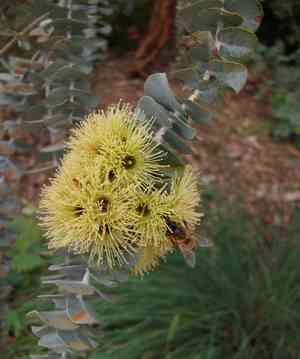
Book-leaf mallee (Eucalyptus kruseana)
Also known as: Book-leaf Mallee
The book-leaf mallee (Eucalyptus kruseana) is a species of tree in the myrtle family, native to Australia. This continent is home to nearly all species of Eucalyptus, which are significant for various uses such as timber, pulpwood, and ornamental planting. While some Eucalyptus species are small, others can grow to remarkable heights, like the Mountain Ash (E. regnans), which can reach up to 100 meters.
In This Article
Attributes of Book-leaf mallee
Lifespan
Perennial
Plant Height
Up to 2.5 meters (8 feet)
Spread
Approximately 2 meters (6.5 feet)
Leaf Color
Silver-blue
Flower Size
1-2 centimeters
Flower Color
Yellow
Images of Book-leaf mallee
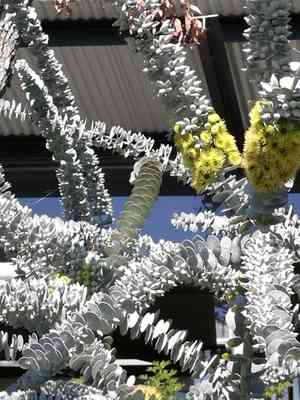
Quickly Identify Book-leaf mallee
1
Silvery-blue rounded leaves resembling book pages.
2
Slow-growing shrub with angular silhouette, 8-10 feet (2.4-3 meters) height.
3
Yellow flowers appear in spring between leaf pairs.
4
Thrives in full sunlight, minimal watering needs.
5
Foliage prized for decorative use in floral arrangements.
Scientific Classification of Book-leaf mallee
Phylum
Vascular plants
Class
Dicotyledons
Order
Myrtales
Family
Myrtle
Genus
Eucalypts
Species
Book-leaf mallee
Planting and Growing of Book-leaf mallee
Care Difficulty
Moderate
Watering Schedule
Every 3 days
Sunlight Requirements
Full sun
Sunshine Duration
4-6 hours
Ideal Temperature
60-75℉
Soil Type
Potting Mix, Peat Mix
Soil pH
6.5-7.5
Fertilizer Type
Balanced
Pruning Season
Spring, Summer
Pruning Area
Branches, Leaves
Pruning Frequency
2 times a year
Repotting Season
Spring
Pot Type
Plastic, Ceramic
 How to Water Book-leaf mallee?
Eucalyptus kruseana should be watered deeply enough that the water reaches the roots but not so much that it remains soggy. Aim for about 500 ml per watering session, ensuring the soil is consistently moist but not waterlogged. This allows the roots to access necessary moisture without drowning.
What are the symptoms of an underwatered Book-leaf mallee?
›
What should I do if my Book-leaf mallee is not getting enough water?
›
What are the symptoms of an overwatered Book-leaf mallee?
›
How to save an overwatered Book-leaf mallee?
›
 What Are the Sunlight Requirements for Book-leaf mallee?
Full sun exposure for about 6 to 8 hours daily allows Eucalyptus kruseana to maximize its photosynthetic potential, promoting lush growth and resilience against environmental stress.
Why is full sun important for Eucalyptus kruseana?
›
Solutions to achieve ideal light conditions:
›
What benefits does the plant gain from ideal lighting?
›
 What Is the Ideal Temperature Range for Book-leaf mallee?
Eucalyptus kruseana thrives best between 60°F and 75°F. This temperature allows for optimal growth and ensures that the plant maintains healthy leaves and produces new shoots effectively.
 What Soil is Best for Book-leaf mallee?
Eucalyptus kruseana thrives in well-draining soil, which prevents waterlogging and root rot. This ensures that the roots have access to oxygen and nutrients while tissue integrity is not compromised. The soil should be moderately fertile to support healthy growth. While eucalyptus can tolerate poor soils, a moderate nutrient supply enhances leaf production and plant vigor. This plant prefers a slightly acidic to neutral pH, between 6.5 and 7.5, to ensure optimal nutrient availability and absorption, promoting healthy foliage and overall plant health.
 How to Fertilize Book-leaf mallee?
For Eucalyptus kruseana, applying a balanced, all-purpose liquid fertilizer at half strength is recommended to avoid over-fertilizing. This species thrives with gentle support, so a weak solution every month or every two weeks should suffice, particularly during the growing season.
 How to Prune Book-leaf mallee?
Begin your pruning process by carefully identifying and removing any dead, damaged, or diseased branches. This will help the plant focus its energy on new growth and maintain its overall health. Gently prune back overly long or uneven branches to shape the plant. This involves trimming stems just above a node or bud that faces outward to encourage a natural, bushy appearance. It's important not to over-prune, as this can stress the plant. To stimulate new growth and a fuller appearance, lightly trim the tips of branches. This technique, known as 'tipping,' encourages the plant to develop additional branches and helps maintain a compact form.
More About Pruning Techniques→
 How to Propagate Book-leaf mallee plant?
1
For seed propagation, collect mature seeds from dried capsules. For cuttings, select healthy shoots from non-flowering, semi-hardwood branches for the best rooting success.
2
Use a well-draining soil mix. For seeds, a mix of sand and peat is ideal. For cuttings, a combination of sand and perlite can encourage root formation.
3
Sow seeds lightly onto the soil surface and cover with a thin layer of soil. Plant cuttings after dipping in rooting hormone, placing them deep enough for stability.
 How to Repot Book-leaf mallee plant?
1
Keeping an eye on the signals your Eucalyptus kruseana provides is key to knowing when to repot. Look for signs such as roots growing from the bottom of the pot, restricted growth, or soil that dries out too quickly. These indicate that the plant may be outgrowing its current home and it's time for a move.
2
Selecting the right pot for your Eucalyptus kruseana ensures healthy growth. Opt for a pot that is slightly larger than the current one, with good drainage holes to prevent waterlogging. A clay or terracotta pot is ideal, as these materials help wick moisture away, reducing the risk of root rot.
3
Eucalyptus kruseana thrives in well-draining, sandy soil that mimics its native habitat. This type of soil prevents excess moisture from accumulating and promotes healthy root growth. Look for a mix that contains sand, perlite, and organic matter to provide the perfect environment for your plant.
Toxicity
Ingestion
WARNING
The judgment on toxicity and danger is for reference only. We DO NOT GUARANTEE any accuracy of such judgment. Therefore, you SHALL NOT rely on such judgment. It is IMPORTANT TO SEEK PROFESSIONAL ADVICE in advance when necessary.



