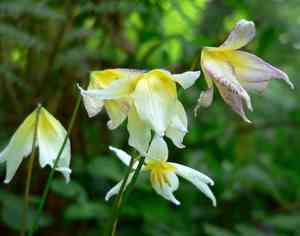
Napa fawn lily (Erythronium helenae)
Also known as: St. Helena fawn lily
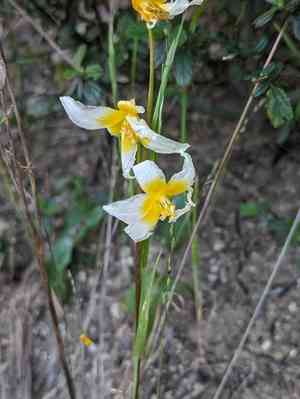
The plant features upright stalks reaching up to 30 centimeters in height, each supporting one to three blossoms. The flowers display white tepals with yellowish bases, measuring around 3 to 4 centimeters in length. As they mature, the tepals may develop pink or purple streaks or spots. The flowers also have prominent yellow stamens topped with large yellow anthers.
In This Article
Attributes of Napa fawn lily
Lifespan
Perennial
Plant Type
Herb
Plant Height
Approximately 20 to 30 cm (8 to 12 inches)
Spread
The plant typically does not form a crown, but leaf spread can be around 15 to 20 cm (6 to 8 inches)
Leaf Color
Mottled green with brown or purple spots
Flower Size
Approximately 3 to 4 cm (1.2 to 1.6 inches)
Flower Color
White to pale yellow
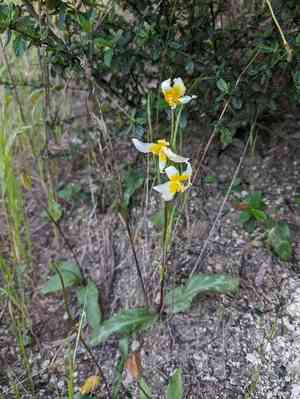
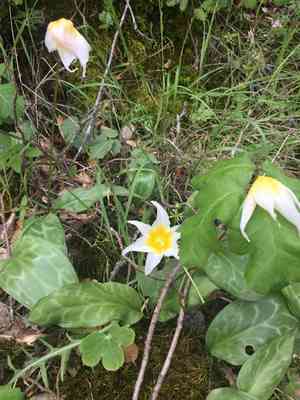
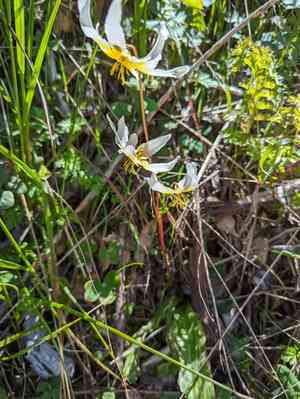
Images of Napa fawn lily
Quickly Identify Napa fawn lily
1
Identifying Erythronium helenae can be done by observing its lance-shaped, mottled leaves and its nodding flowers which have tepals that curve upwards. The flowers typically appear solitary or in groups of two.
Scientific Classification of Napa fawn lily
Phylum
Vascular plants
Class
Monocotyledons
Order
Liliales
Family
Lily
Genus
Fawn lilies
Species
Napa fawn lily
Planting and Growing of Napa fawn lily
Care Difficulty
Hard
Watering Schedule
Every 2 days
Sunlight Requirements
Partial sun
Sunshine Duration
6-10 hours
Ideal Temperature
60-75℉
Soil Type
Potting Mix, Peat Mix
Soil pH
6.5-7.5
Fertilizer Type
Balanced
Pruning Season
Spring, Summer
Pruning Area
Branches, Leaves
Pruning Frequency
2 times a year
Repotting Season
Spring
Pot Type
Plastic, Ceramic
 How to Water Napa fawn lily?
Erythronium helenae prefers to be watered thoroughly but infrequently. The goal is to soak the root zone, ensuring water reaches about 100ml per watering, allowing the soil to slightly dry out between waterings.
What are the symptoms of an underwatered Napa fawn lily?
›
What should I do if my Napa fawn lily is not getting enough water?
›
What are the symptoms of an overwatered Napa fawn lily?
›
How to save an overwatered Napa fawn lily?
›
 What Are the Sunlight Requirements for Napa fawn lily?
Erythronium helenae ideally requires partial sunlight, thriving best in dappled light resembling a forest floor. This light range ensures vigorous growth and abundant blooming.
How much light does Erythronium helenae need daily?
›
What are some solutions to achieve ideal lighting?
›
What are the benefits of achieving the ideal light conditions?
›
 What Is the Ideal Temperature Range for Napa fawn lily?
The ideal temperature range for Erythronium helenae is between 60°F and 75°F. This range provides the optimal conditions for photosynthesis and other metabolic processes, ensuring vibrant growth and development.
 What Soil is Best for Napa fawn lily?
Erythronium helenae thrives in well-drained soil, which prevents waterlogging that can lead to root rot. Ensuring the soil is loose and airy allows roots to access oxygen and essential nutrients easily, promoting healthy growth. While it requires good drainage, the soil should also retain enough moisture to support the plant’s growth during dry periods. This balance helps maintain hydration, essential for Erythronium helenae's vibrant foliage and flowering. A nutrient-rich growing medium fuels the growth of Erythronium helenae. Incorporating organic matter like compost enriches the soil, providing a continuous supply of nutrients for robust plant development and vibrant blooms.
 How to Fertilize Napa fawn lily?
For Erythronium helenae, it is advisable to use a balanced 10-10-10 or 5-10-10 NPK fertilizer. When applying a liquid fertilizer, dilute it at half the recommended strength to avoid over-fertilizing. For slow-release granules, use approximately one teaspoon per square foot of soil. Erythroniums are light feeders, so moderation is key.
 How to Prune Napa fawn lily?
Begin by trimming back any dead or damaged stems to the base of the plant. Use clean, sharp scissors or garden shears to make precise cuts, preventing damage to the healthy parts. Focus on removing any foliage that appears crowded to improve air circulation. Avoid over-pruning as this plant does not require heavy pruning.
More About Pruning Techniques→
 How to Propagate Napa fawn lily plant?
1
Choose a well-draining soil mix enriched with organic matter for optimal growth. Ensure the soil is loose to aid root development.
2
Plant Erythronium helenae seeds shallowly in the prepared soil, ensuring even spacing to provide enough room for growth.
3
Carefully dig up mature plants and separate the bulbs or rhizomes, ensuring each division has roots and shoots for successful propagation.
 How to Repot Napa fawn lily plant?
1
Erythronium helenae requires repotting when you notice that the bulb growth appears stunted or the soil is either rapidly drying out or remains consistently soggy. These signs usually indicate that the plant has outgrown its pot or the soil has lost its efficacy, making repotting a priority in either the spring or autumn, which are the plant's dormant periods.
2
Select a pot that is 1-2 inches larger in diameter than the previous one, ensuring it has ample drainage holes to prevent waterlogging. Opt for a clay or ceramic pot as they provide better insulation and breathability, promoting healthy root systems. A pot of the right size reduces empty soil space, decreasing the risk of overwatering.
3
Choose a well-draining loam mix, rich in organic matter, which allows for good air circulation and moisture retention without causing sogginess. Such soil will maintain a balanced moisture level conducive to the growth of Erythronium helenae, reducing potential root rot while supplying essential nutrients.
Toxicity
Ingestion
WARNING
The judgment on toxicity and danger is for reference only. We DO NOT GUARANTEE any accuracy of such judgment. Therefore, you SHALL NOT rely on such judgment. It is IMPORTANT TO SEEK PROFESSIONAL ADVICE in advance when necessary.
Learn More About Napa fawn lily Diseases
Anthracnose
Bacterial Leaf Spot
Bacterial Soft Rot
Bacterial Wilt
Crown Gall
Cyst Nematode
Damping-off
Downy Mildew
Drought Stress
Fusarium Wilt
Gray Mold
Leaf Curl
Leaf Spot
Mosaic
Nutrient Deficiency
Nutrient Toxicity
Powdery Mildew
Root Rot
Root-knot Nematode
Rusts
Sooty Mold
Spider Mites
Temperature Stress
Thrips Damage
White Mold



