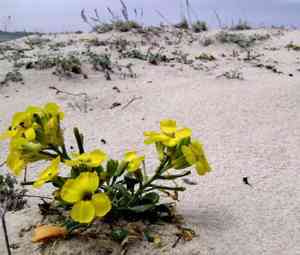
Curly wallflower (Erysimum menziesii)
Also known as: Yadon's wallflower
Curly wallflower (Erysimum concinnum) is a perennial plant native to California's coastal sand dunes. This species exhibits a low-growing form with distinctive grey-green leaves. In spring, it produces bright yellow flowers that are reminiscent of small wallflower blossoms. Adapted to endure the tough, windy coastal environment, curly wallflower features dense leaf rosettes and an extensive root system. These characteristics help the plant secure itself in the shifting sands and access deeper water reserves, ensuring its survival in this challenging habitat.
In This Article
Attributes of Curly wallflower
Lifespan
Perennial
Plant Type
Herb
Plant Height
15-60 cm
Spread
20-50 cm
Leaf Color
Green
Flower Size
1-2 cm
Flower Color
Yellow
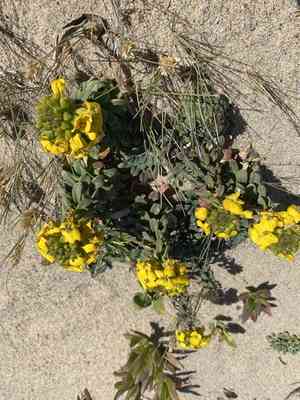
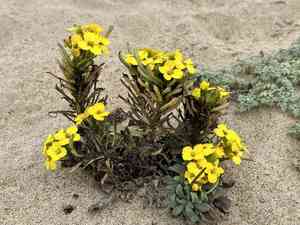
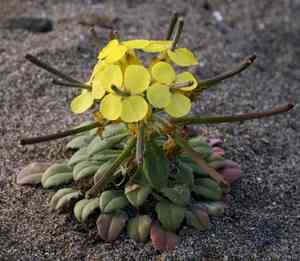
Images of Curly wallflower
Quickly Identify Curly wallflower
1
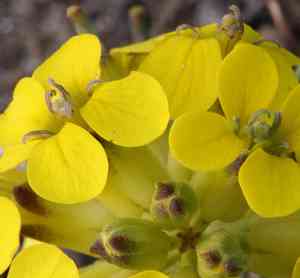
Erysimum menziesii is recognized by its bright yellow flowers which are typically arranged in clusters. The leaves are narrow and elongated, often covered with fine hairs, and the plant emits a distinctive musty odor.
Scientific Classification of Curly wallflower
Phylum
Vascular plants
Class
Dicotyledons
Order
Brassicales
Family
Cruciferae
Genus
Wallflower
Species
Curly wallflower
Planting and Growing of Curly wallflower
Care Difficulty
Easy
Watering Schedule
Every 3 days
Sunlight Requirements
Full sun
Sunshine Duration
6-10 hours
Ideal Temperature
65-75℉
Soil Type
Potting Mix, Peat Mix
Soil pH
6.5-7.5
Fertilizer Type
Balanced
Pruning Season
Spring, Summer
Pruning Area
Branches, Leaves
Pruning Frequency
2 times a year
Repotting Season
Spring
Pot Type
Plastic, Ceramic
 How to Water Curly wallflower?
For Erysimum menziesii, it's essential to provide about 250 milliliters of water per session, ensuring the soil remains moderately moist but not waterlogged. The key is to water until the top inch of soil feels damp. This prevents the roots from sitting in water while delivering enough moisture to support healthy growth.
What are the symptoms of an underwatered Curly wallflower?
›
What should I do if my Curly wallflower is not getting enough water?
›
What are the symptoms of an overwatered Curly wallflower?
›
How to save an overwatered Curly wallflower?
›
 What Are the Sunlight Requirements for Curly wallflower?
Full sun for optimal growth. Ideal lighting enhances Erysimum menziesii's photosynthesis, ensuring robust growth, brilliant bloom display, and increased resistance against stress factors.
What is the best time for sunlight exposure?
›
How to ensure ideal lighting conditions?
›
What benefits does ideal lighting bring?
›
 What Is the Ideal Temperature Range for Curly wallflower?
The ideal temperature range for Erysimum menziesii cultivation is between 65°F and 75°F. This range provides optimal conditions for growth, allowing the plant to maintain its vibrant foliage and produce flowers. Consistent temperatures within this range ensure that the plant can carry out essential physiological processes effectively.
 What Soil is Best for Curly wallflower?
Erysimum menziesii thrives in a soil that strikes a perfect nutrient balance. The plant benefits enormously from a medium that provides not just macro but crucial micro-nutrients, ensuring robust growth and radiant blooms. The ability of soil to drain well is vital for Erysimum menziesii. A well-drained soil prevents root rot by ensuring that water does not accumulate, which is crucial during wetter months for maintaining healthy plant roots. Soil aeration is essential for the plant’s root health. It ensures that the roots have access to oxygen, a vital component for photosynthesis and nutrient uptake, facilitating a strong and healthy plant.
 How to Fertilize Curly wallflower?
Erysimum menziesii, commonly known as Menzies' wallflower, typically requires a balanced fertilizer. For liquid fertilizers, a dilution rate of half the recommended strength is ideal. Apply approximately 100 ml of this diluted solution per plant during active growth periods.
 How to Prune Curly wallflower?
Begin by removing dead or damaged stems to prevent potential disease spread. Focus on cutting above a leaf node or outward-facing bud to encourage healthy new growth. Trim back straggly stems to maintain an appealing shape and promote denser foliage. Prune after the flowering season to remove spent blooms. Cutting back flower stalks to the base can redirect the plant's energy towards producing new growth and flowers, resulting in a more vibrant display the following season.
More About Pruning Techniques→
 How to Propagate Curly wallflower plant?
1
Gently clean and soak the seeds in lukewarm water for 24 hours. This step helps to soften the seed coat and promotes faster germination.
2
Fill the seed tray with seed-starting mix and evenly distribute the seeds on the surface. Cover them with a thin layer of soil, approximately 0.5 cm in depth.
3
Select healthy, non-flowering stems for cuttings. Cut a 10 cm piece just below a node, remove the lower leaves, and dip the base into rooting hormone to encourage root development.
 How to Repot Curly wallflower plant?
1
Erysimum menziesii should be repotted when you see roots growing through the drainage holes or if the soil retains moisture for too long. These are signals that the plant has outgrown its pot, impacting its growth and vitality. Early spring or autumn are ideal because temperatures are moderate, reducing shock.
2
Select a pot that is one size larger with good drainage holes. Clay pots are often recommended as they allow air exchange and moisture evaporation, preventing root rot. A slightly larger size gives roots room to grow, enhancing stability and absorption of nutrients.
3
Opt for a well-draining sandy soil mix, which imitates the plant’s natural habitat and prevents overwatering. Adding perlite or coarse sand to a standard potting mix improves drainage and aeration, crucial for maintaining healthy roots and vibrant blooms.
Toxicity
ingestion
WARNING
The judgment on toxicity and danger is for reference only. We DO NOT GUARANTEE any accuracy of such judgment. Therefore, you SHALL NOT rely on such judgment. It is IMPORTANT TO SEEK PROFESSIONAL ADVICE in advance when necessary.
Learn More About Curly wallflower Diseases
Anthracnose
Bacterial Leaf Spot
Clubroot
Crown Gall
Cyst Nematode
Damping-off
Downy Mildew
Drought Stress
Fusarium Wilt
Gray Mold
Leaf Spot
Mosaic
Nutrient Deficiency
Nutrient Toxicity
Powdery Mildew
Root Rot
Root-knot Nematode
Rusts
Sooty Mold
Spider Mites
Temperature Stress
Thrips Damage
White Mold



