Headland wallflower (Erysimum concinnum)
Also known as: Sand Wallflower
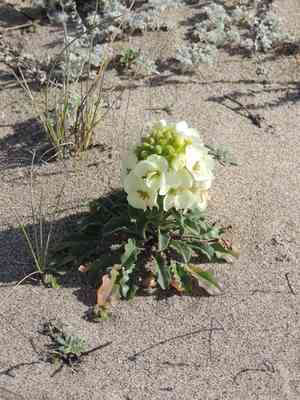
The headland wallflower is a captivating perennial, celebrated for its striking yellow to orange blooms that adorn slender, upright stems. Its narrow green leaves cluster in a dense rosette at the base. This plant flourishes in well-drained, sandy or rocky soils, making it well-suited for coastal cliffs and arid environments. Its ability to conserve water highlights its resilience and adaptability.
In This Article
Attributes of Headland wallflower
Lifespan
Biennial
Plant Type
Herb
Plant Height
Up to 1 meter (100 cm)
Spread
Approximately 30 cm
Leaf Color
Green
Flower Size
Approximately 1.5 cm
Flower Color
Yellow
Images of Headland wallflower
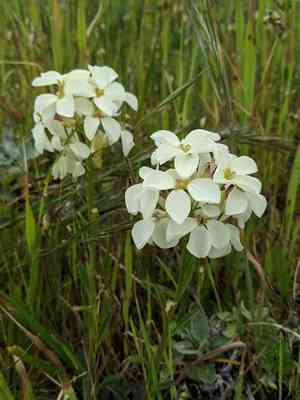
Quickly Identify Headland wallflower
1
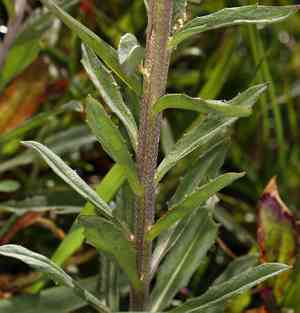
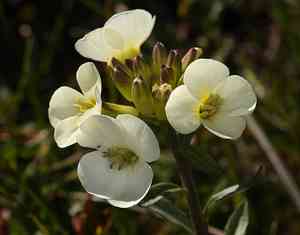
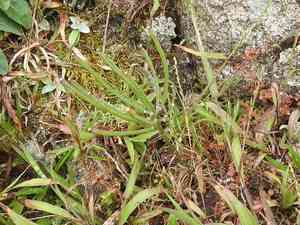
The plant can be identified by its small yellow flowers and linear to lance-shaped leaves. It typically has a slender stem that may grow to nearly a meter in height, and the lower stem is covered in long, stiff hairs.
Scientific Classification of Headland wallflower
Phylum
Vascular plants
Class
Dicotyledons
Order
Brassicales
Family
Cruciferae
Genus
Wallflower
Species
Headland wallflower
Planting and Growing of Headland wallflower
Care Difficulty
Easy
Watering Schedule
Every 2 days
Sunlight Requirements
Partial sun
Sunshine Duration
4-6 hours
Ideal Temperature
50-77℉
Soil Type
Potting Mix, Peat Mix
Soil pH
6.5-7.5
Fertilizer Type
Balanced
Pruning Season
Spring, Summer
Pruning Area
Branches, Leaves
Pruning Frequency
2 times a year
Repotting Season
Spring
Pot Type
Plastic, Ceramic
 How to Water Headland wallflower?
Erysimum concinnum prefers its soil to be moderately moist. Water around 200 ml until the top layer feels damp but not soggy. Letting soil dry slightly between waterings supports healthy growth.
What are the symptoms of an underwatered Headland wallflower?
›
What should I do if my Headland wallflower is not getting enough water?
›
What are the symptoms of an overwatered Headland wallflower?
›
How to save an overwatered Headland wallflower?
›
 What Are the Sunlight Requirements for Headland wallflower?
Partial sun is ideal for Erysimum concinnum, promoting well-rounded development with bright yet soft light. This nurtures sturdy growth, resulting in more blooms and healthier foliage.
What conditions does Erysimum concinnum thrive in?
›
How can ideal lighting be ensured?
›
What benefits does ideal lighting provide to Erysimum concinnum?
›
 What Is the Ideal Temperature Range for Headland wallflower?
The ideal temperature range for Erysimum concinnum lies between 50°F to 77°F. These temperatures mimic its natural environment, providing optimal conditions for photosynthesis and other vital physiological processes. Maintaining this range will ensure the plant remains healthy and productive.
 What Soil is Best for Headland wallflower?
Erysimum concinnum thrives in well-drained soils because it prevents waterlogging, which can lead to root rot. A soil with good drainage allows the plant roots to access the necessary oxygen, enhancing growth and health. This plant does well in nutrient-rich soils. Ensure that the soil has a good balance of essential nutrients like nitrogen, phosphorus, and potassium to promote vibrant blooms and sturdy growth. While it prefers well-drained soil, maintaining adequate moisture is critical for Erysimum concinnum. The soil should retain enough moisture to keep the roots hydrated without becoming waterlogged.
 How to Fertilize Headland wallflower?
Erysimum concinnum typically requires a balanced amount of nutrients. For liquid fertilizers, mix them at half the recommended strength to prevent potential over-fertilization. For solid slow-release fertilizers, apply them sparingly according to the instructions, ensuring not to exceed the advised dosage, usually around one tablespoon per plant.
 How to Prune Headland wallflower?
Begin by using sharp, clean pruning shears. Focus on removing dead or damaged stems first, as these can harbor disease and pests. Trim back any crossing branches to prevent damage and to maintain airflow through the plant. This encourages new, healthy growth and maintains the plant's natural shape. To encourage bushier growth, cut back the main stems of the plant by about one-third. This not only helps in shaping the plant but also promotes the development of additional branches, leading to a lusher appearance. Ensure regular deadheading by removing spent flowers to prolong blooming.
More About Pruning Techniques→
 How to Propagate Headland wallflower plant?
1
Begin by filling the seed tray with a well-draining potting mix. Sprinkle the seeds on the surface and lightly press them into the soil. Water gently to avoid displacing the seeds and cover the tray with a clear plastic lid to maintain humidity.
2
Select healthy, non-flowering shoots from the mother plant. Use a sharp, sterilized knife to take 4-6 inch cuttings just below a node. Remove the lower leaves to expose the nodes, which will encourage root development.
3
Dip the cut ends of the nodes in rooting hormone powder to enhance the chances of root formation. Plant the cuttings in a pot filled with moist, well-draining soil. Place a plastic bag over the pot to create a humid environment.
 How to Repot Headland wallflower plant?
1
You'll know it's time to repot Erysimum concinnum when the roots begin to peek through the drainage holes, indicating that the plant is becoming root-bound. Additionally, if growth slows or the soil seems to dry out quickly, these are signals that it might be time for a bigger pot.
2
Select a pot that is one to two inches larger in diameter than the current one. Make sure it has drainage holes to prevent waterlogging. A slightly larger pot allows for root expansion, promoting healthier growth and reducing the risk of water stagnation at the root level.
3
Opt for a well-draining sandy soil mix for Erysimum concinnum. This mix mimics their natural habitat and ensures excellent drainage, thus preventing root rot. Such a substrate also provides adequate aeration, which is crucial for the plant's roots to thrive.
Learn More About Headland wallflower Diseases
Anthracnose
Bacterial Leaf Spot
Bacterial Soft Rot
Clubroot
Crown Gall
Cyst Nematode
Damping-off
Downy Mildew
Drought Stress
Fusarium Wilt
Gray Mold
Leaf Spot
Mosaic
Nutrient Deficiency
Nutrient Toxicity
Powdery Mildew
Root Rot
Root-knot Nematode
Rusts
Sooty Mold
Spider Mites
Temperature Stress
Thrips Damage
White Mold
Chemical Injury


