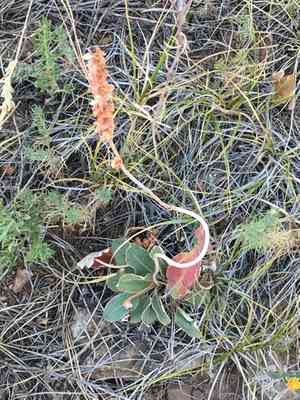
Redroot buckwheat (Eriogonum racemosum)
Also known as: Pink Wild Buckwheat, Desert Buckwheat
Redroot Buckwheat (Eriogonum racemosum) is a hardy perennial characterized by its clusters of pink or white flowers on slender, branching stems. It is well-suited for arid regions, with narrow, basal leaves that often have a dusty appearance. This drought-resistant plant flourishes in rocky, well-drained soils and is known to attract a variety of pollinators.
In This Article
Attributes of Redroot buckwheat
Lifespan
Perennial
Plant Type
Herb
Plant Height
0 mm to 30 cm
Spread
20-40 cm
Leaf Color
Green
Flower Size
0.5-1 cm
Flower Color
Pink to reddish
Images of Redroot buckwheat
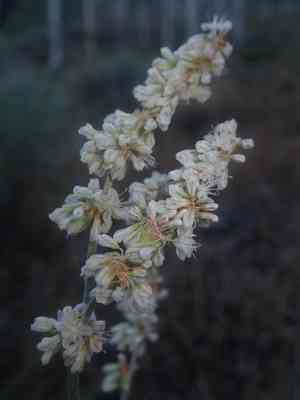
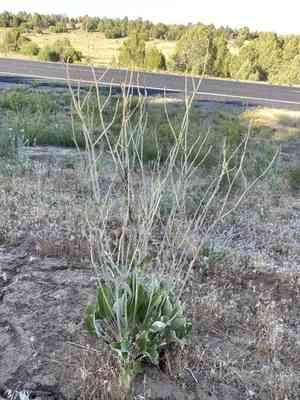
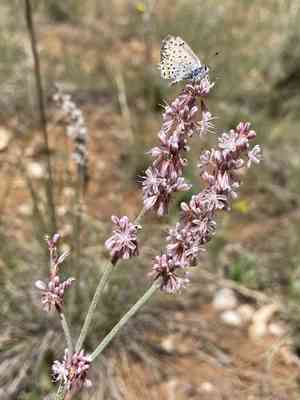
Quickly Identify Redroot buckwheat
1
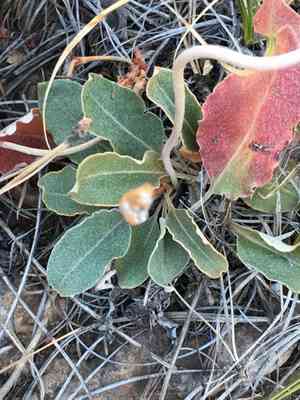
Eriogonum racemosum can be identified by its erect, branching stems and small, oval leaves covered with fine hairs. Its pink to reddish flowers are arranged in clusters at the ends of the branches, making it visually distinctive.
Scientific Classification of Redroot buckwheat
Phylum
Vascular plants
Class
Dicotyledons
Order
Caryophyllales
Family
Buckwheat
Genus
Wild Buckwheat
Species
Redroot buckwheat
Planting and Growing of Redroot buckwheat
Care Difficulty
Easy
Watering Schedule
Every 2 days
Sunlight Requirements
Full sun
Sunshine Duration
6-10 hours
Ideal Temperature
50-77℉
Soil Type
Potting Mix, Peat Mix
Soil pH
6.5-7.5
Fertilizer Type
Balanced
Pruning Season
Spring, Summer
Pruning Area
Branches, Leaves
Pruning Frequency
2 times a year
Repotting Season
Spring
Pot Type
Plastic, Ceramic
 How to Water Redroot buckwheat?
Eriogonum racemosum thrives best with a modest amount of water—about 250 milliliters per watering. The principle to follow is to ensure the soil is moist but not soggy. Water until it begins to drain out of the bottom of your pot, which indicates that the moisture has reached the root zone without waterlogging the plant.
What are the symptoms of an underwatered Redroot buckwheat?
›
What should I do if my Redroot buckwheat is not getting enough water?
›
What are the symptoms of an overwatered Redroot buckwheat?
›
How to save an overwatered Redroot buckwheat?
›
 What Are the Sunlight Requirements for Redroot buckwheat?
Ideal exposure involves full sun for at least six hours daily. This light range optimizes photosynthesis, ensuring robust growth and flowering, enhancing the plant's attractiveness and health.
What is the best location for Eriogonum racemosum?
›
Does Eriogonum racemosum require any shading during peak sunlight?
›
How can I simulate ideal sunlight conditions indoors?
›
 What Is the Ideal Temperature Range for Redroot buckwheat?
Eriogonum racemosum thrives best when the environmental temperature is kept between 50°F to 77°F. In this range, the plant can effectively photosynthesize and grow without stress. These conditions mimic its natural habitat, ensuring optimal health.
 What Soil is Best for Redroot buckwheat?
Eriogonum racemosum thrives in well-drained soil. This prevents the roots from sitting in water, which could lead to root rot. Ensuring good drainage supports healthier plant growth and more vigorous flowering. This plant prefers soil of moderate fertility. Excess nutrients can encourage foliage at the expense of flowers. Keeping fertility moderate helps maintain the natural balance and beauty of the plant. Adequate aeration in the soil is essential for the roots to access oxygen and essential nutrients. Proper soil structure enhances the plant's ability to absorb iron, leading to healthier growth and leaf color.
 How to Fertilize Redroot buckwheat?
For Eriogonum racemosum, a modest amount of fertilizer is recommended. Typically, 1/4 cup of liquid fertilizer diluted in a gallon of water suffices. When using solid fertilizers, about 1 tablespoon of granular fertilizer per square foot around the plant base is beneficial.
 How to Prune Redroot buckwheat?
Excessive pruning can stress the plant and stunt its growth. It's important to only remove up to one-third of the plant at any given time to maintain its vigor. Before and after pruning, inspect the plant for any signs of pest infestations. Early detection helps in applying the appropriate treatments if necessary. If the plant is in a windy or exposed position, be careful with pruning as a sparse canopy might increase susceptibility to wind damage.
More About Pruning Techniques→
 How to Propagate Redroot buckwheat plant?
1
Harvest Eriogonum racemosum seeds once they mature in the autumn. Allow seed heads to fully dry on the plant to ensure high viability. Once dry, gently gather the seeds and store them in a cool, dry place until ready to plant.
2
In early spring, sow seeds in prepared seed trays filled with potting soil. Sprinkle seeds evenly and cover them with a thin layer of soil. Lightly water to keep the soil moist but not waterlogged, as too much moisture can inhibit germination.
3
After seedlings have two true leaves, they can be transplanted to larger pots or directly into the garden. Gradually acclimate them to outdoor conditions to prevent shock. Ensure they are well spaced to promote healthy growth and airflow.
 How to Repot Redroot buckwheat plant?
1
Eriogonum racemosum needs repotting when its roots have outgrown the current pot, usually visible through drainage holes, or the soil loses its drainage ability. Spring and early summer provide optimal growth conditions for recovery and root development.
2
Select a pot with good drainage holes and a diameter 1-2 inches larger than the current pot. A slightly larger size reduces waterlogging risk and promotes healthy root spread without overwhelming the plant; terracotta is ideal for its breathability.
3
Opt for a well-draining cactus mix that mimics Eriogonum racemosum's natural habitat. This soil type prevents root rot and ensures proper aeration and nutrient delivery, fostering robust growth and resilience.
Learn More About Redroot buckwheat Diseases
Anthracnose
Bacterial Leaf Spot
Bacterial Soft Rot
Chemical Injury
Crown Gall
Cyst Nematode
Damping-off
Downy Mildew
Drought Stress
Fusarium Wilt
Gray Mold
Leaf Spot
Mosaic
Nutrient Deficiency
Nutrient Toxicity
Powdery Mildew
Root Rot
Root-knot Nematode
Rusts
Sooty Mold
Spider Mites
Temperature Stress
Thrips Damage
White Mold



