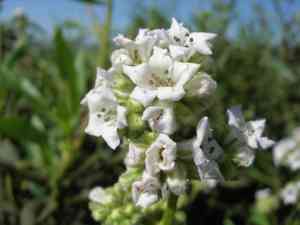
Hairy yerba santa (Eriodictyon trichocalyx)
Also known as: Hairy-leaved yerba santa
Eriodictyon trichocalyx, known as hairy yerba santa, is an upright shrub that can reach heights of approximately 2 meters. It features lanceolate to oval leaves that can grow up to 14 cm in length. These leaves vary in texture, ranging from smooth and sticky to densely covered with woolly hairs. The plant blooms with clusters of tubular, bell-shaped flowers that can be white to pale purple, typically appearing from spring to early summer. This shrub is well-suited to dry, rocky environments and is commonly found in chaparral and coastal sage scrub regions.
In This Article
Attributes of Hairy yerba santa
Lifespan
Perennial
Plant Type
Shrub
Plant Height
Up to 3 meters
Spread
Approximately 1-1.5 meters
Leaf Color
Glossy green
Flower Size
About 1-2 cm
Flower Color
Purple to lavender
Images of Hairy yerba santa
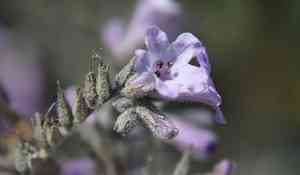
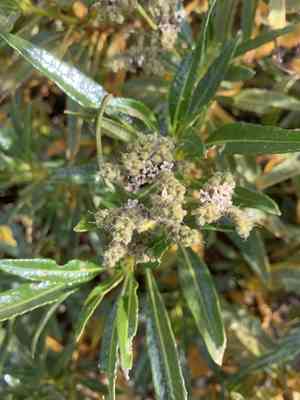
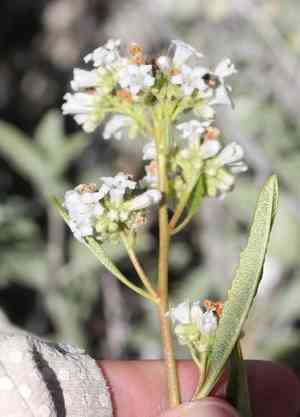
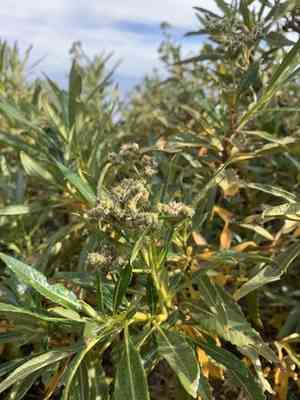
Quickly Identify Hairy yerba santa
1
Look for the hairy leaves, which are lance-shaped and glossy green. The plant can grow up to 3 meters tall and produces purple to lavender flowers.
Scientific Classification of Hairy yerba santa
Phylum
Vascular plants
Class
Dicotyledons
Order
Boraginales
Family
Waterleaf
Genus
Yerba Santa
Species
Hairy yerba santa
Planting and Growing of Hairy yerba santa
Care Difficulty
Moderate
Watering Schedule
Every 2 days
Sunlight Requirements
Full sun
Sunshine Duration
6-10 hours
Ideal Temperature
60-75℉
Soil Type
Potting Mix, Peat Mix
Soil pH
6.5-7.5
Fertilizer Type
Balanced
Pruning Season
Spring, Summer
Pruning Area
Branches, Leaves
Pruning Frequency
2 times a year
Repotting Season
Spring
Pot Type
Plastic, Ceramic
 How to Water Hairy yerba santa?
Ensure each watering reaches a depth sufficient to moisten the root zone without leaving standing water. Typically, 250 milliliters will suffice, but adjust based on soil moisture levels and environmental conditions.
What are the symptoms of an underwatered Hairy yerba santa?
›
What should I do if my Hairy yerba santa is not getting enough water?
›
What are the symptoms of an overwatered Hairy yerba santa?
›
How to save an overwatered Hairy yerba santa?
›
 What Are the Sunlight Requirements for Hairy yerba santa?
Eriodictyon trichocalyx flourishes under full sun conditions. Adequate light fosters healthy growth, supports photosynthesis efficiently, and enhances the production of its beneficial oils, which contribute to its medicinal properties and aromatic appeal.
How much sunlight does it ideally need?
›
What solutions can ensure it gets ideal sunlight exposure?
›
What are the benefits of maintaining its optimal light exposure?
›
 What Is the Ideal Temperature Range for Hairy yerba santa?
The ideal temperature range for Eriodictyon trichocalyx is between 60°F and 75°F. This range provides optimal conditions for photosynthesis and nutrient absorption, ensuring robust plant growth and health. Temperatures within this band promote proper blooming and foliage development, making it conducive for sustained vitality.
 What Soil is Best for Hairy yerba santa?
Eriodictyon trichocalyx thrives in well-drained soils to prevent root rot. Adequate drainage ensures that water does not stagnate around the roots, which helps the plant absorb nutrients more effectively. Rich soil composition is vital for Eriodictyon trichocalyx as it requires essential nutrients for robust growth. A nutrient-dense soil ensures that the plant maintains healthy foliage and strong stems. While this plant enjoys good drainage, it also benefits from soil that retains some moisture to support hydration. This balance helps to sustain the plant during dry conditions without over-watering.
 How to Fertilize Hairy yerba santa?
Eriodictyon trichocalyx, like many native plants, does not require large amounts of fertilizer. Apply a balanced liquid fertilizer at half strength every two weeks during the growing season to supplement nutrient needs without overwhelming the plant.
 How to Prune Hairy yerba santa?
Before you begin, gather a pair of sharp pruning shears or secateurs. Ensure they are cleaned and sterilized to prevent any disease transmission. Consider wearing gardening gloves for added protection. Start by identifying dead, damaged, or diseased branches. These should be your primary focus. Next, look for any crossing branches that may affect airflow and shape. Make clean cuts at a slight angle, approximately a quarter inch above a healthy bud or outward-facing node. This promotes optimal growth directions and prevents water from pooling in cut areas.
More About Pruning Techniques→
 How to Propagate Hairy yerba santa plant?
1
Collect seeds from a healthy Eriodictyon trichocalyx plant during the appropriate season. Ensure that the seeds are mature and dry. Store them in a cool, dark place if not sown immediately. Use well-draining soil for sowing.
2
Select a healthy branch and use pruning shears to cut below a leaf node, typically a 4-6 inch section. Remove the lower leaves, leaving a few at the top to aid in photosynthesis. Use rooting hormone to encourage root development.
3
Once seedlings have grown enough to handle, gently transplant them into individual pots. Use a similar soil mix as the one used for seed starting. Ensure that the pots have good drainage to prevent root rot.
 How to Repot Hairy yerba santa plant?
1
Eriodictyon trichocalyx needs repotting when you notice roots growing out of the drainage holes, or when the plant seems pot-bound and growth has slowed down significantly. Ideally, repotting should be done during its active growth phases in spring or summer to minimize stress.
2
Choose a pot with ample drainage holes and one size larger than the current pot. This allows room for root expansion and prevents waterlogged conditions, which can lead to root rot. A clay pot can offer better aeration and moisture regulation.
3
Opt for a well-draining sandy soil mix that mimics its natural habitat. This will ensure proper aeration and water drainage, vital for the health of Eriodictyon trichocalyx, preventing root rot while providing necessary nutrients.
Learn More About Hairy yerba santa Diseases
Anthracnose
Bacterial Leaf Spot
Bacterial Wilt
Crown Gall
Cyst Nematode
Damping-off
Downy Mildew
Drought Stress
Fusarium Wilt
Gray Mold
Leaf Curl
Leaf Spot
Mosaic
Nutrient Deficiency
Nutrient Toxicity
Powdery Mildew
Root Rot
Root-knot Nematode
Rusts
Sooty Mold
Spider Mites
Temperature Stress
Thrips Damage
White Mold



