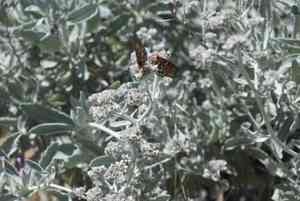
Woolly yerba santa (Eriodictyon tomentosum)
Also known as: Yerba Santa, Woolly Yerba Santa
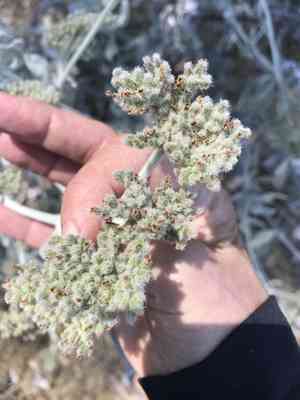
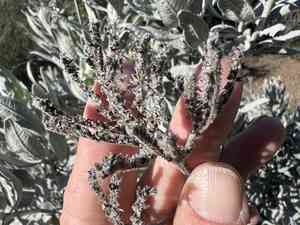
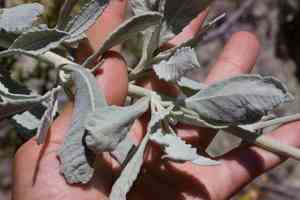
Eriodictyon tomentosum is a shrub that can grow up to 1 to 3 meters tall. Its twigs and leaves are densely covered with white, woolly hairs, giving the plant a silvery appearance. The leaves are oval-shaped, reaching up to 10 centimeters in length and 5 centimeters in width, sometimes featuring small teeth along their edges.
In This Article
Attributes of Woolly yerba santa
Lifespan
Perennial
Plant Type
Shrub
Plant Height
0.5 to 2 meters
Spread
1 to 2 meters
Leaf Color
Green, with dense white woolly hairs
Flower Size
0.5 to 1 cm
Flower Color
White to lavender
Images of Woolly yerba santa
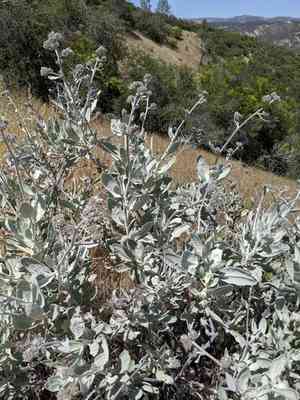
Quickly Identify Woolly yerba santa
1
Identify Eriodictyon tomentosum by its dense, woolly hairs on the leaves and stems, and its aromatic leaves that emit a sweet fragrance when crushed.
Scientific Classification of Woolly yerba santa
Phylum
Vascular plants
Class
Dicotyledons
Order
Boraginales
Family
Waterleaf
Genus
Yerba Santa
Species
Woolly yerba santa
Planting and Growing of Woolly yerba santa
Care Difficulty
Hard
Watering Schedule
Every 2 days
Sunlight Requirements
Full sun
Sunshine Duration
4-8 hours
Ideal Temperature
60-75℉
Soil Type
Potting Mix, Peat Mix
Soil pH
6.5-7.5
Fertilizer Type
Balanced
Pruning Season
Spring, Summer
Pruning Area
Branches, Leaves
Pruning Frequency
2 times a year
Repotting Season
Spring
Pot Type
Plastic, Ceramic
 How to Water Woolly yerba santa?
When watering Eriodictyon tomentosum, it's important to moisten the soil thoroughly but avoid water logging. Use around 200 milliliters of water per session until you see slight moisture seeping out of the drainage holes. This ensures the entire root system receives adequate hydration without sitting in excess water.
What are the symptoms of an underwatered Woolly yerba santa?
›
What should I do if my Woolly yerba santa is not getting enough water?
›
What are the symptoms of an overwatered Woolly yerba santa?
›
How to save an overwatered Woolly yerba santa?
›
 What Are the Sunlight Requirements for Woolly yerba santa?
This plant favors full sun to partial sun conditions. Ideal light exposure ensures Eriodictyon tomentosum grows robustly, maintaining lush, green foliage and reducing disease susceptibility.
How much light does Eriodictyon tomentosum need?
›
What solutions ensure ideal light for Eriodictyon tomentosum?
›
What are the benefits of ideal light conditions?
›
 What Is the Ideal Temperature Range for Woolly yerba santa?
The ideal temperature range for Eriodictyon tomentosum is between 60°F and 75°F. This range supports optimal growth and health by maintaining metabolic processes and promoting robust foliage development.
 What Soil is Best for Woolly yerba santa?
Eriodictyon tomentosum thrives in well-draining soil, as excess moisture can lead to root rot. A sandy loam with good drainage allows for the roots to access necessary air and prevents water from pooling around them. Although relatively hardy, this plant benefits from a nutrient-rich soil composition. Incorporating organic matter such as compost enriches the soil, providing essential nutrients for healthy growth and robust foliage. A slightly acidic to neutral pH (6.5 to 7.5) is ideal for Eriodictyon tomentosum. This range allows for optimal nutrient absorption and prevents the occurrence of soil-based diseases, ensuring plant vitality.
 How to Fertilize Woolly yerba santa?
Eriodictyon tomentosum, commonly known as woolly yerba santa, requires a balanced approach to fertilization. Use a water-soluble fertilizer with an NPK ratio of 10-10-10. For liquid fertilizer, a concentration of 1 tablespoon per gallon of water is recommended for optimal growth without overfeeding.
 How to Prune Woolly yerba santa?
Begin by using sharp, clean pruning shears to trim back overgrown branches, focusing on shaping the plant. Aim to cut just above a leaf node to encourage new growth. Avoid cutting too deep into the plant to minimize stress. Regularly remove spent flowers by snipping them off at the base. This not only prevents seed setting but also channels the plant's energy into producing more blooms. Deadheading should be done throughout the blooming season for optimal results.
More About Pruning Techniques→
 How to Propagate Woolly yerba santa plant?
1
Harvest seeds from Eriodictyon tomentosum in late summer when they are mature. Dry seeds thoroughly before storing them in a cool, dry place until planting season.
2
Select healthy stems from the plant and cut 4-6 inches long sections. Remove lower leaves and dip the cut ends in rooting hormone to encourage root growth.
3
Plant the prepared cuttings in a pot filled with a well-draining mix. Cover them with a plastic dome to maintain humidity and place in indirect sunlight.
 How to Repot Woolly yerba santa plant?
1
The best indicator that Eriodictyon tomentosum needs repotting is when roots start appearing at the drainage holes. If growth appears stunted or the plant seems to struggle despite proper care, this may signal it's time to transfer to a larger pot. Spring and autumn present ideal conditions as they offer moderate temperatures and adequate light levels, helping minimize stress.
2
Select a pot slightly larger than the current one, ensuring there’s room for root growth without excess soil, which can lead to moisture retention issues. A good pot choice is one with adequate drainage holes to help prevent water accumulation. Opting for terracotta materials can aid in controlling moisture levels, as they are porous and allow for better air circulation.
3
Eriodictyon tomentosum thrives in a well-draining succulent mix. A suitable soil blend should comprise sand, perlite, and organic matter to retain minimal moisture while providing necessary nutrients. This kind of soil reduces waterlogging risks, thus preventing root rot and supporting healthier growth and development.
Learn More About Woolly yerba santa Diseases
Anthracnose
Bacterial Leaf Spot
Bacterial Wilt
Crown Gall
Cyst Nematode
Damping-off
Downy Mildew
Drought Stress
Fusarium Wilt
Gray Mold
Leaf Curl
Leaf Spot
Mosaic
Nutrient Deficiency
Nutrient Toxicity
Powdery Mildew
Root Rot
Root-knot Nematode
Rusts
Sooty Mold
Spider Mites
Temperature Stress
Thrips Damage
White Mold



