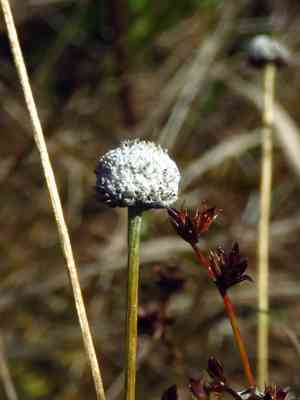
Tenangle pipewort (Eriocaulon decangulare)
Also known as: Ten-angled Pipewort
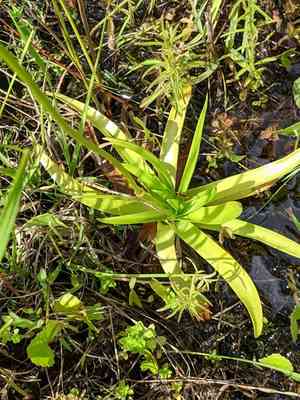
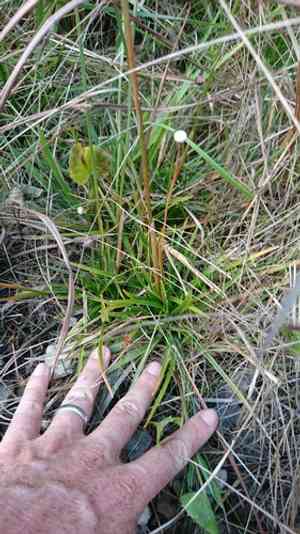
The tenangle pipewort (Eriocaulon decangulare) is a perennial plant characterized by its narrow, grass-like leaves arranged in a rosette formation. It produces small, white or grayish flower heads atop long, thin stems. This plant is well-suited to nutrient-poor environments such as bogs, marshes, and shallow waters. It typically grows in sandy or peaty soils and thrives in conditions ranging from full sunlight to partial shade, demonstrating its resilience and specialized adaptation to challenging habitats.
In This Article
Attributes of Tenangle pipewort
Lifespan
Perennial
Plant Type
Herb
Plant Height
10-50 cm
Spread
N/A
Leaf Color
Green
Flower Size
0.5-1 cm
Flower Color
White
Images of Tenangle pipewort


Quickly Identify Tenangle pipewort
1
Eriocaulon decangulare can be identified by its clustered, grass-like leaves and distinctive white flower heads. The stems are often ridged and can be ten-angled, as referenced in its common name.
Scientific Classification of Tenangle pipewort
Phylum
Vascular plants
Class
Monocotyledons
Order
Poales
Family
Pipeworts
Genus
Pipeworts
Species
Tenangle pipewort
Planting and Growing of Tenangle pipewort
Care Difficulty
Moderate
Watering Schedule
Every 4 days
Sunlight Requirements
Partial sun
Sunshine Duration
4-8 hours
Ideal Temperature
60-75℉
Soil Type
Potting Mix, Peat Mix
Soil pH
4.5-6.5
Fertilizer Type
Balanced
Pruning Season
Spring, Summer
Pruning Area
Branches, Leaves
Pruning Frequency
2 times a year
Repotting Season
Spring
Pot Type
Plastic, Terracotta
 How to Water Tenangle pipewort?
For Eriocaulon decangulare, watering should be thorough but not excessive. Ensure the soil is evenly moist without becoming soggy. The goal is to maintain a balance where the soil feels like a wrung-out sponge, holding moisture but not dripping wet.
What are the symptoms of an underwatered Tenangle pipewort?
›
What should I do if my Tenangle pipewort is not getting enough water?
›
What are the symptoms of an overwatered Tenangle pipewort?
›
How to save an overwatered Tenangle pipewort?
›
 What Are the Sunlight Requirements for Tenangle pipewort?
Partial sun environments balance to provide enough light for photosynthesis without excessive heat. This ensures optimal growth, enhancing vitality and bloom success.
What is the ideal lighting condition?
›
How to achieve this ideal lighting?
›
What are the benefits of ideal lighting?
›
 What Is the Ideal Temperature Range for Tenangle pipewort?
Eriocaulon decangulare thrives best in a temperature range of 60 to 75 degrees Fahrenheit. This range provides optimal conditions for growth, ensuring that the plant's physiological processes function efficiently, without the stress of temperature extremes. Keeping the plants within this range helps in maintaining healthy foliage and vibrant flowering.
 What Soil is Best for Tenangle pipewort?
Eriocaulon decangulare thrives in acidic soils, as these provide essential nutrients that contribute to vibrant growth. Acidic conditions enhance the plant's ability to absorb minerals, promoting healthier and more robust foliage. This plant requires soil that retains moisture without becoming waterlogged. Sandy loam is ideal because it balances drainage and moisture retention, ensuring the roots stay hydrated but aerated. Rich in organic matter, the soil should provide a continuous release of nutrients. This helps the plant maintain its nutrient supply, supporting sustained growth and enhancing its natural beauty.
 How to Fertilize Tenangle pipewort?
Eriocaulon decangulare requires a balanced approach to fertilization. For liquid fertilizers, use a solution diluted to half the recommended strength to avoid nutrient burn. As for slow-release fertilizers, apply approximately a tablespoon around the root zone. Monitor the plant's health and adjust the amount as needed to ensure vigorous growth.
 How to Prune Tenangle pipewort?
Before pruning, ensure your tools are clean and sharp. This reduces the risk of disease transmission and enables precise cuts, which is essential for maintaining the plant's health and aesthetic value. Begin by identifying and removing any leaves that appear brown or wilted. Use clean scissors or gardening shears to trim them back to the base without damaging surrounding healthy foliage. To encourage air circulation, thin out crowded areas by selectively removing a few branches or stems. This helps reduce humidity around the plant and mitigates fungal infestations.
More About Pruning Techniques→
 How to Propagate Tenangle pipewort plant?
1
Begin by filling a seed tray with a light, well-draining potting mix. Place the seeds evenly on the surface and cover them lightly with a thin layer of the same potting mix. Water gently and ensure the soil remains consistently moist but not waterlogged.
2
Carefully remove the plant from its pot or ground, gently teasing apart the rootball into smaller sections. Make sure each division has a healthy portion of roots and foliage. Replant each division into a suitably sized pot or bed and water thoroughly.
3
Place seed trays or newly divided plants in a location with bright, indirect light. Maintain a warm temperature consistently and avoid direct sunlight that may scorch young plants. Consistent care during these initial stages is key to successful propagation.
 How to Repot Tenangle pipewort plant?
1
Eriocaulon decangulare shows signs of needing repotting when roots grow through drainage holes or the soil becomes compacted. Repotting in spring or summer ensures healthier growth when plants are more adaptable.
2
Select a pot slightly larger than the current one, with good drainage. A well-chosen pot prevents waterlogging and root rot, which is crucial for the health of Eriocaulon decangulare.
3
Opt for sandy, well-drained soil to replicate Eriocaulon decangulare's natural habitat. This soil type maintains optimal moisture levels and prevents water retention, encouraging healthy plant growth.
Learn More About Tenangle pipewort Diseases
Anthracnose
Bacterial Leaf Spot
Bacterial Soft Rot
Bacterial Wilt
Chemical Injury
Damping-off
Downy Mildew
Drought Stress
Fusarium Wilt
Gray Mold
Leaf Spot
Mosaic
Nutrient Deficiency
Nutrient Toxicity
Powdery Mildew
Root Rot
Root-knot Nematode
Sooty Mold
Spider Mites
Temperature Stress
Thrips Damage
White Mold



