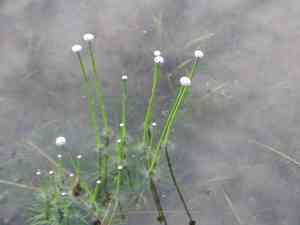
Sevenangle pipewort (Eriocaulon aquaticum)
Also known as: White buttons
The sevenangle pipewort (*Eriocaulon aquaticum*) is a small aquatic plant typically found in wetland areas. Its leaves remain submerged, while its unique, seven-sided, hollow stalks hold the flowers above water. The plant's submerged parts offer a habitat for various invertebrates, which, in turn, serve as food for fish and other aquatic organisms. Additionally, beetles feed on its roots and shoots, further integrating it into the ecosystem.
In This Article
Attributes of Sevenangle pipewort
Lifespan
Perennial
Plant Type
Herb
Plant Height
10 cm to 23 cm
Spread
1-2 cm (0.4-0.8 inches)
Leaf Color
Green
Flower Size
2.5 cm
Flower Color
White
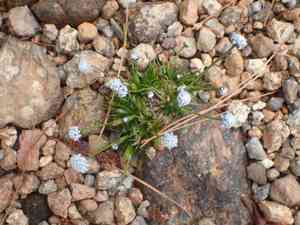
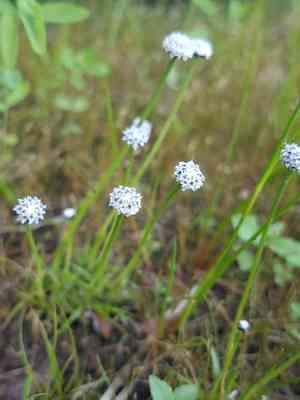
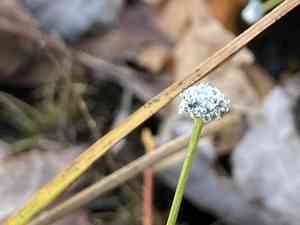
Images of Sevenangle pipewort

Quickly Identify Sevenangle pipewort
1
Eriocaulon aquaticum can be identified by its rosette of narrow, grass-like leaves and small spherical white flower heads that grow on tall, slender stalks extending above the water.
Scientific Classification of Sevenangle pipewort
Phylum
Vascular plants
Class
Monocotyledons
Order
Poales
Family
Pipeworts
Genus
Pipeworts
Species
Sevenangle pipewort
Planting and Growing of Sevenangle pipewort
Care Difficulty
Hard
Watering Schedule
Every 8 days
Sunlight Requirements
Partial sun
Sunshine Duration
4-8 hours
Ideal Temperature
65-75℉
Soil Type
Potting Mix, Peat Mix
Soil pH
4.5-6.5
Fertilizer Type
Balanced
Pruning Season
Spring, Summer
Pruning Area
Branches, Leaves
Pruning Frequency
2 times a year
Repotting Season
Spring
Pot Type
Plastic, Ceramic
 How to Water Sevenangle pipewort?
For Eriocaulon aquaticum, ensure each watering session involves thoroughly soaking the soil with approximately 200 milliliters. The goal is to allow moisture to reach the plant's roots without waterlogging the medium. Ideally, maintain a balance where the soil is consistently moist but never saturated.
What are the symptoms of an underwatered Sevenangle pipewort?
›
What should I do if my Sevenangle pipewort is not getting enough water?
›
What are the symptoms of an overwatered Sevenangle pipewort?
›
How to save an overwatered Sevenangle pipewort?
›
 What Are the Sunlight Requirements for Sevenangle pipewort?
Partial sun or dappled sunlight is optimal for Eriocaulon aquaticum. Ideal light ensures the plant maintains its lush appearance and vigor, supporting its photosynthetic efficiency and nutrient assimilation.
What is the best location for Eriocaulon aquaticum?
›
How to optimize light exposure?
›
What are the benefits of ideal lighting?
›
 What Is the Ideal Temperature Range for Sevenangle pipewort?
Eriocaulon aquaticum thrives best in temperatures ranging from 65°F to 75°F, providing a stable environment for growth. Maintaining this temperature range can support healthy foliage and robust plant development, ensuring the plant's metabolic processes operate efficiently.
 What Soil is Best for Sevenangle pipewort?
Eriocaulon aquaticum thrives in soil that retains moisture well. The presence of organic matter and good drainage ensures that the plant's roots are consistently moist without becoming waterlogged, promoting healthy growth. This plant benefits from a soil rich in organic material, which provides the necessary nutrients and maintains the right balance of moisture. Organic-rich soils also encourage beneficial microbial activity that supports root health. Well-aerated soil is essential for Eriocaulon aquaticum as it allows oxygen to reach the roots, which is crucial for respiration and nutrient uptake. Adequate aeration prevents root rot and other moisture-related diseases.
 How to Fertilize Sevenangle pipewort?
For Eriocaulon aquaticum, a balanced aquatic plant fertilizer is recommended. You can use about 1/8 teaspoon of liquid fertilizer per gallon of water every two weeks. Ensure that the fertilizer is diluted properly to avoid any potential harm to the plant.
 How to Prune Sevenangle pipewort?
Eriocaulon aquaticum primarily benefits from the removal of dead or decaying leaves. Identify these parts by their darker color or wilted appearance and use your sharp tools to slice them off near the base. Once the flowers have bloomed and begun to fade, you can cut back the stalks. This not only tidies the plant's appearance but also redirects the plant's energy into producing new growth rather than seed production. Regular pruning helps maintain a pleasing shape. Trim excess growth and any parts extending awkwardly beyond the plant’s main form to keep it looking compact and healthy.
More About Pruning Techniques→
 How to Propagate Sevenangle pipewort plant?
1
To propagate Eriocaulon aquaticum from seeds, wait until the flowers have matured and produce seed heads. Collect the seeds by gently shaking the plant over a container. Ensure seeds are dry and store them in a cool, dark place.
2
Prepare a soil mix that retains moisture but also allows for drainage. A mixture of peat moss and perlite can be effective. Fill seed trays or pots with this soil mix, ensuring it is firmly packed but not compressed.
3
Sow the collected seeds on the surface of the prepared soil. Press them lightly into the soil but do not cover them completely, as light aids germination. Water carefully to keep the soil moist but not soaked.
 How to Repot Sevenangle pipewort plant?
1
Eriocaulon aquaticum needs repotting when its roots outgrow the pot or start appearing on the soil surface. The best time to repot is at the onset of new growth in spring or summer, when the plant is most resilient. You might also notice that the water isn't being absorbed as efficiently, which is another good indicator.
2
Select a pot with adequate drainage and a wider surface area to accommodate the spreading roots. A wide, shallow pot works best, allowing the plant plenty of room while preventing excessive waterlogging. This kind of pot helps ensure that the plant doesn't get root rot, a common issue in aquatic plants.
3
Choose a soil mix specifically designed for aquatic plants, which usually includes a blend of clay and a coating of sand or gravel. This ensures that the roots are firmly anchored while facilitating adequate moisture retention and nutrient uptake, essential for the plant's vitality.
Learn More About Sevenangle pipewort Diseases
Anthracnose
Bacterial Leaf Spot
Bacterial Soft Rot
Bacterial Wilt
Chemical Injury
Damping-off
Downy Mildew
Drought Stress
Fusarium Wilt
Gray Mold
Leaf Spot
Mosaic
Nutrient Deficiency
Nutrient Toxicity
Powdery Mildew
Root Rot
Root-knot Nematode
Sooty Mold
Spider Mites
Temperature Stress
Thrips Damage
White Mold



