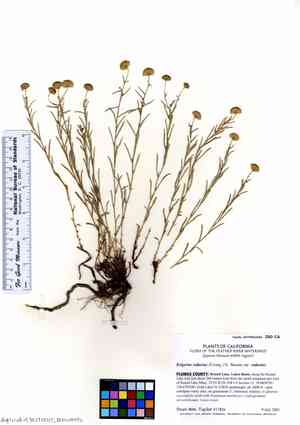
Lesser california rayless fleabane (Erigeron reductus)
Also known as: Little rayless fleabane
The lesser California rayless fleabane is a small perennial herb that flourishes in coastal sage scrub and chaparral habitats. It thrives in well-drained, sandy or rocky soils and enjoys full sun. This plant has a robust, spreading root system and features a rosette of narrow leaves. Its daisy-like flowers, which have yellow centers and minimal pale petals, bloom in the bright summer months of its preferred coastal environment.
In This Article
Attributes of Lesser california rayless fleabane
Lifespan
Perennial
Plant Height
20-60 cm
Spread
N/A
Leaf Color
Green
Flower Size
1.5-2 cm
Flower Color
White petals with a yellow center
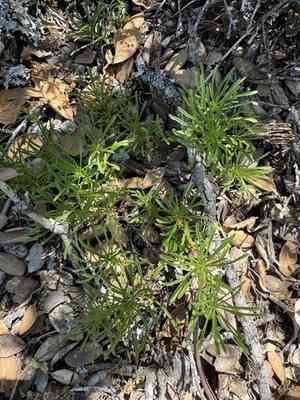
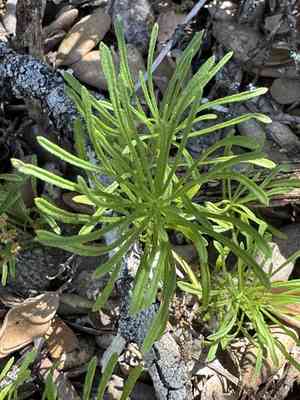
Images of Lesser california rayless fleabane
Quickly Identify Lesser california rayless fleabane
1
Erigeron reductus can be identified by its narrow, lance-shaped leaves and small daisy-like flowers with white petals and a yellow center. The plant tends to grow in clusters and can reach heights between 20 and 60 cm.
Scientific Classification of Lesser california rayless fleabane
Phylum
Vascular plants
Class
Dicotyledons
Order
Asterales
Family
Daisy
Genus
Fleabanes
Species
Lesser california rayless fleabane
Planting and Growing of Lesser california rayless fleabane
Care Difficulty
Moderate
Watering Schedule
Every 2 days
Sunlight Requirements
Full sun
Sunshine Duration
6-10 hours
Ideal Temperature
60-75℉
Soil Type
Potting Mix, Peat Mix
Soil pH
6.5-7.5
Fertilizer Type
Balanced
Pruning Season
Spring, Summer
Pruning Area
Branches, Leaves
Pruning Frequency
2 times a year
Repotting Season
Spring
Pot Type
Plastic, Ceramic
 How to Water Lesser california rayless fleabane?
Erigeron reductus does best when watered deeply but infrequently. Watering should ensure the soil is moist but not soggy, typically around 150 milliliters per watering. This encourages roots to grow deeper into the soil, promoting a healthy plant.
What are the symptoms of an underwatered Lesser california rayless fleabane?
›
What should I do if my Lesser california rayless fleabane is not getting enough water?
›
What are the symptoms of an overwatered Lesser california rayless fleabane?
›
How to save an overwatered Lesser california rayless fleabane?
›
 What Are the Sunlight Requirements for Lesser california rayless fleabane?
Preferring full to partial sunlight, Erigeron reductus benefits from a mix of direct and indirect light. This enhances blooming, foliage color, and overall vigor, making it resilient and visually appealing.
How much light does Erigeron reductus need?
›
What are the optimal lighting solutions for Erigeron reductus?
›
Why is correct lighting important for Erigeron reductus?
›
 What Is the Ideal Temperature Range for Lesser california rayless fleabane?
The ideal temperature range for Erigeron reductus is between 60°F and 75°F. This range ensures optimal growth and blooming conditions. Maintaining this range helps in facilitating proper photosynthesis and metabolic activity, which in turn promotes healthy foliage and flower production.
 What Soil is Best for Lesser california rayless fleabane?
For Erigeron reductus, well-draining soil is essential to prevent root rot. This plant thrives in soils that allow water to pass through quickly, mimicking its natural environment. By avoiding waterlogged conditions, the plant can maintain healthy roots and a robust growth pattern, ensuring lush flowering. While some plants require rich, organic-laden soils, Erigeron reductus is adapted to soils with lower organic matter. This requirement reflects its native habitats, which helps the plant avoid stress from nutrient overload and supports its natural growth processes. Erigeron reductus does well in soils that have moderate nutrient availability. Over-fertilization can be detrimental, leading to poor growth and minimal flowering. Balanced nutrient levels support its moderate growth and flowering traits seen in its native environments.
 How to Fertilize Lesser california rayless fleabane?
Erigeron reductus, also known as St. Augustine fleabane, requires a balanced approach to fertilization. Use a half-strength liquid fertilizer, applying 50 milliliters per plant to avoid over-fertilization. This should suffice to promote healthy growth without risking nutrient burns.
 How to Prune Lesser california rayless fleabane?
Use clean, sharp pruning shears to make precise cuts. Ensuring your tools are sterilized prevents the spread of disease and helps cleanly remove stems without crushing them. When pruning, focus on removing any dead or damaged stems first. Cut just above a node, as this is where new growth will emerge. For shaping, trim overgrown sections back to maintain a balanced and appealing form.
More About Pruning Techniques→
 How to Propagate Lesser california rayless fleabane plant?
1
Start by selecting a well-draining potting mix and filling seed trays. Sow the seeds shallowly and cover them lightly with soil. Water the trays gently to settle the soil without displacing the seeds. Place the trays in a warm, bright location, ensuring they receive indirect sunlight.
2
Select healthy, disease-free stems and cut them at an angle using sterile scissors. The cutting should be about 4-6 inches long and taken just below a leaf node. Remove the lower leaves to prevent decay, leaving a few leaves at the top for photosynthesis.
3
For division, dig up mature plants and separate them into smaller sections, ensuring each section has a portion of roots and foliage. Plant the divisions into prepared soil in individual pots or directly into the garden. Water thoroughly to encourage root establishment.
 How to Repot Lesser california rayless fleabane plant?
1
Erigeron reductus shows signs of needing repotting when its roots start poking out from the drainage holes or the growth rate slows noticeably. This indicates that the plant is becoming root-bound or has depleted the nutrients from its soil. Ideally, plan to repot every couple of years during the growing season for the best results.
2
Select a pot that is just one size larger than the current one. It should have ample drainage holes to allow excess water to escape and prevent root rot. A slightly larger pot not only supports the root expansion but also maintains even soil moisture levels, ensuring the plant thrives.
3
Opt for a well-draining, sandy soil mix that allows air to circulate around the roots while retaining minimal moisture. This kind of soil prevents waterlogged conditions and mimics the plant's natural environment, promoting healthier growth and preventing root diseases.
Learn More About Lesser california rayless fleabane Diseases
Anthracnose
Bacterial Leaf Spot
Bacterial Wilt
Black Spot
Chemical Injury
Crown Gall
Cyst Nematode
Damping-off
Downy Mildew
Drought Stress
Fusarium Wilt
Gray Mold
Leaf Curl
Leaf Spot
Mosaic
Nutrient Deficiency
Nutrient Toxicity
Powdery Mildew
Root Rot
Root-knot Nematode
Rusts
Sooty Mold
Spider Mites
Temperature Stress
Thrips Damage
White Mold



