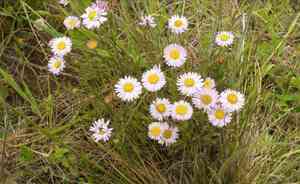
Willamette fleabane (Erigeron decumbens)
Also known as: Willamette fleabane, spreading fleabane
Willamette fleabane is a perennial herb that tends to grow low to the ground, often creating dense mats. It has narrow, lance-shaped leaves primarily at its base and features daisy-like flowers with white to light pink petals surrounding a yellow center. Preferring well-drained soils, this plant thrives in prairies and meadows, providing important support for pollinators during its bloom.
In This Article
Attributes of Willamette fleabane
Lifespan
Perennial
Plant Type
Herb
Plant Height
0.1 to 0.5 meters
Spread
0.2 to 0.5 meters
Leaf Color
Bright green
Flower Size
1.5 to 2.5 centimeters
Flower Color
White to pinkish
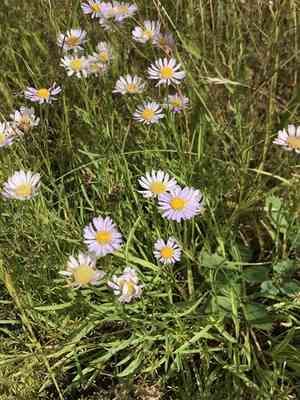
Images of Willamette fleabane
Quickly Identify Willamette fleabane
1
To identify Erigeron decumbens, look for its distinguishing features such as its low-growing, spreading habit, bright green linear leaves, and small daisy-like flowers with numerous white to pinkish ray florets surrounding a yellow disc. It also has a tendency to form dense mats, which helps differentiate it from other species in its genus.
Scientific Classification of Willamette fleabane
Phylum
Vascular plants
Class
Dicotyledons
Order
Asterales
Family
Daisy
Genus
Fleabanes
Species
Willamette fleabane
Planting and Growing of Willamette fleabane
Care Difficulty
Easy
Watering Schedule
Every 3 days
Sunlight Requirements
Full sun
Sunshine Duration
6-10 hours
Ideal Temperature
65-75℉
Soil Type
Potting Mix, Peat Mix
Soil pH
6.5-7.5
Fertilizer Type
Balanced
Pruning Season
Spring, Summer
Pruning Area
Branches, Leaves
Pruning Frequency
2 times a year
Repotting Season
Spring
Pot Type
Plastic, Terracotta
 How to Water Willamette fleabane?
For Erigeron decumbens, you should aim to water around 250 milliliters each time. The soil should be moist but not soggy. Check the topsoil about 1-2 inches deep; if it's dry, it's time to water. Always ensure that excess water drains away to prevent root rot.
What are the symptoms of an underwatered Willamette fleabane?
›
What should I do if my Willamette fleabane is not getting enough water?
›
What are the symptoms of an overwatered Willamette fleabane?
›
How to save an overwatered Willamette fleabane?
›
 What Are the Sunlight Requirements for Willamette fleabane?
Erigeron decumbens flourishes in full sun conditions. Ideal light exposure ensures healthy foliage, abundant blooms, and increases its resilience against challenging environmental factors.
How much sun does Erigeron decumbens need?
›
What can you do if full sun is not available?
›
What are the benefits of ideal light conditions for Erigeron decumbens?
›
 What Is the Ideal Temperature Range for Willamette fleabane?
For optimal growth, Erigeron decumbens thrives best within a temperature range of 65 to 75°F. This range provides the perfect balance of warmth without risking heat stress or insufficient metabolic activity, promoting healthy development and flowering.
 What Soil is Best for Willamette fleabane?
Erigeron decumbens thrives in well-drained soil to prevent root rot. Proper drainage ensures that water doesn't pool around the roots, allowing the plant to absorb nutrients efficiently and reducing the risk of fungal infections. This plant benefits from soil with moderate nutrient content, which supports healthy growth and robust flowering. A balanced supply of nutrients encourages the development of strong foliage and vibrant blossoms. Adding organic matter to the soil can greatly enhance its structure and fertility, benefiting Erigeron decumbens. Organic matter helps retain moisture while providing essential nutrients, fostering a healthier growing environment.
 How to Fertilize Willamette fleabane?
For Erigeron decumbens, applying a balanced, water-soluble fertilizer at half the recommended strength is ideal. Use about 1/2 teaspoon of liquid fertilizer per gallon of water. Avoid over-fertilizing by sticking to this moderate amount and adjusting according to the plant's response.
 How to Prune Willamette fleabane?
Look for any dead or brown stems and remove them at the base. This helps redirect the plant’s energy to producing healthy new growth. Cut back any excessively long stems to encourage a bushier shape and prevent the plant from looking leggy. Ensure cuts are made just above a leaf node to promote branching.
More About Pruning Techniques→
 How to Propagate Willamette fleabane plant?
1
Fill seed trays with a seed-starting mix and gently press the seeds into the surface. Lightly cover with more mix and water gently. Maintain a warm temperature and indirect sunlight to promote germination.
2
Identify healthy and mature plants that can be divided. Water them thoroughly the day before division to lessen plant stress, and select a cool, overcast day to carry out the operation.
3
After dividing, plant each section into a prepared garden bed or pot filled with nutrient-rich soil. Water well and keep in a shaded area until signs of new growth appear.
 How to Repot Willamette fleabane plant?
1
Erigeron decumbens shows signs of needing repotting when its roots begin to outgrow the current container, often peeking out of the drainage holes. Additionally, if the plant's growth slows noticeably despite regular care, it could indicate that it's time for a fresh start.
2
Choose a pot that is one size larger than the current container, ensuring it has adequate drainage holes. This prevents waterlogging, which can lead to root rot, and gives the plant ample space to expand its root system, promoting healthier and more vigorous growth.
3
Opt for a well-draining sandy soil mix, ideal for Erigeron decumbens, as it mimics its natural habitat. This type of soil allows for proper aeration and prevents the roots from sitting in water, reducing the risk of fungal diseases and ensuring robust plant health.
Learn More About Willamette fleabane Diseases
Anthracnose
Bacterial Leaf Spot
Bacterial Soft Rot
Bacterial Wilt
Black Spot
Chemical Injury
Crown Gall
Cyst Nematode
Damping-off
Downy Mildew
Drought Stress
Fusarium Wilt
Gray Mold
Leaf Curl
Leaf Spot
Mosaic
Nutrient Deficiency
Nutrient Toxicity
Powdery Mildew
Root Rot
Root-knot Nematode
Rusts
Sooty Mold
Spider Mites
Temperature Stress
Thrips Damage
White Mold


