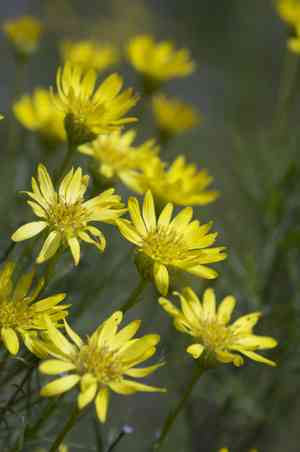
Narrowleaf goldenbush (Ericameria linearifolia)
Also known as: Slimleaf goldenbush
The small, flowering shrub known as Ericameria linearifolia, or narrowleaf goldenbush, displays yellow flowers in the spring or early summer. It thrives in sandy or rocky soils and is native to North America, spanning regions from Mexico to Nevada, Arizona, California, and southwestern Utah.
In This Article
Attributes of Narrowleaf goldenbush
Lifespan
Perennial
Plant Type
Shrub
Plant Height
1.5 m
Spread
90 cm to 1.5 m
Leaf Color
Bright Green
Flower Size
1 cm to 1.8 cm
Flower Color
Yellow
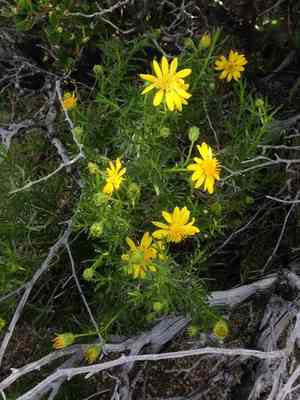
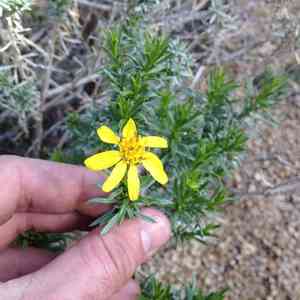
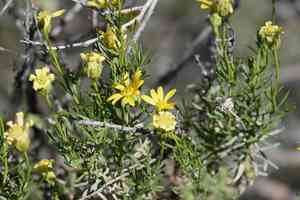
Images of Narrowleaf goldenbush
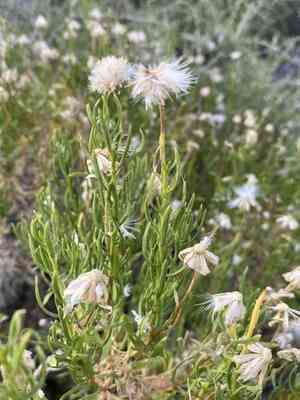
Quickly Identify Narrowleaf goldenbush
1
To identify Ericameria linearifolia, look for a small, woody shrub with linear, needle-like leaves that are bright green. The plant typically blooms in late summer to fall, producing clusters of small yellow flowers that are characteristic of the Asteraceae family.
Scientific Classification of Narrowleaf goldenbush
Phylum
Vascular plants
Class
Dicotyledons
Order
Asterales
Family
Daisy
Genus
Goldenbushes
Species
Narrowleaf goldenbush
Planting and Growing of Narrowleaf goldenbush
Care Difficulty
Easy
Watering Schedule
Every 2 days
Sunlight Requirements
Full sun
Sunshine Duration
6-10 hours
Ideal Temperature
65-75℉
Soil Type
Potting Mix, Peat Mix
Soil pH
6.5-7.5
Fertilizer Type
Balanced
Pruning Season
Spring, Summer
Pruning Area
Branches, Leaves
Pruning Frequency
2 times a year
Repotting Season
Spring
Pot Type
Plastic, Ceramic
 How to Water Narrowleaf goldenbush?
Ericameria linearifolia, commonly known as narrowleaf goldenbush, thrives in well-drained soil and prefers to stay on the dry side. Water to ensure the soil is moist but not waterlogged, approximately 500 milliliters per watering.
What are the symptoms of an underwatered Narrowleaf goldenbush?
›
What should I do if my Narrowleaf goldenbush is not getting enough water?
›
What are the symptoms of an overwatered Narrowleaf goldenbush?
›
How to save an overwatered Narrowleaf goldenbush?
›
 What Are the Sunlight Requirements for Narrowleaf goldenbush?
Ericameria linearifolia thrives in full sun. Ensuring this level of exposure maximizes photosynthesis, encourages robust flowering, and enhances resilience, translating to a healthier and more vibrant plant.
What is the best position for Ericameria linearifolia?
›
How to achieve ideal lighting for this plant?
›
What benefits do ideal lighting conditions bring?
›
 What Is the Ideal Temperature Range for Narrowleaf goldenbush?
Ericameria linearifolia, commonly known as narrow-leaved goldenbush, thrives in a temperature range between 65°F and 75°F. These conditions mimic the natural habitats where it is usually found, providing optimal conditions for photosynthesis and growth. Maintaining this temperature range ensures vigorous development and reduces the chances of stress.
 What Soil is Best for Narrowleaf goldenbush?
Ericameria linearifolia thrives best in soil that has excellent drainage. This means water shouldn't stay around the roots for long. The benefit here is that good drainage prevents root rot and helps the plant maintain its health and vigor by ensuring it gets just the right amount of moisture. This plant prefers soil with moderate fertility levels. High fertility isn't necessary and can sometimes be detrimental. The benefit to the plant is that moderate fertility encourages a more robust root system and maintains the plant’s resilience to environmental stressors. While generally preferring neutral to slightly acidic soils, Ericameria linearifolia can tolerate slightly alkaline conditions. This adaptability helps in maximizing its growth potential in a variety of landscapes and contributes to its versatility as a garden plant.
 How to Fertilize Narrowleaf goldenbush?
When fertilizing Ericameria linearifolia, use a balanced, water-soluble fertilizer at half the recommended strength for liquid applications. For slow-release fertilizers, apply according to the package instructions, typically 1 teaspoon per plant, ensuring it is evenly distributed around the base of the plant.
 How to Prune Narrowleaf goldenbush?
Ensure your pruning tools are clean and sanitized before starting. This will prevent the spread of diseases and infections which can seriously damage Ericameria linearifolia. Be cautious not to over-prune, as this can stress the plant. Aim to remove no more than one-third of the foliage at any given time to ensure the plant retains enough energy for healthy growth.
More About Pruning Techniques→
 How to Propagate Narrowleaf goldenbush plant?
1
Collect ripe seeds from the plant after blooming. Prepare seedling trays with a well-draining potting mix. Sow seeds lightly on the surface, cover with a thin layer of soil, and keep moist. Place in a warm area with indirect sunlight.
2
Select healthy, non-flowering stems and cut 4-6 inches sections. Remove lower leaves and dip the cut end in rooting hormone. Plant the cuttings in a pot filled with a mixture of sand and peat moss. Keep them in indirect light and maintain soil moisture.
3
Carefully dig up the plant to expose the root system. Use a clean knife to divide the root ball into smaller sections, ensuring each section has ample roots. Replant the divisions in new locations, water thoroughly, and provide support if needed.
 How to Repot Narrowleaf goldenbush plant?
1
Repot Ericameria linearifolia when you notice roots emerging from the drainage holes, the plant becomes top-heavy, or the soil no longer retains moisture well. Spring and autumn are the best times as these seasons provide mild temperatures, supporting plant recovery.
2
Select a pot that's one size larger than the current one, ensuring it has multiple drainage holes to prevent waterlogging. A shallow, wide pot is ideal, promoting balanced root spread and enhanced air circulation, crucial for this desert-adaptive species.
3
A well-draining cactus mix is ideal for this plant. It should provide excellent aeration and drainage to mimic its native dry, rocky environment. Avoid heavy, compact soils that retain moisture excessively, risking root rot and poor plant health.
Toxicity
Ingestion
WARNING
The judgment on toxicity and danger is for reference only. We DO NOT GUARANTEE any accuracy of such judgment. Therefore, you SHALL NOT rely on such judgment. It is IMPORTANT TO SEEK PROFESSIONAL ADVICE in advance when necessary.



