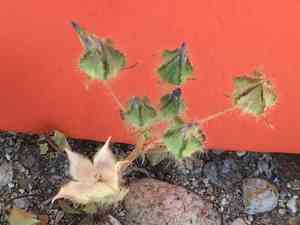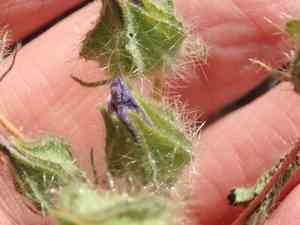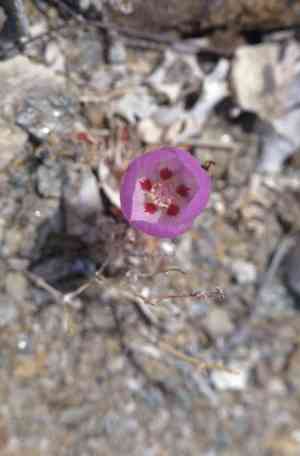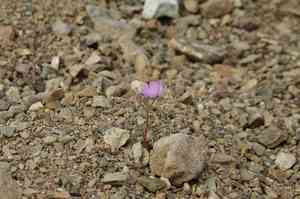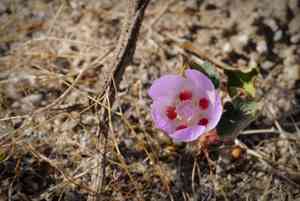
Desert fivespot(Eremalche rotundifolia)

Desert fivespot (Eremalche rotundifolia)

Also known as: Desert Five-Spot

The desert fivespot (Eremalche rotundifolia) is native to the Mojave and Colorado Deserts in North America, thriving in rocky soils up to elevations of approximately 1500 meters. This wildflower exhibits several remarkable adaptations:

1. **Petal Overlapping:** Its petals overlap and can fold into a ball during the night, helping to conserve moisture and protect reproductive structures from temperature extremes.
2. **Solar Tracking:** The leaves exhibit heliotropism, meaning they follow the sun's movement throughout the day to maximize sunlight absorption.

These adaptations help the desert fivespot efficiently manage water use and optimize photosynthesis in its challenging desert habitat.

Attributes of Desert fivespot

Lifespan
Annual
Plant Type
Herb
Plant Height
81 cm to 99 cm
Spread
30 cm to 60 cm
Leaf Color
Green
Flower Size
5 cm
Flower Color
Pink Purple Red

ForwardPlant - Identify plants with a snap

Identify and diagnose plants, get toxicity alerts, and explore safety guides for all types of fungi.

Try for Free

Images of Desert fivespot

Desert fivespot(Eremalche rotundifolia)

Quickly Identify Desert fivespot

1
Eremalche rotundifolia can be identified by its round, lobed leaves and its distinctive flowers that feature five deep pink to purple petals, each with a dark spot at the base.

Scientific Classification of Desert fivespot

Phylum
Vascular plants
Class
Dicotyledons
Order
Malvales
Family
Mallow
Genus
Mallows
Species
Desert fivespot

Planting and Growing of Desert fivespot

Care Difficulty
Easy
Watering Schedule
Every 2 days
Sunlight Requirements
Full sun
Sunshine Duration
6-10 hours
Ideal Temperature
68-86℉
Soil Type
Potting Mix, Peat Mix
Soil pH
6.5-7.5
Fertilizer Type
Balanced
Pruning Season
Spring, Summer
Pruning Area
Branches, Leaves
Pruning Frequency
2 times a year
Repotting Season
Spring
Pot Type
Plastic, Ceramic

water icon How to Water Desert fivespot?

For Eremalche rotundifolia, also known as desert five-spot, watering should be just enough to mimic its natural arid environment. Usually, about 250 milliliters per session is enough. Ensure the soil feels slightly damp but not wet, as this plant is adapted to surviving in sparse rainfall conditions.
What are the symptoms of an underwatered Desert fivespot?
What should I do if my Desert fivespot is not getting enough water?
What are the symptoms of an overwatered Desert fivespot?
How to save an overwatered Desert fivespot?

sunlight icon What Are the Sunlight Requirements for Desert fivespot?

Sunlight Requirements: Full sun, Partial sun
Duration of light: 6 to 8 hours daily
Eremalche rotundifolia benefits from partial to full sun light, where it can engage in optimal photosynthesis processes. Proper light exposure results in robust growth and a flourishing bloom period
What is the best lighting condition for Eremalche rotundifolia?
How to achieve ideal lighting for Eremalche rotundifolia?
What benefits does ideal lighting provide for Eremalche rotundifolia?
More About Sunlight Requirements Techniques

temperature icon What Is the Ideal Temperature Range for Desert fivespot?

Ideal Temperature: 68 ~ 86℉
The ideal temperature range for Eremalche rotundifolia is between 68°F and 86°F. In this range, the plant is most likely to thrive, showing optimal growth and development. The temperature should mimic the warm climates of its native habitat in deserts and semi-arid regions to provide the best results.

soil icon What Soil is Best for Desert fivespot?

Soil type: Sandy soil, Sandy loam, Sand soil
Soil PH: 6.5 ~ 7.5
Eremalche rotundifolia thrives in well-drained soil conditions, crucial for preventing root rot. This plant is adapted to arid environments where quick drainage prevents the pooling of water, ensuring healthy root development. While not overly demanding, this plant benefits from moderate nutrient levels in the soil to support its growth. Excess nutrients can lead to lush growth that might be more susceptible to pests. A slightly alkaline soil encourages optimal nutrient availability for Eremalche rotundifolia, supporting its foliage and flowering processes. This pH range ensures that nutrients do not become locked in the soil.

fertilize icon How to Fertilize Desert fivespot?

Fertilizer type: Balanced
For Eremalche rotundifolia, it's essential to use a balanced fertilizer at half the recommended strength for similar desert-dwelling plants. Typically, apply 1/2 teaspoon per gallon of water for liquid fertilizers, ensuring not to over-soak the soil but moisten it adequately.

prune icon How to Prune Desert fivespot?

Pruning Time: Spring, Summer
Begin by examining the plant for any dead, damaged, or diseased branches. Prioritize removing these sections, as this will immediately contribute to its overall health. Identify branches that are weak or not flowering, and consider cutting them away. This will allow the plant to focus its energy on more productive parts, potentially increasing blooms. Look for overly dense areas within the plant's structure. Thinning these will improve air circulation, reduce the risk of disease, and allow sunlight to penetrate, fostering better growth. More About Pruning Techniques

propagate icon How to Propagate Desert fivespot plant?

Propagate Time: Spring, Early spring
1
Fill a seed tray with a suitable potting mix, ensuring it is evenly spread and lightly compacted. Water the mix thoroughly before sowing the seeds.
2
Scatter the Eremalche rotundifolia seeds evenly over the surface of the moistened potting mix. Gently press them into the soil, taking care not to bury them too deep.
3
Place the seed tray in a location with indirect sunlight and maintain a consistent temperature between 18-22°C. Mist the surface regularly to keep it moist.

repot icon How to Repot Desert fivespot plant?

Repotting frequency: Every 2-3 years
1
Eremalche rotundifolia should be repotted when you notice significant root growth exiting the drainage holes or if the plant demonstrates stunted growth despite adequate care. Typically, the best time to repot is during the spring when the plant is actively growing, which allows it to recover more efficiently from any stress caused by repotting.
2
Select a pot that is one size larger than the current one. Ensure it has ample drainage holes to prevent waterlogging, which is detrimental to Eremalche rotundifolia's health. A clay pot can be advantageous because it offers good aeration and reduces the likelihood of overwatering by allowing excess moisture to evaporate more easily.
3
Opt for a well-draining cactus mix or create your own by mixing sand, perlite, and a small amount of organic matter. This blend supports the plant's preference for dry conditions and reduces the risk of root rot, ensuring that excess water drains efficiently, and prevents compaction around the root system.

ForwardPlant - Identify plants with a snap

Find the best spots for them to optimize their health, simply using your phone.

Try for Free