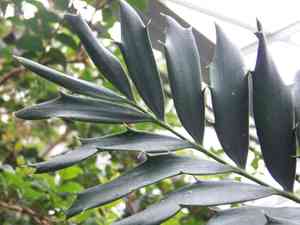
Zululand cycad (Encephalartos ferox)
Also known as: Tongaland Cycad
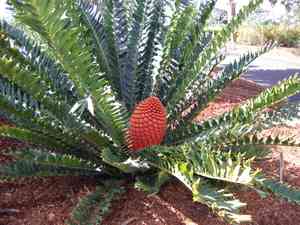
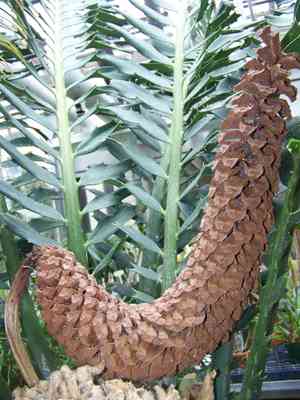
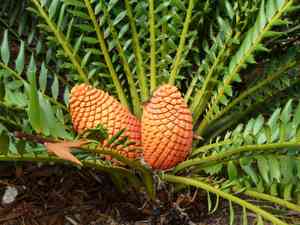
The Zululand cycad (Encephalartos ferox) stands out with its robust, glossy, dark green fronds adorned with sharply pointed, toothed leaflets, a natural deterrent to herbivores. This perennial cycad flourishes in subtropical environments and favors sandy, well-drained soils. It's known for its slow growth and the production of large, conical cones, which create a striking contrast against its lush foliage. The plant prefers partial to full sunlight and can endure coastal conditions, making it ideal for seaside landscaping. Regular watering during dry spells supports its growth, although it's fairly drought-resistant once established.
In This Article
Attributes of Zululand cycad
Lifespan
Perennial
Plant Height
Up to 1.5 meters
Spread
1 to 2 meters
Leaf Color
Glossy green
Flower Size
N/A
Flower Color
N/A
Images of Zululand cycad
Quickly Identify Zululand cycad
1
Identifying Encephalartos ferox involves looking for its distinctive stiff, glossy green leaflets that are slightly curved. The plant has a stout trunk and bears large, conical cones with bright red seeds.
Scientific Classification of Zululand cycad
Phylum
Vascular plants
Class
Cycads
Order
Cycadales
Family
Sago-palm
Genus
Bread tree
Species
Zululand cycad
Planting and Growing of Zululand cycad
Care Difficulty
Hard
Watering Schedule
Every 2 days
Sunlight Requirements
Partial sun
Sunshine Duration
4-8 hours
Ideal Temperature
65-77℉
Soil Type
Potting Mix, Peat Mix
Soil pH
6.5-7.5
Fertilizer Type
Balanced
Pruning Season
Spring, Summer
Pruning Area
Branches, Leaves
Pruning Frequency
2 times a year
Repotting Season
Spring
Pot Type
Plastic, Ceramic
 How to Water Zululand cycad?
For Encephalartos ferox, ensure the soil is drenched but not waterlogged. Water until the excess starts draining from the bottom of the pot to guarantee moisture reaches the roots. This typically requires around 500 ml, depending on the pot size.
What are the symptoms of an underwatered Zululand cycad?
›
What should I do if my Zululand cycad is not getting enough water?
›
What are the symptoms of an overwatered Zululand cycad?
›
How to save an overwatered Zululand cycad?
›
 What Are the Sunlight Requirements for Zululand cycad?
Partial sun with 2 to 4 hours of morning light promotes healthy leaves and sturdy stems, enhancing the plant's beauty and fostering optimal growth conditions.
What is the best lighting condition for Encephalartos ferox?
›
How can I ensure my plant gets the right lighting?
›
What benefits does ideal lighting provide for the plant?
›
 What Is the Ideal Temperature Range for Zululand cycad?
The ideal temperature range for Encephalartos ferox is between 65°F and 77°F. In this range, the plant can thrive and show optimal growth. These temperatures mimic the climate of its natural habitat in southern Africa, ensuring the plant’s physiological processes operate smoothly. Maintaining these conditions helps to support healthy leaf production and root development.
 What Soil is Best for Zululand cycad?
Encephalartos ferox requires well-drained soil to prevent root rot. This condition mimics its natural environment, allowing the plant to thrive by ensuring adequate air circulation around the roots. The plant prefers soil that is rich in essential nutrients. This helps support its growth and ensures that the leaves maintain their vibrant green color, indicative of a healthy plant. Soil with moderate moisture retention is ideal, as it provides the necessary moisture without becoming waterlogged. This balance is crucial for maintaining the plant's health and preventing fungal diseases.
 How to Fertilize Zululand cycad?
For Encephalartos ferox, it is crucial not to over-fertilize. Use a balanced, water-soluble fertilizer diluted to about half the recommended strength. Apply approximately 250 ml per plant, ensuring it's evenly distributed around the roots.
 How to Prune Zululand cycad?
Begin pruning by removing any dead or yellowing fronds at their base, ensuring a neat and healthy appearance for the plant. Use clean and sharp pruning shears to make precise cuts. Always aim to prune early in the growing seasons to encourage robust growth and development. This plant does not require extensive pruning, and over-pruning may harm its natural beauty and health.
More About Pruning Techniques→
 How to Propagate Zululand cycad plant?
1
Collect seeds from a mature Encephalartos ferox cone. This can be a challenging process as the cones are large and woody. Ensure that the seeds are ripe, typically after the cone naturally begins to open.
2
Clean the seeds thoroughly to remove all pulp and surface debris, which can harbor fungi. Soaking the seeds overnight in water can help soften the seed coat, promoting better germination rates.
3
Place the clean and prepared seeds in the seed trays filled with a suitable medium. Keep them at a warm temperature, ideally between 25-30°C, to encourage germination. Monitor regularly for mold or rot.
 How to Repot Zululand cycad plant?
1
Encephalartos ferox signals it's time for a pot change when you notice its roots peeking through drainage holes. This usually indicates overcrowding, hindering growth. Additionally, if water takes unusually long to drain, it's another sign your plant requires new, fresh soil.
2
Your ideal pot should be slightly larger than the current one, providing ample space for root expansion while preventing water stagnation. A pot with good drainage holes is essential for preventing root rot. Choose a sturdy material like terracotta to give stability as the plant grows.
3
Encephalartos ferox thrives in a well-draining, sandy soil mixture. This allows for optimal moisture regulation, preventing waterlogged conditions detrimental to the roots. The soil should mimic its native habitat, ensuring proper root aeration and nutrient access.
Toxicity
Ingestion
WARNING
The judgment on toxicity and danger is for reference only. We DO NOT GUARANTEE any accuracy of such judgment. Therefore, you SHALL NOT rely on such judgment. It is IMPORTANT TO SEEK PROFESSIONAL ADVICE in advance when necessary.
Learn More About Zululand cycad Diseases
Anthracnose
Bacterial Leaf Spot
Bacterial Soft Rot
Black Spot
Chemical Injury
Crown Gall
Cyst Nematode
Damping-off
Drought Stress
Fusarium Wilt
Gray Mold
Leaf Spot
Mosaic
Nutrient Deficiency
Nutrient Toxicity
Powdery Mildew
Root Rot
Root-knot Nematode
Sooty Mold
Spider Mites
Temperature Stress
Thrips Damage
White Mold



