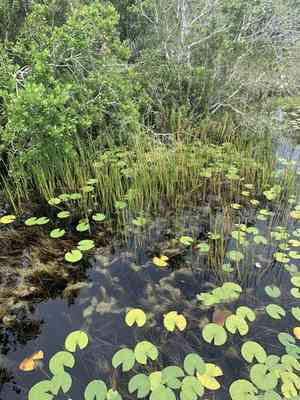
Knotted spikerush (Eleocharis interstincta)
Also known as: Jointed Spikerush
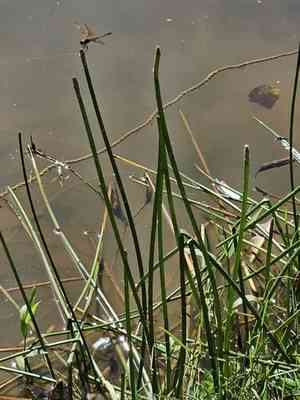
The knotted spikerush is a perennial sedge typically found in wetland environments, such as the edges of streams and ponds. It grows in dense, grass-like clumps with cylindrical stems that can grow up to 30 cm tall. Its small, cone-shaped spikelets are a key feature. This plant thrives in shallow, standing water and plays an important role in the hydrology of its ecosystem.
In This Article
Attributes of Knotted spikerush
Lifespan
Perennial
Plant Type
Grass
Plant Height
30 cm to 91 cm
Spread
Not applicable (no wide crown)
Leaf Color
Green (stems are leafless)
Flower Size
Small (less than 1 cm)
Flower Color
Brownish-green
Images of Knotted spikerush
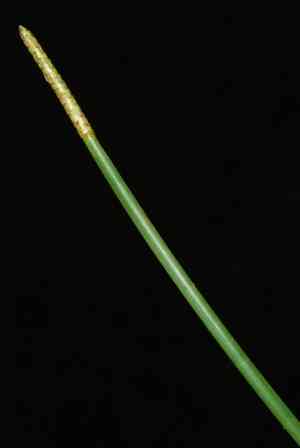
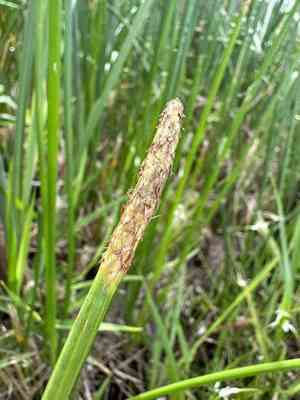
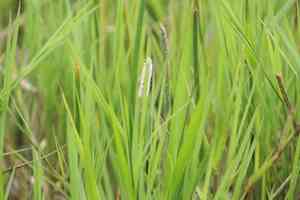
Quickly Identify Knotted spikerush
1
Perennial aquatic plant reaching up to 4 feet (1.2 meters) in height.
2
Cylindrical stem segments with light green lines and dark red sheaths at the base.
3
Singular inflorescence with brown cylindrical spikelet containing 50-140 small flowers.
4
Tiny glossy nutlets with convex shape housing a single seed.
5
Distinctive absence of traditional leaves, replaced by dark reddish basal sheathes.
Scientific Classification of Knotted spikerush
Phylum
Vascular plants
Class
Monocotyledons
Order
Poales
Family
Sedge
Genus
Eleocharis
Species
Knotted spikerush
Planting and Growing of Knotted spikerush
Care Difficulty
Easy
Watering Schedule
Every 2 days
Sunlight Requirements
Full sun
Sunshine Duration
6-10 hours
Ideal Temperature
77-86℉
Soil Type
Potting Mix, Peat Mix
Soil pH
6.5-7.5
Fertilizer Type
Balanced
Pruning Season
Spring, Summer
Pruning Area
Branches, Leaves
Pruning Frequency
2 times a year
Repotting Season
Spring
Pot Type
Plastic, Ceramic
 How to Water Knotted spikerush?
Eleocharis interstincta thrives in wet conditions. Therefore, when watering, ensure that the soil is consistently moist. Water until the top 2-3 inches of the soil are completely saturated, but ensure there is no standing water that could encourage root rot.
What are the symptoms of an underwatered Knotted spikerush?
›
What should I do if my Knotted spikerush is not getting enough water?
›
What are the symptoms of an overwatered Knotted spikerush?
›
How to save an overwatered Knotted spikerush?
›
 What Are the Sunlight Requirements for Knotted spikerush?
Eleocharis interstincta benefits from a light range of partial to full sun. Optimal lighting conditions encourage healthy leaf growth and robust plant development, ensuring the plant's vigor and vitality.
Ideal Lighting Solution
›
Practical Measures for Best Lighting
›
Benefits of Ideal Light Conditions
›
 What Is the Ideal Temperature Range for Knotted spikerush?
The ideal temperature range of 77 to 86 °F promotes optimal growth for Eleocharis interstincta. Within this range, the plant can efficiently perform photosynthesis, absorb nutrients, and maintain proper cellular function. Temperature stability helps avoid stress on the plant, which can otherwise lead to stunted growth or increased susceptibility to pests and diseases.
 What Soil is Best for Knotted spikerush?
Eleocharis interstincta thrives in soils that retain moisture, which is crucial for its growth. The plant benefits from consistent water availability, mimicking its natural aquatic or semi-aquatic environments. Rich, organic soils provide Eleocharis interstincta with essential nutrients to support its dense growth. Such soils enhance the vigor and health of the plant by supplying continuous nutrients, which is ideal for robust development. The plant prefers soils with good aeration to prevent root rot and ensure root health. Well-aerated soil allows for efficient gas exchange and root expansion, supporting overall plant vitality.
 How to Fertilize Knotted spikerush?
For Eleocharis interstincta, it is essential to maintain moderate fertilization as over-fertilization can lead to adverse effects. During the growing season, use a balanced water-soluble fertilizer at a rate of 1/4 to 1/2 strength every two weeks. Be cautious to not exceed these levels to prevent nutrient burn.
 How to Prune Knotted spikerush?
Begin by identifying any dead or discolored leaves or stems. Using your sharp scissors or shears, gently cut these away from the main body of the plant. This helps direct the plant's energy into producing new, healthy growth. Lightly trim the tips of healthy stems to encourage new shoots. This will promote a fuller look and may increase the density of the foliage, contributing to a more aesthetically pleasing plant.
More About Pruning Techniques→
 How to Propagate Knotted spikerush plant?
1
Choose a mature and healthy Eleocharis interstincta with an established clump. Look for vigorous growth, which indicates the plant is in prime condition for division. Avoid plants showing signs of disease or stress.
2
Carefully dig around the plant using a sharp spade, keeping the maximum amount of roots intact. Lift the plant gently from the ground and use the spade or a sharp knife to split the roots into sections, ensuring each division has a portion of rhizomes and roots.
3
Prepare planting holes in the desired location, ideally matching the conditions from where the divisions were taken. Place the divided sections into the holes, firm the soil around them, and water thoroughly to reduce transplant shock.
 How to Repot Knotted spikerush plant?
1
Repot Eleocharis interstincta when it begins to outgrow its current pot, typically when you see roots emerging from the drainage holes. This often happens during the active growth periods in spring and summer when the plant requires more space to accommodate its expanding root system.
2
Choose a pot that is only slightly larger than the current one, ensuring it has good drainage holes. This will prevent water logging, which Eleocharis interstincta is prone to. A pot that is too big may retain excessive moisture, causing root rot in this moisture-loving, yet sensitive plant.
3
Select a soil mixture that is rich in organic matter and able to retain moisture yet drains well. Such soil mimics the plant's natural marshy habitat, providing enough nutrients and moisture, essential for its growth while preventing sogginess and ensuing root issues.
Learn More About Knotted spikerush Diseases
Anthracnose
Bacterial Leaf Spot
Bacterial Soft Rot
Bacterial Wilt
Damping-off
Downy Mildew
Drought Stress
Fusarium Wilt
Gray Mold
Leaf Spot
Mosaic
Nutrient Deficiency
Nutrient Toxicity
Powdery Mildew
Root Rot
Root-knot Nematode
Rusts
Sooty Mold
Spider Mites
Temperature Stress
Thrips Damage
White Mold



