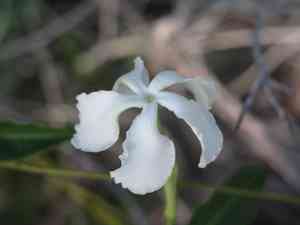
Devil's potato(Echites umbellatus)

Devil's potato (Echites umbellatus)

Also known as: Devil's Potato, Wild Allamanda

The devil's potato, known scientifically as *Echites umbellatus*, is a tropical climbing plant that flourishes in warm, humid climates. Key adaptations include:

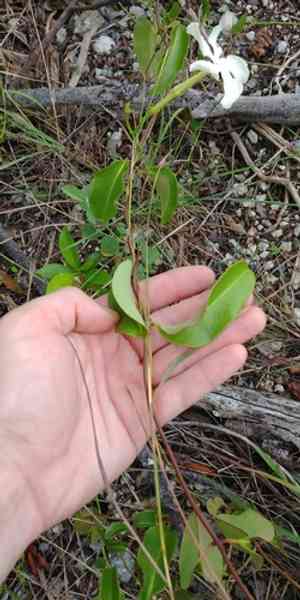
1. **Climbing Vines**: Its sprawling vines help it climb over other vegetation to access sunlight, essential for photosynthesis in dense tropical forests.
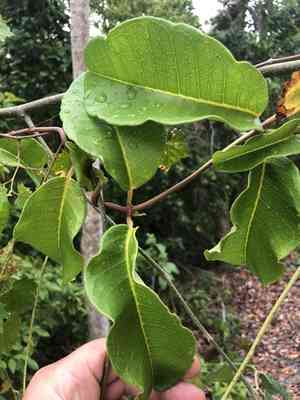
2. **Glossy Leaves**: The plant features glossy green leaves that minimize water loss and withstand intense sunlight.
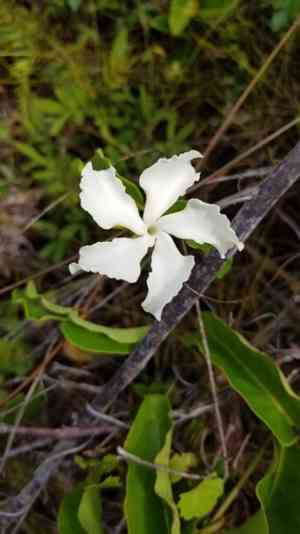
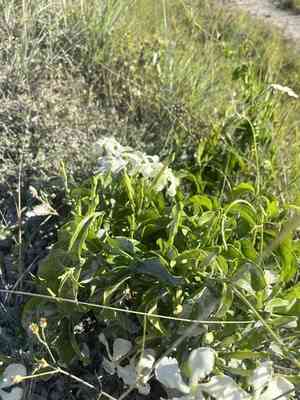
3. **Attractive Flowers**: It produces clusters of bell-shaped flowers in shades of creamy-white to pale yellow, which attract pollinators, aiding in successful reproduction.
4. **Pollinator Attraction**: The vivid floral displays and fragrance are crucial for drawing in pollinators, such as bees and butterflies, ensuring effective pollination.

These adaptations enable the devil's potato to thrive amid the competition and challenges of its tropical habitat.

Attributes of Devil's potato

Lifespan
Perennial
Plant Type
Vine
Plant Height
3 to 5 meters (10 to 16 feet)
Spread
Variable, depending on the structure it climbs on
Leaf Color
Dark green
Flower Size
5 to 7.5 centimeters (2 to 3 inches)
Flower Color
White

ForwardPlant - Identify plants with a snap

Identify and diagnose plants, get toxicity alerts, and explore safety guides for all types of fungi.

Try for Free

Images of Devil's potato

Devil's potato(Echites umbellatus)

Quickly Identify Devil's potato

1
Echites umbellatus can be identified by its glossy, dark green leaves that are oval-shaped and opposite. It produces clusters of fragrant, trumpet-shaped white flowers. The plant also has distinctive milky latex when the stem is broken.

Scientific Classification of Devil's potato

Phylum
Vascular plants
Class
Dicotyledons
Order
Gentianales
Family
Dogbane
Genus
Echites
Species
Devil's potato

Planting and Growing of Devil's potato

Care Difficulty
Moderate
Watering Schedule
Every 2 days
Sunlight Requirements
Full sun
Sunshine Duration
4-8 hours
Ideal Temperature
65-75℉
Soil Type
Potting Mix, Peat Mix
Soil pH
6.5-7.5
Fertilizer Type
Balanced
Pruning Season
Spring, Summer
Pruning Area
Branches, Leaves
Pruning Frequency
2 times a year
Repotting Season
Spring
Pot Type
Plastic, Ceramic

water icon How to Water Devil's potato?

Echites umbellatus prefers a moderate amount of watering. Aim to provide around 500 milliliters of water each time, allowing the soil to be evenly moist but not waterlogged. The principle is to water until you see slight drainage from the bottom of the pot.
What are the symptoms of an underwatered Devil's potato?
What should I do if my Devil's potato is not getting enough water?
What are the symptoms of an overwatered Devil's potato?
How to save an overwatered Devil's potato?

sunlight icon What Are the Sunlight Requirements for Devil's potato?

Sunlight Requirements: Full sun, Partial sun
Duration of light: 6 to 8 hours daily
This plant benefits from full sun to partial sun conditions, which help maximize flower production and maintain lush, healthy foliage, ensuring overall vitality and vigor.
How does Echites umbellatus thrive best?
What are potential solutions to ensure ideal lighting?
What benefits come from achieving ideal lighting conditions?

temperature icon What Is the Ideal Temperature Range for Devil's potato?

Ideal Temperature: 65 ~ 75℉
The ideal temperature range for Echites umbellatus is between 65°F and 75°F. This range allows the plant to perform optimally regarding growth and metabolic functions. Maintaining this range ensures vibrant foliage and a strong root system. In these conditions, the plant can also resist common stress factors better, such as pests and diseases.

soil icon What Soil is Best for Devil's potato?

Soil type: Sandy loam, Loam
Soil PH: 6.5 ~ 7.5
Echites umbellatus requires well-draining soil to prevent waterlogging, which can lead to root rot. Proper drainage ensures oxygen reaches the roots, promoting healthy growth and vibrant foliage. The plant benefits from nutrient-rich soils that provide essential minerals. These nutrients support robust growth and flowering, allowing the plant to reach its full ornamental potential. Incorporating organic matter like compost improves soil structure and fertility. It enhances water retention and supplies essential nutrients, fostering a healthy root system.

fertilize icon How to Fertilize Devil's potato?

Fertilizer type: Balanced
For Echites umbellatus, apply a balanced liquid fertilizer with a concentration of 1/4 strength. Use approximately 200 ml per application for a medium-sized potted plant. Ensure the fertilizer penetrates evenly into the soil.

prune icon How to Prune Devil's potato?

Pruning Time: Spring, Summer
Start by inspecting the plant for any dead or diseased branches, and remove these first to promote overall health. Trim back weak shoots and aim to maintain a rounded shape by cutting back any overly long branches. Make your cuts just above a leaf node to encourage new growth, and always use sharp, clean tools to prevent infection. Echites umbellatus benefits from a structured form, so focus on maintaining its natural bushy appearance. Concentrate on the outer growth and aim for symmetry by pruning branches that disrupt the plant's overall look. This should be done gradually, ensuring no more than a third of the plant is trimmed at any one time to avoid shock. More About Pruning Techniques

propagate icon How to Propagate Devil's potato plant?

Propagate Time: Spring,Early summer
1
Collect seeds from mature Echites umbellatus pods. Once pods dry out on the plant, they are ready to be harvested for seed propagation.
2
Cut healthy, non-flowering stems from the plant about 4-6 inches long. Strip the lower leaves, leaving a couple at the top.
3
Seeds should be sown in a mix of sand and potting soil, lightly covered, and kept moist. Cuttings are inserted into a moist potting mix, ideally with a rooting hormone.
More About Propagating Techniques

repot icon How to Repot Devil's potato plant?

Repotting frequency: Every 2-3 years
1
Look for signs like roots growing out of the drainage holes or the plant becoming root-bound. If growth seems stunted, or you notice more leaf drop, these are clear indicators that it's time for a new pot. Spring and summer provide optimal growing conditions for recovery from the stress of repotting.
2
Select a pot that is one size larger than the current one, with adequate drainage holes. This ensures roots have room to grow, and excess water can escape, preventing root rot. Ceramic or clay pots are excellent for stability and breathability. These materials help balance moisture retention and air circulation, which is crucial for healthy root development.
3
Choose a well-draining potting mix, enriched with organic matter. This type of soil allows for efficient water drainage while retaining essential nutrients. The increased aeration promotes healthy root growth essential for Echites umbellatus to thrive. Mixing in some perlite or sand can further enhance drainage and prevent compacted soil.

ForwardPlant - Identify plants with a snap

Find the best spots for them to optimize their health, simply using your phone.

Try for Free

Toxicity

Ingestion, Skin contact

Identify toxic plants for your safety

Learn which plants are harmful to you and your pets, and make informed choices for a safer home!

Try for Free
WARNING
The judgment on toxicity and danger is for reference only. We DO NOT GUARANTEE any accuracy of such judgment. Therefore, you SHALL NOT rely on such judgment. It is IMPORTANT TO SEEK PROFESSIONAL ADVICE in advance when necessary.