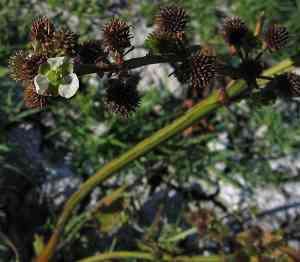
Upright burhead (Echinodorus berteroi)
Also known as: Creeping burhead
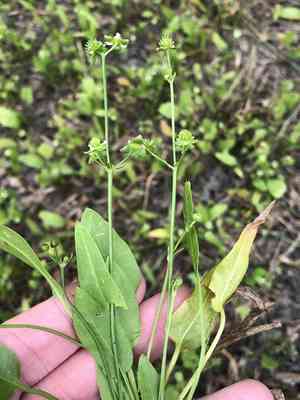
Modified submersed leaves, known as phyllodes, are typically linear to narrowly elliptical and range in size from 10 to 45 cm in length and 5 to 40 mm in width. These leaves exhibit a wide variety of shapes and sizes and are usually light green and membranous, allowing for transparency. The vein network within these leaves can vary in color, often creating a mosaic-like appearance.
In This Article
Attributes of Upright burhead
Lifespan
Perennial
Plant Type
Herb
Plant Height
30 cm to 91 cm
Spread
20-30 cm
Leaf Color
Bright Green
Flower Size
3-5 cm
Flower Color
White
Images of Upright burhead
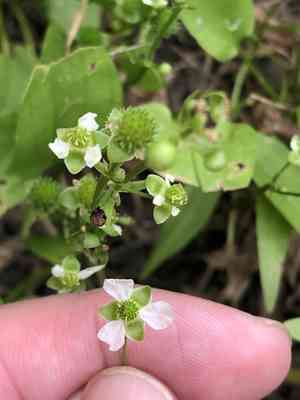
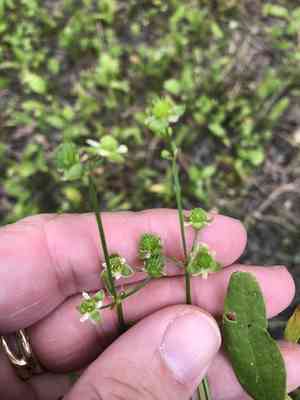
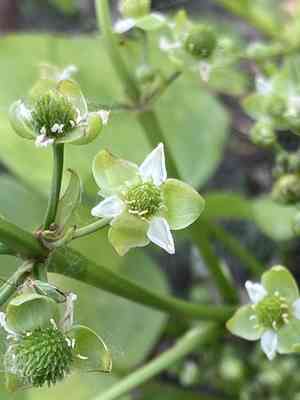
Quickly Identify Upright burhead
1
Echinodorus berteroi can be identified by its lanceolate leaves which have a slightly wavy margin and are generally bright green. The leaves grow from a central rosette and can reach significant length.
Scientific Classification of Upright burhead
Phylum
Vascular plants
Class
Monocotyledons
Order
Alismatales
Family
Water-plantain
Genus
Burheads
Species
Upright burhead
Planting and Growing of Upright burhead
Care Difficulty
Easy
Watering Schedule
Every 8 days
Sunlight Requirements
Full sun
Sunshine Duration
6-10 hours
Ideal Temperature
68-77℉
Soil Type
Potting Mix, Peat Mix
Soil pH
6.5-7.5
Fertilizer Type
Balanced
Pruning Season
Spring, Summer
Pruning Area
Branches, Leaves
Pruning Frequency
2 times a year
Repotting Season
Spring
Pot Type
Plastic, Ceramic
 How to Water Upright burhead?
For Echinodorus berteroi, ensure each watering session moistens the soil down to the root level but does not make it soggy. Use approximately 250 ml of water to achieve the ideal moisture content, tailoring slightly to the plant's specific environment.
What are the symptoms of an underwatered Upright burhead?
›
What should I do if my Upright burhead is not getting enough water?
›
What are the symptoms of an overwatered Upright burhead?
›
How to save an overwatered Upright burhead?
›
 What Are the Sunlight Requirements for Upright burhead?
Echinodorus berteroi thrives best in environments with partial to full sun. This range of light helps in preventing etiolation and supports vibrant foliage growth and overall vitality, contributing to a stronger plant structure.
What is the ideal lighting for Echinodorus berteroi?
›
How to ensure Echinodorus berteroi gets ideal light?
›
What benefits arise from ideal light conditions?
›
 What Is the Ideal Temperature Range for Upright burhead?
For optimal growth, Echinodorus berteroi should be maintained in temperatures ranging from 68°F to 77°F. These conditions mimic their natural habitat, allowing for a robust development and nutrient uptake in the plant. The specified range ensures that the metabolic and photosynthetic activities are at their peak, contributing to overall plant health.
 What Soil is Best for Upright burhead?
Echinodorus berteroi thrives in environments where the soil retains moisture well. This helps ensure the roots remain hydrated, promoting robust growth and vibrant foliage. Rich, nutrient-dense soils provide Echinodorus berteroi with essential minerals and nutrients. This boosts the plant's growth rate and enhances its overall health. Maintaining a soil pH between 6.5 and 7.5 is crucial for Echinodorus berteroi as it ensures optimal nutrient uptake, enhancing the plant's vigor and reducing the risk of nutrient deficiencies.
 How to Fertilize Upright burhead?
For Echinodorus berteroi, it's crucial to balance fertilization as they are sensitive to soil nutrient levels. Use a half-strength aquatic plant fertilizer, applying 5 ml per 10 liters of water for liquid fertilizer. For slow-release fertilizers, use 2 grams per square foot and incorporate it into the substrate.
 How to Prune Upright burhead?
While pruning, look for signs of insects or disease. Early detection is crucial, as it allows you to treat infestations or infections before they spread to healthy parts of the plant. Echinodorus berteroi, like many aquatic plants, needs adequate foliage for photosynthesis. Avoid removing more than a third of its leaves at once, which can stress the plant and hinder its growth.
More About Pruning Techniques→
 How to Propagate Upright burhead plant?
1
To begin seed propagation, collect mature seeds from a healthy Echinodorus berteroi. The seeds must be fully developed for successful germination. Typically, seeds can be found in the seed pods once they dry and open naturally.
2
Use a well-draining soil mixture suitable for aquatic plants. A mix of sand and peat moss is ideal. It retains moisture while allowing excess water to drain. Ensure the mixture is slightly acidic for optimal growth.
3
Division involves separating the root cluster into sections, each containing at least one healthy leaf and root part. Gently pull the roots apart, ensuring minimal damage, and plant the divisions in separate pots with fresh substrate.
 How to Repot Upright burhead plant?
1
Look for signals like roots growing through the drainage holes or soil that is retaining too much water. These are clear indicators your Echinodorus berteroi needs repotting. The best time is during its active growing season, ensuring the plant establishes well.
2
Select a pot that's 1-2 inches wider than the current one, with adequate drainage. This size promotes healthy root growth without overwhelming the plant, and drainage ensures excess water doesn't lead to root rot.
3
Opt for a rich, loamy compost that retains moisture yet drains well. This blend provides essential nutrients while preventing overwatering, keeping the roots well-hydrated without sogginess.
Learn More About Upright burhead Diseases
Anthracnose
Bacterial Leaf Spot
Bacterial Soft Rot
Bacterial Wilt
Chemical Injury
Damping-off
Downy Mildew
Drought Stress
Fusarium Wilt
Gray Mold
Leaf Spot
Mosaic
Nutrient Deficiency
Nutrient Toxicity
Powdery Mildew
Root Rot
Root-knot Nematode
Sooty Mold
Spider Mites
Temperature Stress
Thrips Damage
White Mold



