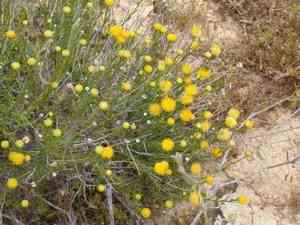
Yellow aster (Eastwoodia elegans)
Also known as: Yosemite Woolly Sunflower
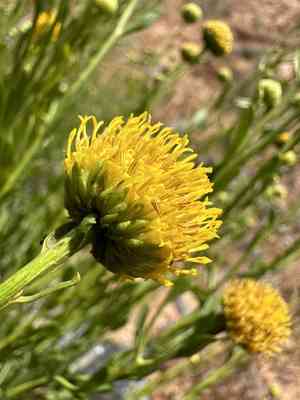
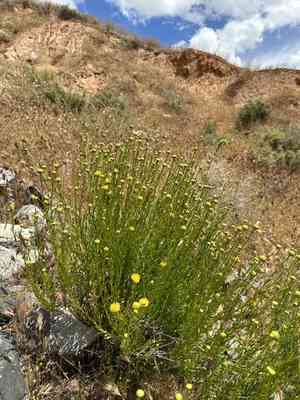
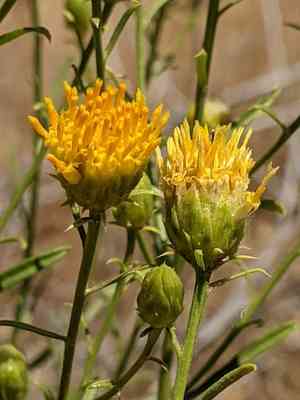
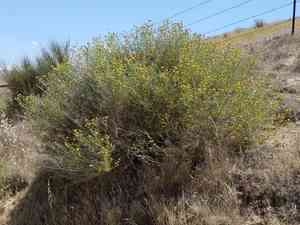
Eastwoodia elegans is a shrub that grows erect, branching stems, reaching up to 1 meter in height. Each plant can produce multiple yellow flower heads, each with up to 40 disc florets and no ray florets. The stems feature shredding bark and have small leaves that are typically under 5 cm in length.
In This Article
Attributes of Yellow aster
Lifespan
Perennial
Plant Type
Shrub
Plant Height
30-60 cm
Spread
Not applicable
Leaf Color
Green, often with a woolly or hairy texture
Flower Size
1-3 cm
Flower Color
Bright Yellow
Images of Yellow aster
Quickly Identify Yellow aster
1
Look for its bright yellow flowers arranged in dense clusters, woolly leaves, and the unique structure of its inflorescence. It typically blooms in the spring and summer.
Scientific Classification of Yellow aster
Phylum
Vascular plants
Class
Dicotyledons
Order
Asterales
Family
Daisy
Genus
Eastwoodia
Species
Yellow aster
Planting and Growing of Yellow aster
Care Difficulty
Moderate
Watering Schedule
Every 2 days
Sunlight Requirements
Full sun
Sunshine Duration
6-10 hours
Ideal Temperature
60-75℉
Soil Type
Potting Mix, Peat Mix
Soil pH
6.5-7.5
Fertilizer Type
Balanced
Pruning Season
Spring, Summer
Pruning Area
Branches, Leaves
Pruning Frequency
2 times a year
Repotting Season
Spring
Pot Type
Plastic, Ceramic
 How to Water Yellow aster?
For Eastwoodia elegans, ensure the soil is moistened without becoming soggy. Aim for approximately 150 mL of water each time, allowing the water to penetrate the soil and reach the roots adequately. It's crucial to check the topsoil; if it's dry about an inch below the surface, it's time to water.
What are the symptoms of an underwatered Yellow aster?
›
What should I do if my Yellow aster is not getting enough water?
›
What are the symptoms of an overwatered Yellow aster?
›
How to save an overwatered Yellow aster?
›
 What Are the Sunlight Requirements for Yellow aster?
An ideal light range for Eastwoodia elegans is full sun to partial sun, receiving 6 to 8 hours daily. This facilitates lush growth and encourages full blooming potential.
What is the ideal light condition for Eastwoodia elegans?
›
How can I ensure Eastwoodia elegans gets its required light?
›
What are the benefits of Eastwoodia elegans receiving ideal sunlight?
›
 What Is the Ideal Temperature Range for Yellow aster?
The ideal temperature range for Eastwoodia elegans is between 60°F and 75°F. Within this range, the plant can photosynthesize efficiently, grow robustly, and develop healthy foliage and blooms. It provides the best conditions free from stress caused by either cold or excessive heat.
 What Soil is Best for Yellow aster?
Eastwoodia elegans thrives in well-drained soils that prevent waterlogging and root rot. Ensuring proper drainage is critical as it helps the roots access essential nutrients and oxygen, promoting healthy growth. Rich in organic matter, the soil should provide a balanced supply of essential nutrients. This supports robust growth and helps the plant develop a resilient structure against environmental stressors. The soil needs to maintain adequate moisture without becoming soggy. This balance keeps the plant hydrated while ensuring excess water is drained, enhancing root health and overall plant vigor.
 How to Fertilize Yellow aster?
For Eastwoodia elegans, use a balanced fertilizer diluted to half the recommended strength. Typically, an amount of 100 mL of diluted liquid fertilizer is enough per application, ensuring even distribution across the root zone.
 How to Prune Yellow aster?
Begin by examining the plant for any dead or diseased wood, removing these with a clean, angled cut just above a healthy node. Next, thin out any congested areas to ensure adequate airflow and light penetration. Focus on maintaining the plant's natural shape to encourage balanced growth. Prune during the early spring or late summer to encourage vigorous growth. Avoid pruning in late autumn or winter as this may lead to cold damage. It's crucial to perform pruning in mild weather conditions to reduce stress on the plant.
 How to Propagate Yellow aster plant?
1
Begin by soaking the seeds in water for 24 hours. This helps to speed up the germination process by softening the seed coat.
2
Sow the seeds in a seed tray filled with potting soil. Make sure to plant them at an appropriate depth, typically twice the diameter of the seed.
3
Keep the soil consistently moist by misting it with water regularly. Avoid overwatering, as this could lead to fungal issues or rot.
 How to Repot Yellow aster plant?
1
Look for roots coming out from the drainage holes or when the plant's growth has noticeably slowed down. These are clear signals that Eastwoodia elegans needs repotting to accommodate new growth and ensure healthy root development.
2
Select a pot that's 1-2 inches larger in diameter than the current one. Ensure it has drainage holes to prevent waterlogging. A slightly larger pot provides room for root expansion, promoting vigorous plant growth and preventing root-bound issues.
3
Opt for a well-draining sandy mix with some organic matter. This type of soil prevents root rot by allowing excess water to escape, while providing the necessary nutrients to support robust growth and maintaining appropriate moisture levels.
Learn More About Yellow aster Diseases
Anthracnose
Bacterial Leaf Spot
Bacterial Soft Rot
Black Spot
Chemical Injury
Crown Gall
Damping-off
Downy Mildew
Drought Stress
Fusarium Wilt
Gray Mold
Leaf Curl
Leaf Spot
Mosaic
Nutrient Deficiency
Nutrient Toxicity
Powdery Mildew
Root Rot
Root-knot Nematode
Rusts
Sooty Mold
Spider Mites
Temperature Stress
Thrips Damage
White Mold



