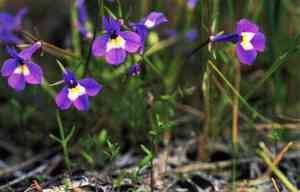
Doublehorn calicoflower (Downingia bicornuta)
Also known as: Two-Horned Downingia, Double Horned Calicoflower
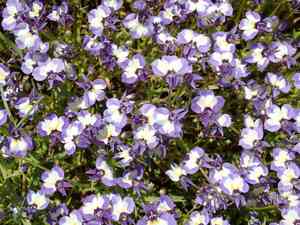
The Doublehorn Calicoflower is a distinctive wetland plant that flourishes in moist conditions. Its remarkable two-horned blossoms come in vivid hues of blue and purple, featuring striking yellow and white centers. This flower's capacity to thrive in saturated soils makes it a standout among aquatic plants, adding a splash of color to water's edge during its blooming period.
In This Article
Attributes of Doublehorn calicoflower
Lifespan
Annual
Plant Type
Herb
Plant Height
5 to 30 cm (2 to 12 inches)
Spread
N/A
Leaf Color
Green
Flower Size
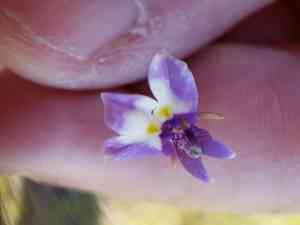
1 to 2 cm (0.4 to 0.8 inches)
Flower Color
Blue and white
Images of Doublehorn calicoflower
Quickly Identify Doublehorn calicoflower
1
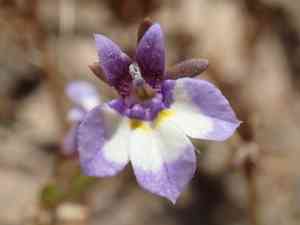
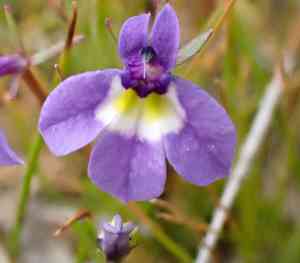
Downingia bicornuta can be identified by its small, annual herbaceous form, bright blue and white bilaterally symmetrical flowers, with distinctive two horn-like protrusions on the corolla. It typically grows in vernal pools and other wetland areas during the spring.
Scientific Classification of Doublehorn calicoflower
Phylum
Vascular plants
Class
Dicotyledons
Order
Asterales
Family
Bellflower
Genus
Downingia
Species
Doublehorn calicoflower
Planting and Growing of Doublehorn calicoflower
Care Difficulty
Moderate
Watering Schedule
Every 3 days
Sunlight Requirements
Full sun
Sunshine Duration
6-12 hours
Ideal Temperature
65-75℉
Soil Type
Potting Mix, Peat Mix
Soil pH
6-7.5
Fertilizer Type
Balanced
Pruning Season
Spring, Summer
Pruning Area
Branches, Leaves
Pruning Frequency
2 times a year
Repotting Season
Spring
Pot Type
Plastic, Ceramic
 How to Water Doublehorn calicoflower?
Downingia bicornuta prefers consistently moist conditions, but not too wet. Water until the top inch of soil is moist, ensuring not to leave the plant in standing water. Generally, 100 ml per watering is sufficient.
What are the symptoms of an underwatered Doublehorn calicoflower?
›
What should I do if my Doublehorn calicoflower is not getting enough water?
›
What are the symptoms of an overwatered Doublehorn calicoflower?
›
How to save an overwatered Doublehorn calicoflower?
›
 What Are the Sunlight Requirements for Doublehorn calicoflower?
Downingia bicornuta flourishes with full to partial sun. Ideally, it benefits most from morning sun, with dappled shade in the afternoon. This range of lighting will promote vibrant blooms and robust, healthy foliage.
What is the optimal lighting for Downingia bicornuta?
›
How can I provide ideal lighting for Downingia bicornuta indoors?
›
Benefits of ideal lighting for Downingia bicornuta?
›
 What Is the Ideal Temperature Range for Doublehorn calicoflower?
The ideal temperature range for cultivating Downingia bicornuta is between 65°F and 75°F. Within this range, the plant exhibits optimal growth and blooming conditions. This temperature ensures appropriate metabolic activity and energy allocation, supporting photosynthesis and nutrient uptake efficiently. Thus, maintaining the temperature within this range promotes healthy plant development.
 What Soil is Best for Doublehorn calicoflower?
Downingia bicornuta flourishes in nutrient-rich loamy soil that supports vibrant growth. This type of soil provides essential nutrients that promote this wildflower’s striking blossoms. Well-draining soil prevents waterlogging, crucial for Downingia bicornuta to prevent root rot. A well-drained substrate ensures healthy root systems and enhances flower display. While drainage is essential, the soil must also retain enough moisture to support the plant’s water needs, especially during its growing season, encouraging robust flowering.
 How to Fertilize Doublehorn calicoflower?
Downingia bicornuta, being a delicate annual, flourishes best in nutrient-poor environments. Excessive fertilization can harm it, so it's crucial to use a diluted fertilizer solution. Opt for a balanced liquid fertilizer, diluted to half its recommended strength, applied sparingly to avoid nutrient burn.
 How to Prune Doublehorn calicoflower?
Begin by removing any spent or dead flowers to encourage new growth. This not only improves the plant's appearance but also directs its energy towards producing healthy blooms. Check for any stems that have become too long or leggy. Trim these back to encourage a more bushy and compact growth habit, ensuring the plant remains healthy and visually appealing. To maintain the desired shape of your Downingia bicornuta, periodically trim back any overgrown areas. Focus on maintaining a symmetrical shape for aesthetic value and better airflow.
More About Pruning Techniques→
 How to Propagate Doublehorn calicoflower plant?
1
Start by filling the seed trays with a well-draining potting mix. Level the surface and lightly compress to remove any air pockets. This ensures that the seeds have good soil contact for germination.
2
Sprinkle the Downingia bicornuta seeds evenly over the soil surface. Cover them with a thin layer of soil, about 1/8 inch, to replicate natural conditions where seeds are often lightly buried by wind or animals.
3
Use the mist spray bottle to gently moisten the soil without disturbing the seeds. Place the trays in a location with indirect sunlight and maintain a consistent watering schedule to ensure the soil remains damp but not waterlogged.
 How to Repot Doublehorn calicoflower plant?
1
Repot Downingia bicornuta when you notice it outgrowing its current pot or when water drains too slowly, indicating poor soil aeration. Early spring or early summer are the best times as the plant is gearing up for active growth, allowing it to recover quickly from the disturbance.
2
Select a pot that's only slightly larger than the current one, ideally one size up. This minimizes root disturbance while providing enough room for growth. Choose pots with adequate drainage holes to prevent waterlogging, which can lead to root rot.
3
Opt for a well-draining sandy soil mix to closely mimic its natural habitat. This type of soil provides excellent drainage and air flow, preventing root suffocation and promoting healthy root development, which is crucial for Downingia bicornuta's growth.



