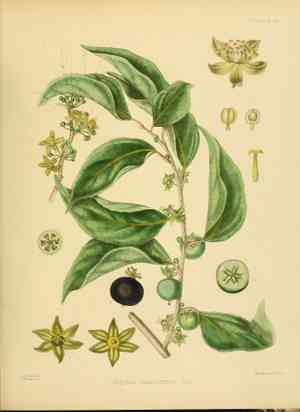
Ceylon gooseberry (Dovyalis hebecarpa)
Also known as: Ceylon gooseberry, Ketembilla
The Ceylon gooseberry (*Dovyalis hebecarpa*), originating from Sri Lanka and southern India, is a tropical shrub or small tree distinguished by its spiny branches and subtle flowers. The plant produces dark purple, highly acidic, nutrient-rich berries that are ideal for making jellies and jams. Additionally, the juice from these berries is used in various beverages due to its rich vitamin and mineral content.
In This Article
Attributes of Ceylon gooseberry
Lifespan
Perennial
Plant Type
Tree, Shrub
Plant Height
4.5 m to 6 m
Spread
7 m
Leaf Color
Green
Flower Size
2.5 cm
Flower Color
Yellow Green
Images of Ceylon gooseberry
Quickly Identify Ceylon gooseberry
1
Dovyalis hebecarpa can be identified by its thorny branches, oval leaves with serrated edges, and small purple berries. The plant also has male and female flowers on separate plants, with the male flowers being small and yellow, and the female flowers being greenish.
Scientific Classification of Ceylon gooseberry
Phylum
Vascular plants
Class
Dicotyledons
Order
Malpighiales
Family
Willow
Genus
Dovyalis
Species
Ceylon gooseberry
Planting and Growing of Ceylon gooseberry
Care Difficulty
Easy
Watering Schedule
Every 2 days
Sunlight Requirements
Full sun
Sunshine Duration
6-10 hours
Ideal Temperature
68-77℉
Soil Type
Potting Mix, Peat Mix
Soil pH
6.5-7.5
Fertilizer Type
Balanced
Pruning Season
Spring, Summer
Pruning Area
Branches, Leaves
Pruning Frequency
2 times a year
Repotting Season
Spring
Pot Type
Plastic, Ceramic
 How to Water Ceylon gooseberry?
Dovyalis hebecarpa prefers a consistent amount of moisture, yet it doesn't like being waterlogged. You'll want to water until you see the water draining from the base of the pot, ensuring the soil is evenly moist but not soggy. This generally amounts to about 700 milliliters of water per session.
What are the symptoms of an underwatered Ceylon gooseberry?
›
What should I do if my Ceylon gooseberry is not getting enough water?
›
What are the symptoms of an overwatered Ceylon gooseberry?
›
How to save an overwatered Ceylon gooseberry?
›
 What Are the Sunlight Requirements for Ceylon gooseberry?
Dovyalis hebecarpa thrives in full to partial sun conditions, ideally receiving 6 to 8 hours of light daily. This level of sunlight promotes vigorous growth, robust health, and prolific fruiting, resulting in a lush and productive plant.
More About Sunlight Requirements Techniques→
What is the optimal lighting setup for Dovyalis hebecarpa?
›
How can I ensure Dovyalis hebecarpa gets enough sunlight indoors?
›
What are the benefits of ideal light exposure for Dovyalis hebecarpa?
›
 What Is the Ideal Temperature Range for Ceylon gooseberry?
Dovyalis hebecarpa thrives best in a temperature range of 68°F to 77°F. Maintaining this range helps in optimizing the plant's growth, photosynthesis, and overall health. Within these temperatures, the plant can effectively perform metabolic processes while minimizing stress.
 What Soil is Best for Ceylon gooseberry?
Dovyalis hebecarpa thrives in well-drained soil as it prevents waterlogging, which can cause root rot. The aerated environment supports healthy root development and enhances nutrient uptake, promoting robust growth. This plant benefits greatly from soil rich in organic matter. Nutrient-rich soils provide essential minerals and elements required for the plant's growth and fruiting, leading to a more productive plant. While drainage is crucial, the soil should also retain some moisture to ensure the plant receives adequate hydration. This balance prevents drought stress and keeps the plant healthy and vigorous.
 How to Fertilize Ceylon gooseberry?
For Dovyalis hebecarpa, use a balanced fertilizer with a ratio such as 10-10-10. When using liquid fertilizer, apply it at half the strength recommended by the manufacturer to avoid potential root damage.
 How to Prune Ceylon gooseberry?
Ensure you have the right tools for pruning, such as sharp pruners or loppers for thicker branches and gloves to protect your hands from thorns. Keeping your tools clean and sharp will provide cleaner cuts and reduce the risk of infection. Start by removing any dead or diseased branches, cutting back to healthy wood. Trim back any crossing or rubbing branches to prevent wounds that can become entry points for disease. Regularly thinning out the canopy improves air circulation and light penetration. After pruning, apply a balanced fertilizer to aid recovery and promote new growth. Water the plant thoroughly to help it adjust, especially if you have removed a significant amount of foliage.
More About Pruning Techniques→
 How to Propagate Ceylon gooseberry plant?
1
Begin by sourcing fresh seeds from a reputable supplier or directly from the fruit. Clean and dry the seeds thoroughly to prevent mold during germination.
2
Prepare a well-draining potting mix, ideally composed of equal parts peat and perlite, which provides the balance of moisture retention and aeration required for seed and cutting propagation.
3
Sow seeds lightly on the surface of the soil, or place cuttings into pre-moistened soil, ensuring sufficient depth and spacing to encourage healthy growth.
 How to Repot Ceylon gooseberry plant?
1
You should consider repotting your Dovyalis hebecarpa when you notice roots emerging from the drainage holes, or if the plant seems root-bound and its growth has stagnated. Another sign is if the soil dries out faster than usual, indicating that the current pot is too small.
2
Select a pot that's one size larger than the current one, with ample drainage holes. This ensures enough room for root expansion and optimal drainage, preventing root rot and encouraging healthy growth. A clay pot can help with moisture regulation.
3
Use a well-draining, organic-rich potting mix that promotes healthy root development. This type of soil helps retain necessary moisture while preventing waterlogging, ensuring that the plant receives sufficient nutrients without being overly saturated.
Learn More About Ceylon gooseberry Diseases
Anthracnose
Bacterial Leaf Spot
Bacterial Soft Rot
Bacterial Wilt
Crown Gall
Damping-off
Downy Mildew
Drought Stress
Fusarium Wilt
Gray Mold
Leaf Curl
Leaf Spot
Mosaic
Nutrient Deficiency
Nutrient Toxicity
Powdery Mildew
Root Rot
Root-knot Nematode
Rusts
Sooty Mold
Spider Mites
Temperature Stress
Thrips Damage
White Mold



