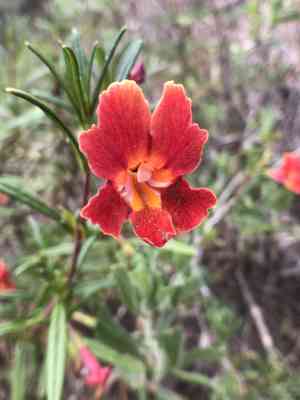
Red bush monkeyflower (Diplacus puniceus)
Also known as: Red Monkeyflower
The California Fuchsia (Epilobium canum) is a native plant known for its striking red flowers. It's frequently planted in gardens and is excellent for attracting hummingbirds, making it a wonderful choice for a wildlife-friendly garden.
In This Article
Attributes of Red bush monkeyflower
Lifespan
Perennial
Plant Type
Shrub
Plant Height
30 cm to 91 cm
Spread
1 m
Leaf Color
Green
Flower Size
1 to 2 inches
Flower Color
Red
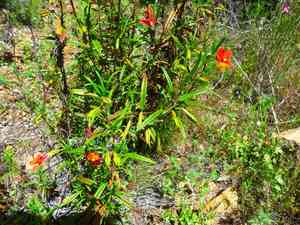
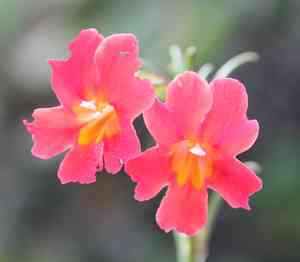
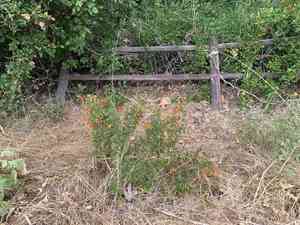
Images of Red bush monkeyflower
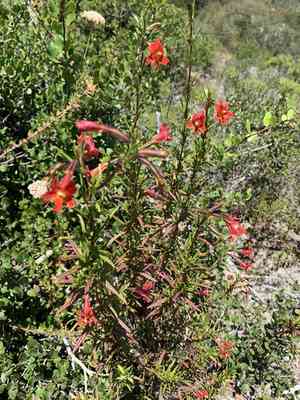
Quickly Identify Red bush monkeyflower
1
Look for bright red tubular flowers and sticky, hairy leaves. The plant typically grows in a low, spreading habit.
Scientific Classification of Red bush monkeyflower
Phylum
Vascular plants
Class
Dicotyledons
Order
Lamiales
Family
Lopseed
Genus
Bush monkeyflowers
Species
Red bush monkeyflower
Planting and Growing of Red bush monkeyflower
Care Difficulty
Moderate
Watering Schedule
Every 2 days
Sunlight Requirements
Full sun
Sunshine Duration
4-6 hours
Ideal Temperature
60-75℉
Soil Type
Potting Mix, Peat Mix
Soil pH
6.5-7.5
Fertilizer Type
Balanced
Pruning Season
Spring, Summer
Pruning Area
Branches, Leaves
Pruning Frequency
2 times a year
Repotting Season
Spring
Pot Type
Plastic, Ceramic
 How to Water Red bush monkeyflower?
For Diplacus puniceus, it is important to water until the soil is moistened uniformly but not soggy, about 500 ml per watering session. Ensure that the water penetrates deeply and reaches the root zone, promoting healthy growth without causing waterlogging.
What are the symptoms of an underwatered Red bush monkeyflower?
›
What should I do if my Red bush monkeyflower is not getting enough water?
›
What are the symptoms of an overwatered Red bush monkeyflower?
›
How to save an overwatered Red bush monkeyflower?
›
 What Are the Sunlight Requirements for Red bush monkeyflower?
Diplacus puniceus ideally needs full sun exposure, benefiting from six to eight hours of direct light. This allocation enhances its flowering and ensures vigorous, bushy growth.
What kind of light does Diplacus puniceus need?
›
How can you achieve ideal lighting for Diplacus puniceus?
›
What are the benefits of ideal lighting for Diplacus puniceus?
›
 What Is the Ideal Temperature Range for Red bush monkeyflower?
For optimal growth, Diplacus puniceus thrives in temperatures ranging from 60 to 75°F. This range ensures that the plant can maintain an appropriate metabolic rate needed for growth and flowering. Conditions within this temperature range allow the plant to maximize photosynthesis and nutrient uptake, promoting vigorous, healthy blooms.
 What Soil is Best for Red bush monkeyflower?
Diplacus puniceus thrives in well-drained soil, which prevents root rot and other water-related issues. Ensuring good drainage allows the roots to breathe and makes it easier for the plant to absorb essential nutrients, leading to a healthier and more vibrant plant. This plant benefits from soil that is enriched with organic matter, as it provides a steady release of nutrients. The increased fertility helps in promoting vigorous growth and enhances the flowering potential of Diplacus puniceus, ensuring a striking visual appeal. Diplacus puniceus prefers soil that maintains moderate moisture levels without becoming waterlogged. Proper moisture management ensures that the plant doesn't suffer from drought stress during dry spells, promoting consistent growth and healthy foliage.
 How to Fertilize Red bush monkeyflower?
For Diplacus puniceus, apply a balanced liquid fertilizer at half strength to avoid overfeeding. Use approximately 1 tablespoon (15 ml) per gallon of water for liquid fertilizer applications. When applying slow-release granules, use around 1 tablespoon (15 grams) per plant, ensuring even distribution around the base of the plant.
 How to Prune Red bush monkeyflower?
Start by pruning away any dead or damaged branches. This encourages healthy growth and prevents the spread of pests or disease. Cut close to a lateral branch or the main stem. After removing the unhealthy parts, step back to assess the overall shape. Trim the plant to maintain a tidy appearance, focusing on keeping it open for air circulation and even sunlight exposure. Regularly pinching the tips of the young shoots can encourage bushier growth and more blooms. This is particularly effective in early spring as the plant begins its active growth phase.
More About Pruning Techniques→
 How to Propagate Red bush monkeyflower plant?
1
Sow Diplacus puniceus seeds on the surface of well-draining soil and lightly cover them. Maintain consistent moisture but do not overwater. Seedlings typically emerge in a few weeks under ideal conditions.
2
Select healthy, non-flowering stems for cuttings, approximately 3 to 4 inches long. Remove lower leaves and dip the cut end in rooting hormone before placing in a moist growing medium.
3
Create a humid environment for cuttings by covering them with a plastic dome or bag. This retains moisture and warmth, facilitating root development. Ventilate periodically to prevent mold.
 How to Repot Red bush monkeyflower plant?
1
Diplacus puniceus should be repotted when you notice roots emerging from the drainage holes or the plant appears lackluster despite regular care. These indicators suggest that the plant has outgrown its current pot and requires more space to thrive.
2
Select a pot that is one to two inches larger in diameter than the current one. Ensure it has sufficient drainage holes to prevent waterlogging. A slightly bigger pot promotes root growth without overwhelming the plant with excessive soil.
3
Opt for a well-draining cactus mix enriched with perlite or sand. This soil choice prevents overwatering by allowing excess moisture to escape quickly, which is ideal for Diplacus puniceus's needs.
Learn More About Red bush monkeyflower Diseases
Anthracnose
Bacterial Leaf Spot
Bacterial Wilt
Black Spot
Chemical Injury
Crown Gall
Damping-off
Downy Mildew
Drought Stress
Fusarium Wilt
Gray Mold
Leaf Curl
Leaf Spot
Mosaic
Nutrient Deficiency
Nutrient Toxicity
Powdery Mildew
Root Rot
Root-knot Nematode
Rusts
Sooty Mold
Spider Mites
Temperature Stress
Thrips Damage
White Mold



