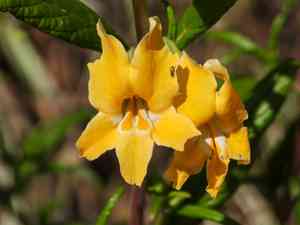
Southern bush monkeyflower (Diplacus longiflorus)
Also known as: Sticky Monkey-flower, Bush Monkey-flower
The Penstemon, commonly known as beardtongue, features tubular flowers that are highly attractive to hummingbirds. These vibrant blossoms, often in shades of red or purple, are complemented by dark green, lance-shaped leaves. Penstemons flourish in dry, open environments, adapting well to arid conditions with their extensive root systems, supporting their striking blooms and semi-woody stems.
In This Article
Attributes of Southern bush monkeyflower
Lifespan
Perennial
Plant Type
Shrub
Plant Height
30 cm to 91 cm
Spread
Approximately 1 meter
Leaf Color
Green
Flower Size
2-3 centimeters
Flower Color
Orange, Yellow
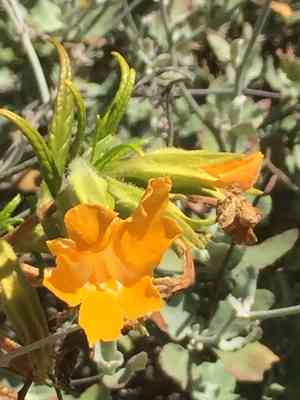
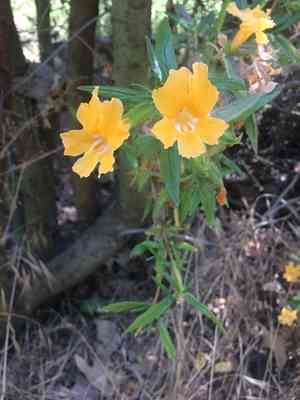
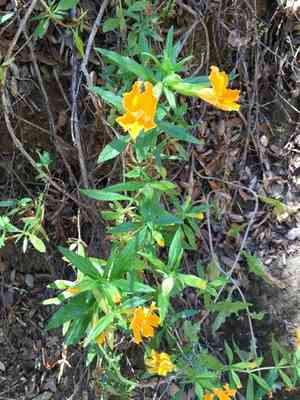
Images of Southern bush monkeyflower
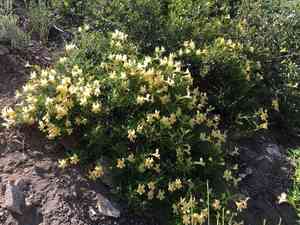
Quickly Identify Southern bush monkeyflower
1
Identifying Diplacus longiflorus involves looking for elongated tubular flowers that are orange or yellow. The leaves are sticky and lance-shaped, and the plant typically grows in bushy form. The stems are woody at the base with a sticky, resinous texture.
Scientific Classification of Southern bush monkeyflower
Phylum
Vascular plants
Class
Dicotyledons
Order
Lamiales
Family
Lopseed
Genus
Bush monkeyflowers
Species
Southern bush monkeyflower
Planting and Growing of Southern bush monkeyflower
Care Difficulty
Moderate
Watering Schedule
Every 4 days
Sunlight Requirements
Full sun
Sunshine Duration
4-8 hours
Ideal Temperature
65-75℉
Soil Type
Potting Mix, Peat Mix
Soil pH
6.5-7.5
Fertilizer Type
Balanced
Pruning Season
Spring, Summer
Pruning Area
Branches, Leaves
Pruning Frequency
2 times a year
Repotting Season
Spring
Pot Type
Plastic, Ceramic
 How to Water Southern bush monkeyflower?
The watering amount for Diplacus longiflorus should ensure that the soil is thoroughly wet but not soggy. Use approximately 500 ml of water per session. This ensures that water reaches the roots but excess water doesn't accumulate, which could cause root rot. Wait until the top inch of soil is dry before watering again.
What are the symptoms of an underwatered Southern bush monkeyflower?
›
What should I do if my Southern bush monkeyflower is not getting enough water?
›
What are the symptoms of an overwatered Southern bush monkeyflower?
›
How to save an overwatered Southern bush monkeyflower?
›
 What Are the Sunlight Requirements for Southern bush monkeyflower?
Diplacus longiflorus thrives best in partial to full sun, ideally with 6 to 8 hours of sunlight daily. Adequate light enriches its blooming potential and foliage lushness.
What is the best lighting setup for Diplacus longiflorus?
›
How can you adjust lighting to benefit Diplacus longiflorus?
›
What are the benefits of ideal lighting for Diplacus longiflorus?
›
 What Is the Ideal Temperature Range for Southern bush monkeyflower?
The ideal temperature range for Diplacus longiflorus, commonly known as Sticky Monkey Flower, is between 65°F to 75°F. Within this range, the plant has optimal growth and flowering potential. These temperatures mimic the climate conditions of its native habitats, typically found in Mediterranean-type climates along the Pacific coast.
 What Soil is Best for Southern bush monkeyflower?
Diplacus longiflorus thrives in soil that drains well to prevent root rot, a common issue with waterlogged roots. Well-draining soil helps ensure that the roots receive adequate oxygen and reduces the risk of fungal diseases. A soil rich in organic matter provides essential nutrients that support robust growth of Diplacus longiflorus. Incorporating compost can enhance soil fertility, providing a steady nutrient supply which is crucial for vibrant blooming. While Diplacus longiflorus is drought-tolerant, it benefits from consistent moisture. The soil should be kept moderately moist, especially during the growing season, to promote healthy development, but care should be taken to avoid overwatering.
 How to Fertilize Southern bush monkeyflower?
For Diplacus longiflorus, apply a balanced liquid fertilizer at half the recommended strength. Use about 1 tablespoon per gallon of water to avoid over-fertilizing, which can harm the plant’s delicate root system.
 How to Prune Southern bush monkeyflower?
Begin pruning by identifying the longer, leggier branches that disrupt the plant's overall shape. Use sharp, sterilized pruning shears to trim these branches back to a healthy node or bud, promoting a more compact and appealing structure. Focus on removing any dead or damaged branches by cutting them out completely. This not only tidies the plant but also encourages healthier growth and abundant flowering.
More About Pruning Techniques→
 How to Propagate Southern bush monkeyflower plant?
1
Begin with high-quality seeds and soak them in warm water for 24 hours to increase germination rates. This step helps break seed dormancy, ensuring even and quick sprouting.
2
Select healthy, non-flowering stems about 10cm long for cuttings. This step ensures that the plant can focus energy on rooting rather than supporting flowers.
3
Use a well-draining mix and plant seeds or cuttings approximately 1cm deep. Proper depth guarantees adequate soil contact, moisture retention, and light exposure for growth.
 How to Repot Southern bush monkeyflower plant?
1
Diplacus longiflorus should be repotted when you notice roots emerging through drainage holes or when the plant's growth visibly slows down. Spring and early autumn are ideal times for repotting as the plant is in its growing stages, allowing it to recover and acclimate to a new pot easily.
2
When selecting a pot for Diplacus longiflorus, choose one that is only an inch or two larger in diameter than the current pot. This helps prevent waterlogging and supports healthy root growth by ensuring a proper balance of moisture and air around the roots.
3
Opt for a well-draining potting mix that mimics its natural habitat. A soil blend containing sand, perlite, and a bit of organic matter works well. This kind of mix ensures good drainage, important for preventing root rot and providing essential aeration to the roots.
Learn More About Southern bush monkeyflower Diseases
Anthracnose
Bacterial Leaf Spot
Bacterial Soft Rot
Bacterial Wilt
Black Spot
Chemical Injury
Crown Gall
Damping-off
Downy Mildew
Drought Stress
Fusarium Wilt
Gray Mold
Leaf Curl
Leaf Spot
Mosaic
Nutrient Deficiency
Nutrient Toxicity
Powdery Mildew
Root Rot
Root-knot Nematode
Rusts
Sooty Mold
Spider Mites
Temperature Stress
Thrips Damage
White Mold



