
Eggs and bacon (Dillwynia retorta)
Also known as: Semall-leaf parrot-pea
"Eggs and bacon" refers to a charming shrub native to Australia, known for its unique narrow leaves and striking yellow flowers with red or orange accents. This plant thrives in sandy soils and heathland regions, well-suited to nutrient-poor conditions. Its vibrant blooms, which appear mainly in spring, are particularly attractive to pollinators.
In This Article
Attributes of Eggs and bacon
Lifespan
Perennial
Plant Type
Shrub
Plant Height
Up to 1.5 meters
Spread
Approximately 1 meter
Leaf Color
Green
Flower Size
Up to 1.5 centimeters
Flower Color
Yellow with red markings
Images of Eggs and bacon

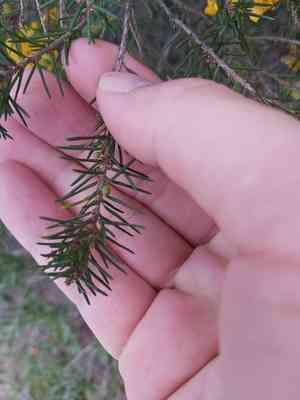
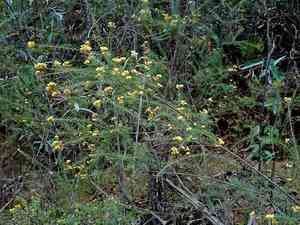
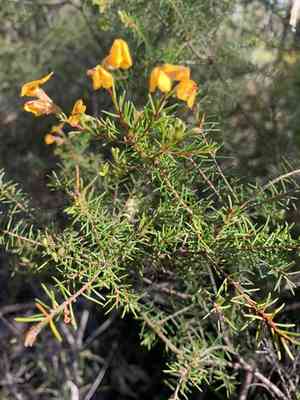
Quickly Identify Eggs and bacon
1
This plant can be identified by its small, linear leaves that are often twisted (retort), and its distinctive, bright pea-shaped flowers that are yellow with red markings. It usually blooms in spring.
Scientific Classification of Eggs and bacon
Phylum
Vascular plants
Class
Dicotyledons
Order
Fabales
Family
Legume
Genus
Dillwynia
Species
Eggs and bacon
Planting and Growing of Eggs and bacon
Care Difficulty
Moderate
Watering Schedule
Every 2 days
Sunlight Requirements
Full sun
Sunshine Duration
6-12 hours
Ideal Temperature
50-77℉
Soil Type
Potting Mix, Peat Mix
Soil pH
4.5-6
Fertilizer Type
Balanced
Pruning Season
Spring, Summer
Pruning Area
Branches, Leaves
Pruning Frequency
2 times a year
Repotting Season
Spring
Pot Type
Plastic, Ceramic
 How to Water Eggs and bacon?
Dillwynia retorta thrives when watered moderately. The goal is to ensure the soil is consistently moist but not waterlogged. About 250 ml per session is ideal, enough to reach the roots without standing water.
What are the symptoms of an underwatered Eggs and bacon?
›
What should I do if my Eggs and bacon is not getting enough water?
›
What are the symptoms of an overwatered Eggs and bacon?
›
How to save an overwatered Eggs and bacon?
›
 What Are the Sunlight Requirements for Eggs and bacon?
Partial sun or full sun contemplation greatly benefits Dillwynia retorta. Ideal light ensures optimal photosynthetic activity, accelerating growth and bloom production while enhancing plant resilience against pests.
Solution for Ideal Lighting
›
Specific Measures to Adjust Lighting
›
Benefits of Ideal Lighting
›
 What Is the Ideal Temperature Range for Eggs and bacon?
Dillwynia retorta thrives best in a temperature range of 50°F to 77°F. This range ensures optimal growth and flowering. Consistent temperatures within this range promote robust physiological processes and minimize environmental stress.
 What Soil is Best for Eggs and bacon?
Dillwynia retorta thrives best in well-drained soil. The efficient drainage prevents waterlogging, which can damage the roots. This promotes healthier growth and vibrant blooms. This plant can exist comfortably in relatively nutrient-poor soil. It has adapted to draw essential nutrients from limited resources, reducing the need for frequent fertilizing. Acidic to neutral pH is ideal, as it matches the natural heathland conditions where Dillwynia retorta grows. This balance ensures access to essential nutrients and supports optimal physiological processes.
 How to Fertilize Eggs and bacon?
For Dillwynia retorta, it’s important to use a balanced fertilizer at half the strength recommended by the manufacturer to avoid over-fertilization. Typically, for liquid fertilizers, you might use about 5ml per liter of water.
 How to Prune Eggs and bacon?
Start by removing any dead or damaged branches. Trim the plant to maintain its shape, focusing on cutting just above a node to promote new growth. Ensure not to remove more than one-third of the plant’s foliage at any one time to avoid stressing the plant. Use a pair of clean, sharp shears to make precise cuts at an angle. Cutting at the right angles aids in water runoff from the cuts, reducing the likelihood of fungal infections.
More About Pruning Techniques→
 How to Propagate Eggs and bacon plant?
1
Seeds should be collected from mature pods in late spring. Ensure the pods are dry and split naturally or can be gently opened post-collection.
2
Select healthy, semi-hardwood cuttings about 10-15 cm in length. Remove the lower leaves and dip the cut end in rooting hormone to promote root development.
3
For seeds, sow in a well-draining seed mix and cover lightly with soil. For cuttings, place them in a propagating mix and keep humid by covering with a plastic dome.
 How to Repot Eggs and bacon plant?
1
Dillwynia retorta requires repotting when its roots become overcrowded or begin circling the pot, indicating that the plant is becoming root-bound. Another signal for repotting is when water begins to take a long time to drain away, suggesting that the soil has compacted. Ideally, repot when active growth is visible.
2
Select a pot that is just one size larger than the current one to avoid overwhelming the plant with too much new soil, which could retain excess moisture. The pot should have adequate drainage holes to allow water to escape easily, preventing roots from sitting in soggy conditions which could lead to root rot.
3
Choose a well-draining sandy soil mix that resembles the plant's natural habitat. This kind of soil prevents waterlogging while providing sufficient aeration to the roots, promoting healthy growth. Adding some organic material can help retain necessary nutrients and moisture.
Learn More About Eggs and bacon Diseases
Anthracnose
Bacterial Leaf Spot
Bacterial Wilt
Crown Gall
Cyst Nematode
Damping-off
Downy Mildew
Drought Stress
Fusarium Wilt
Gray Mold
Leaf Curl
Leaf Spot
Mosaic
Nutrient Deficiency
Nutrient Toxicity
Powdery Mildew
Root Rot
Root-knot Nematode
Rusts
Sooty Mold
Spider Mites
Temperature Stress
Thrips Damage
White Mold



