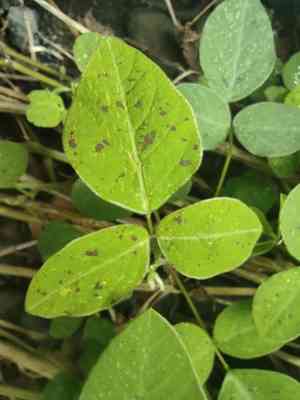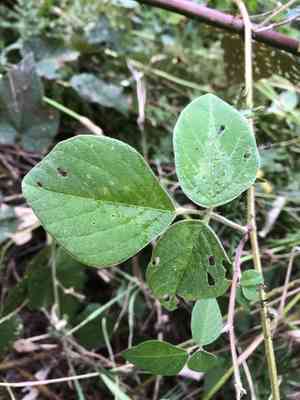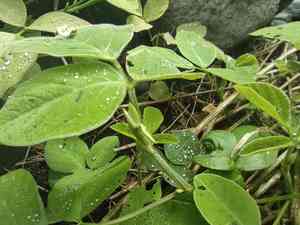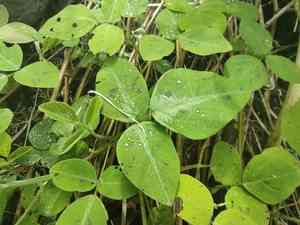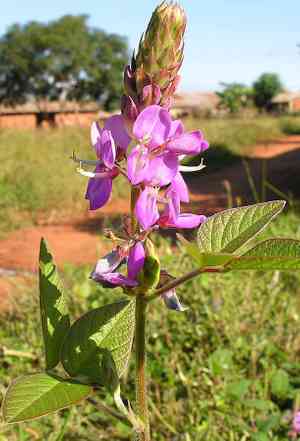
Greenleaf ticktrefoil(Desmodium intortum)

Greenleaf ticktrefoil (Desmodium intortum)

Also known as: Greenleaf desmodium, Kuru-vine

Greenleaf ticktrefoil (Desmodium glutinosum) is a perennial herb notable for its trifoliate leaves and pink to purple flowers that blossom in mid to late summer. Unlike twining plants, it typically grows upright, reaching heights of 1-3 feet.

**Characteristics:**
- **Leaves:** Composed of three distinct leaflets.
- **Flowers:** Pea-like, varying in color from pink to purple.
- **Stem:** Known for being sticky, aiding in seed dispersal as seeds adhere to passing animals and humans.
- **Pods:** Curly, which also facilitates seed spread.

**Ecological Benefits:**
- **Soil Enrichment:** Engages in nitrogen fixation, enhancing soil fertility.
- **Attracts Pollinators:** Supports pollinators such as bees and butterflies.
- **Wildlife Support:** Offers food and habitat for birds and small mammals.
- **Erosion Prevention:** Its root system helps stabilize soil, thus mitigating erosion.

Greenleaf ticktrefoil is particularly valuable in ecological restoration projects due to its ability to thrive in various soil conditions and contribute to soil health and stability.

Attributes of Greenleaf ticktrefoil

Lifespan
Perennial
Plant Type
Herb
Plant Height
0.3 to 1.0 meters
Spread
Spread can vary widely depending on growing conditions
Leaf Color
Bright green
Flower Size
0.5 to 1.0 centimeters
Flower Color
Purple

ForwardPlant - Identify plants with a snap

Identify and diagnose plants, get toxicity alerts, and explore safety guides for all types of fungi.

Try for Free

Images of Greenleaf ticktrefoil

Greenleaf ticktrefoil(Desmodium intortum)

Quickly Identify Greenleaf ticktrefoil

1
Identify Desmodium intortum by its trifoliate leaves, hairy stems, and small purple flowers. The leaves are typically bright green and the plant has a sprawling habit.

Scientific Classification of Greenleaf ticktrefoil

Phylum
Vascular plants
Class
Dicotyledons
Order
Fabales
Family
Legume
Genus
Tick clover
Species
Greenleaf ticktrefoil

Planting and Growing of Greenleaf ticktrefoil

Care Difficulty
Moderate
Watering Schedule
Every 4 days
Sunlight Requirements
Partial sun
Sunshine Duration
6-10 hours
Ideal Temperature
68-86℉
Soil Type
Potting Mix, Peat Mix
Soil pH
6.5-7.5
Fertilizer Type
Balanced
Pruning Season
Spring, Summer
Pruning Area
Branches, Leaves
Pruning Frequency
2 times a year
Repotting Season
Spring
Pot Type
Plastic, Ceramic

water icon How to Water Greenleaf ticktrefoil?

Desmodium intortum prefers a moderate watering approach. Ensure the soil is saturated but not waterlogged, with about 500ml per session enough to thoroughly moisten the root system without creating standing water.
What are the symptoms of an underwatered Greenleaf ticktrefoil?
What should I do if my Greenleaf ticktrefoil is not getting enough water?
What are the symptoms of an overwatered Greenleaf ticktrefoil?
How to save an overwatered Greenleaf ticktrefoil?

sunlight icon What Are the Sunlight Requirements for Greenleaf ticktrefoil?

Sunlight Requirements: Partial sun
Duration of light: 3-6 hours
Prefers partial sun exposure. Ideal light conditions facilitate robust growth and health, promoting a vibrant appearance and reducing vulnerability to stress factors.
What are the best light conditions for Desmodium intortum?
How can I ensure Desmodium intortum gets ideal lighting?
What are the benefits of optimal lighting for Desmodium intortum?

temperature icon What Is the Ideal Temperature Range for Greenleaf ticktrefoil?

Ideal Temperature: 68 ~ 86℉
The ideal temperature range for Desmodium intortum is between 68°F and 86°F. This range provides optimal conditions for growth and photosynthesis, ensuring the plant can thrive. Maintaining this temperature range helps in robust leaf and stem development, contributing to higher overall plant health.

soil icon What Soil is Best for Greenleaf ticktrefoil?

Soil type: Loam
Soil PH: 6.5 ~ 7.5
Desmodium intortum thrives in loamy soils which can hold moisture effectively while ensuring good drainage. This balance prevents waterlogging, promoting robust root development and overall plant health. Loamy soil is rich in nutrients vital for the growth of Desmodium intortum. This soil type supports vigorous growth by offering essential minerals and organic matter required for healthy plant development. The structure of loam soil allows for optimal aeration, which ensures the roots of Desmodium intortum receive adequate oxygen. This characteristic is crucial in preventing root diseases and encouraging strong plant vitality.

fertilize icon How to Fertilize Greenleaf ticktrefoil?

Fertilizer type: Balanced
Desmodium intortum thrives with moderate amounts of fertilizer. Liquid fertilizers should be diluted to half strength, and each application should provide approximately 0.5 to 1.0 liters per plant, ensuring the root zone is sufficiently covered without oversaturating the soil.

prune icon How to Prune Greenleaf ticktrefoil?

Pruning Time: Spring, Summer
Desmodium intortum thrives best when pruned during its active growing seasons, which are spring and summer. Pruning during these times stimulates new growth and can lead to a robust and lush plant. When pruning, focus on cutting back to promote new and vigorous growth. Removing approximately one-third of the plant's length is common, promoting a fuller and more vibrant appearance over time. More About Pruning Techniques

propagate icon How to Propagate Greenleaf ticktrefoil plant?

Propagate Time: Early spring,Late spring,Summer
1
Begin by soaking the seeds of Desmodium intortum in water for 24 hours before sowing. This helps to soften the seed coat and improves germination rates. After soaking, plant the seeds in a well-draining potting mix, covering them lightly with soil.
2
Select healthy, non-flowering shoots from the parent plant during late spring or early summer. Cut a 6-8 inch section from the shoot just below a node. Remove the lower leaves and dip the cut end in rooting hormone to encourage root growth.
3
Plant the cut end into a pot filled with moist, well-draining potting mix. Keep the cuttings in a warm, humid environment, ideally with a plastic cover, to retain moisture and promote rooting. Roots should develop in 3-4 weeks.
More About Propagating Techniques

repot icon How to Repot Greenleaf ticktrefoil plant?

Repotting frequency: Every 1-2 years
1
Desmodium intortum should be repotted when you notice roots growing through the drainage holes or spiraling on the soil surface. These signs indicate that the plant has outgrown its current pot, leading to soil compaction and poor drainage, which could hinder root growth and nutrient uptake.
2
Select a pot with a diameter 1-2 inches larger than the current one. Ensure it has drainage holes to prevent waterlogging. A slightly bigger pot provides enough space for root expansion, encouraging healthy plant development while maintaining adequate moisture levels.
3
Opt for well-draining loamy soil rich in organic matter. This type of soil allows for optimal air circulation around the roots and retains moisture without becoming waterlogged, supporting vigorous growth and preventing root rot.

ForwardPlant - Identify plants with a snap

Find the best spots for them to optimize their health, simply using your phone.

Try for Free